Wildlife Guide · Worldwide
Squirrel
Sciuridae
A worldwide family of more than 280 rodents, from familiar tree squirrels to ground squirrels and gliding flying squirrels.
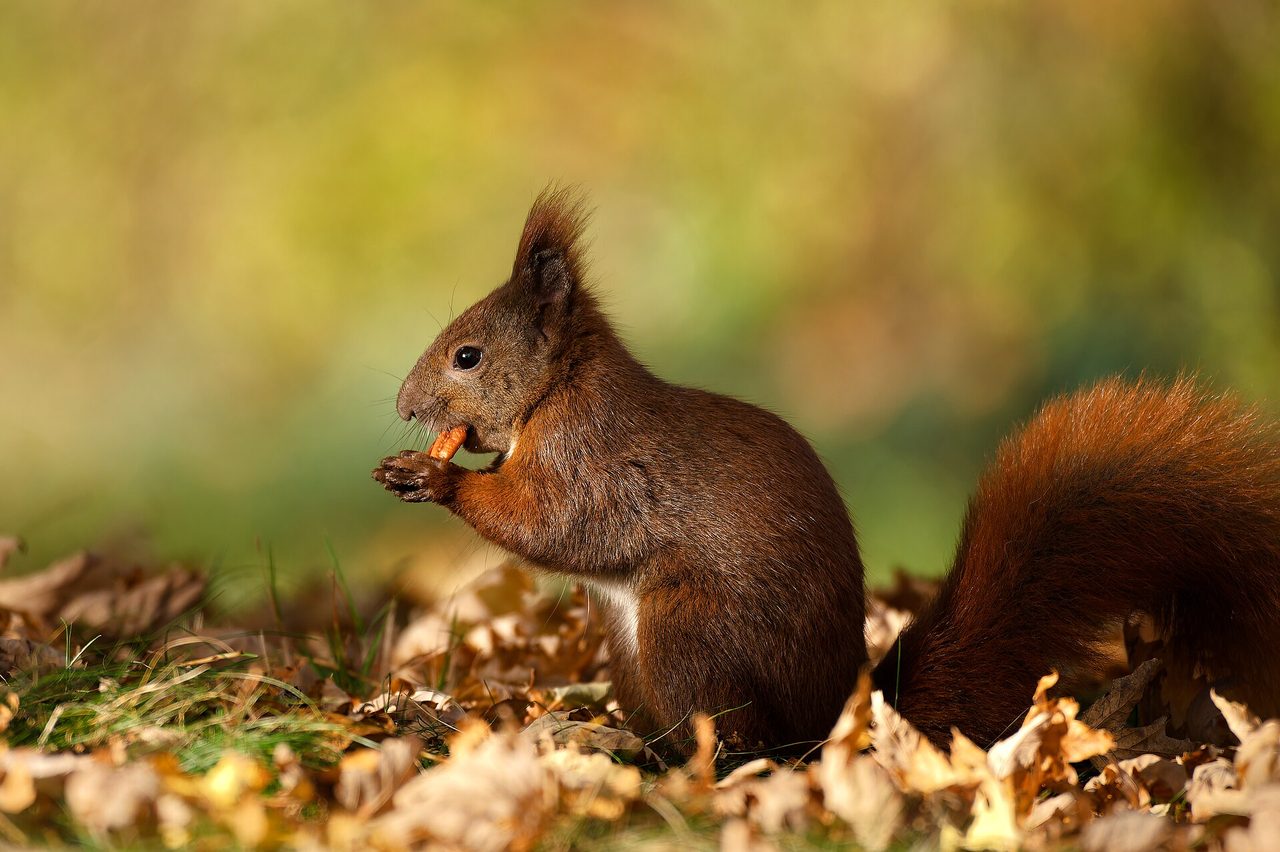
Photo: Laurens R. Krol / Wikimedia Commons (CC BY 4.0)
In brief
A squirrel is a small-to-medium rodent in the family Sciuridae, a group of more than 280 species worldwide that includes tree squirrels, ground squirrels and gliding flying squirrels; most are common and Least Concern, though some island species are endangered.
Also in Animals A to Z · Animals that start with S
By WARN Research & Conservation TeamLast updated
Squirrels make up the family Sciuridae, one of the most widespread mammal families on Earth, with roughly 280 to 285 species spread across about 58 genera. The family is usually split into three broad lifestyles: tree squirrels, ground squirrels (which include chipmunks, marmots and prairie dogs), and flying squirrels that glide between trees on a flap of skin. They are found on every continent except Antarctica and Australia, in habitats ranging from tropical rainforest to arctic tundra and city parks. Most squirrels are common and listed as Least Concern, but a number of island, high-elevation and forest-restricted species are threatened, and a few, such as the Hon Khoai squirrel of Vietnam and the Namdapha flying squirrel of India, are Critically Endangered.
280+
Living species in family Sciuridae
~58
Genera worldwide
5–10 yrs
Typical wild lifespan
20 mph
Top sprint speed (eastern gray squirrel)
Figures sourced from Wikipedia – Squirrel, Encyclopaedia Britannica – Squirrel, Animal Diversity Web – Sciuridae and other references on this page.
Squirrel: Quick Facts
| Lifespan | 5–10 years in the wild; up to 10–20 years in captivity |
|---|---|
| Weight | ~12 g (African pygmy squirrel) to 8 kg or more (large marmots) |
| Size | ~10 cm to over 1 m total length, depending on species |
| Diet | Mainly seeds, nuts, fruit, buds and fungi; some insects and small animals |
| Gestation | About 3–6 weeks |
| Young per litter | Typically 2–8, varying by species |
| Baby name | Kit or kitten |
| Group name | Scurry (nest is a drey) |
| Top speed | Up to about 20 mph (32 km/h) in the eastern gray squirrel |
| CITES | Most species not listed; a few (e.g. certain Asian giant and flying squirrels) on CITES Appendix II |
Scientific Classification
| Kingdom | Animalia |
|---|---|
| Phylum | Chordata |
| Class | Mammalia |
| Order | Rodentia |
| Family | Sciuridae |
| Subfamilies | Ratufinae, Sciurillinae, Sciurinae, Callosciurinae, Xerinae |
| Species | ~280–285 worldwide |
Conservation Status
- IUCN Status
- Varies by species (most Least Concern; some Endangered or Critically Endangered)
- Population
- Not quantified family-wide; most species common and abundant
- Trend
- Stable for most species; declining for forest- and island-restricted species
- Assessed
- Assessed per species; ongoing
- CITES
- Most species not listed; some Asian giant and flying squirrels on Appendix II
As a family of 280+ species, squirrels have no single IUCN listing. The general picture is that most are Least Concern, while species with small, island or high-elevation ranges face the greatest extinction risk.
Did you know?
Flying squirrels do not actually fly. They glide, using a stretchy membrane between their wrists and ankles to coast for tens of metres between trees, steering with their flattened tail.
Key Facts: Squirrel
- Squirrels are rodents in the family Sciuridae, with roughly 280–285 species across about 58 genera found on every continent except Antarctica and Australia.
- The family covers three broad groups: tree squirrels, ground squirrels (including chipmunks, marmots and prairie dogs), and flying squirrels that glide rather than truly fly.
- Sizes span from the tiny African pygmy squirrel at about 10 cm to giant flying squirrels over a metre long including the tail.
- Diet is mainly seeds and nuts, but squirrels also eat fruit, fungi, buds, insects and occasionally small vertebrates; they cannot digest cellulose.
- Most squirrel species are listed as Least Concern, but island, high-elevation and forest-restricted species can be Endangered or Critically Endangered.
- Habitat loss, deforestation and competition from introduced species are the main pressures on the threatened members of the family.
What is a squirrel?
A squirrel is a rodent in the family Sciuridae. The family is large and varied, with about 280 to 285 living species grouped into roughly 58 genera and five subfamilies. Despite the differences in size and lifestyle, squirrels share a recognisable body plan: a slender frame, large eyes, strong hind legs for leaping, sharp curved claws for gripping bark, and in most species a long bushy tail used for balance, signalling and warmth. The family is traditionally divided into tree squirrels, ground squirrels and flying squirrels, though all three are close relatives within the same family rather than separate groups.
Where squirrels live and how they behave
Squirrels are found almost everywhere there are trees or open ground, on every continent except Antarctica and Australia, from tropical forests and deserts to mountains, farmland and urban parks. Tree squirrels nest in leafy dreys or tree cavities and are active by day. Ground squirrels dig burrow systems and many enter deep hibernation through cold winters. Flying squirrels are mostly nocturnal and glide between trees on a membrane stretched between their limbs. Many species are famous for caching food, burying or hoarding nuts and seeds to survive lean seasons, a habit that helps disperse tree seeds and shape forests.
Diet, breeding and lifespan
Squirrels are largely plant eaters, favouring seeds, nuts, fruit, buds and fungi, and supplementing this with insects, eggs and occasionally small animals; like other rodents they cannot digest cellulose, so leaves are a poor food source. Gestation is short, typically three to six weeks, and litters of helpless, hairless young, usually called kits or kittens, are born in a nest. The young are weaned over several weeks and most reach breeding age within their first year. In the wild squirrels commonly live five to ten years, while protected captive animals can reach 10 to 20 years.
Conservation across the family
Because Sciuridae is so large, conservation status varies widely from species to species. The majority of squirrels, including familiar tree squirrels like the eastern gray squirrel, are assessed as Least Concern and remain common; the eastern gray squirrel is even considered invasive in parts of Europe. The risk is concentrated in species with small or isolated ranges. The Hon Khoai squirrel, endemic to a tiny island group off southern Vietnam, and the Namdapha flying squirrel, known from a single specimen in northeast India, are both Critically Endangered. Deforestation, habitat fragmentation, hunting and introduced competitors are the principal threats to vulnerable members of the family.
Tree, ground and flying squirrels compared
| Group | Where they live | Activity | Distinctive trait |
|---|---|---|---|
| Tree squirrels | Forests, woodlands, parks and gardens | Mostly active by day | Long bushy tail for balance; nest in dreys or tree holes |
| Ground squirrels | Open ground, grassland, deserts and mountains | Active by day; many hibernate | Dig burrows; group includes chipmunks, marmots and prairie dogs |
| Flying squirrels | Forests, mainly temperate and tropical | Mostly active at night | Glide between trees on a skin membrane called the patagium |
What WARN Does
This guide is educational reference content, part of the World Animal Rescue Network's wider mission to build global awareness of wildlife and the habitats they depend on. Squirrels as a worldwide family fall outside WARN's current funded field programmes, which at this launch stage focus on partner-network countries: its partner-network countries. We do not run or fund squirrel-specific projects, and we do not claim to. What this page can honestly do is help people understand the family, explain why forest-dependent and island species are at risk, and point readers toward the nearest relevant WARN work: protecting the forest and woodland habitats that squirrels and countless other animals share.
Squirrels are a worldwide family, and WARN does not fund squirrel-specific projects. But the forests and woodlands many species depend on are exactly the habitats our broader work aims to protect. Supporting WARN's habitat protection helps safeguard the wild places that wildlife everywhere relies on.
Squirrel: Frequently Asked Questions
How many species of squirrel are there?
What is a baby squirrel called?
What is a group of squirrels called?
What do squirrels eat?
Can flying squirrels actually fly?
Where do squirrels live?
Are squirrels dangerous?
How long do squirrels live?
How big is a squirrel?
Sources & References
Population figures, conservation status and biological facts on this page are drawn from authoritative scientific and intergovernmental sources.
Terms used on this page
Plain-English definitions, from our wildlife and conservation glossary.
Latest Squirrel Stories
Quick, fact-checked reads on the squirrel — amazing facts, key questions and the threats it faces.
Guides
Pet Adoption vs. Animal Rescue: How to Help When You Can't Adopt
Pet adoption, cat adoption, dog adoption, puppies for adoption — they all matter. But what about the animals you cannot bring home?
Read the storyGuides
Giving in Memory of a Pet: A Complete Guide to Tribute Donations and Pet Memorials
How to give in memory of a much-loved pet, what a tribute donation actually does, how memorial walls work, and how WARN matches your gift to the same species your animal belonged to.
Read the storySpecies
12 Amazing Facts About the Humpback Whale, the Ocean's Great Singer
From hours-long songs that only males sing to flippers longer than any other whale, here are 12 genuinely surprising facts about the humpback whale.
Read the storyExplore more animals
Discover more animals, their habitats and their conservation status in the WARN wildlife-guide library.