Animal Comparison
Chipmunk vs Squirrel
Chipmunks are squirrels — ground-dwelling members of the squirrel family with facial stripes and large cheek pouches. Tree squirrels usually lack those.
By WARN Research & Conservation TeamLast updated
In brief — Chipmunk vs Squirrel
Chipmunks are striped ground squirrels with cheek pouches; “squirrel” in parks usually means a tree squirrel without face stripes.
Chipmunks are squirrels: small ground-dwelling members of the squirrel family Sciuridae. They differ from familiar tree squirrels in their facial stripes, large cheek pouches and more terrestrial habits. The comparison is type-within-family, not unrelated look-alikes; the names do not mark separate species.
See the difference
Images are shown at different scales. Read each caption for the species, source and context.
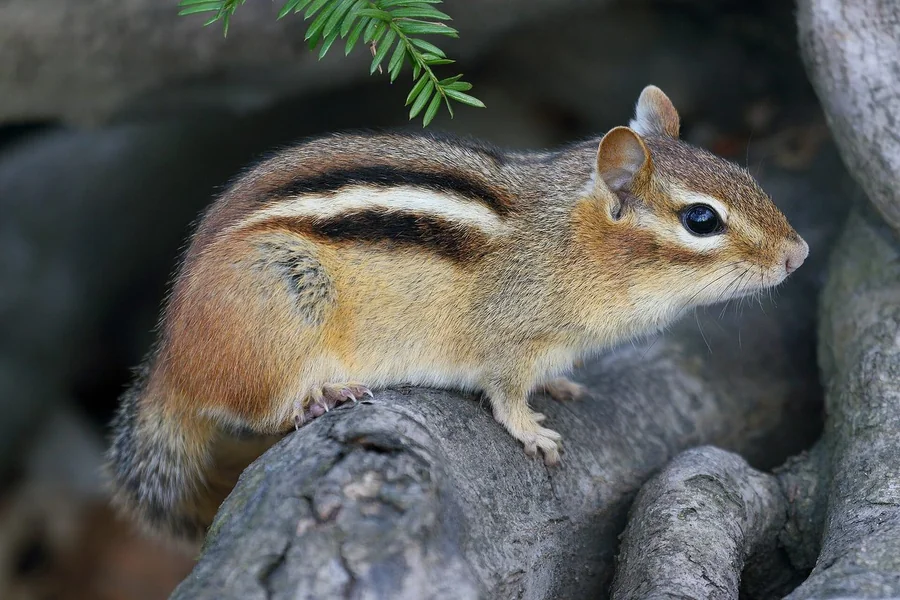
Chipmunk — a ground squirrel; face stripes and pouches
AI-generated educational wildlife portrait — World Animal Rescue Network
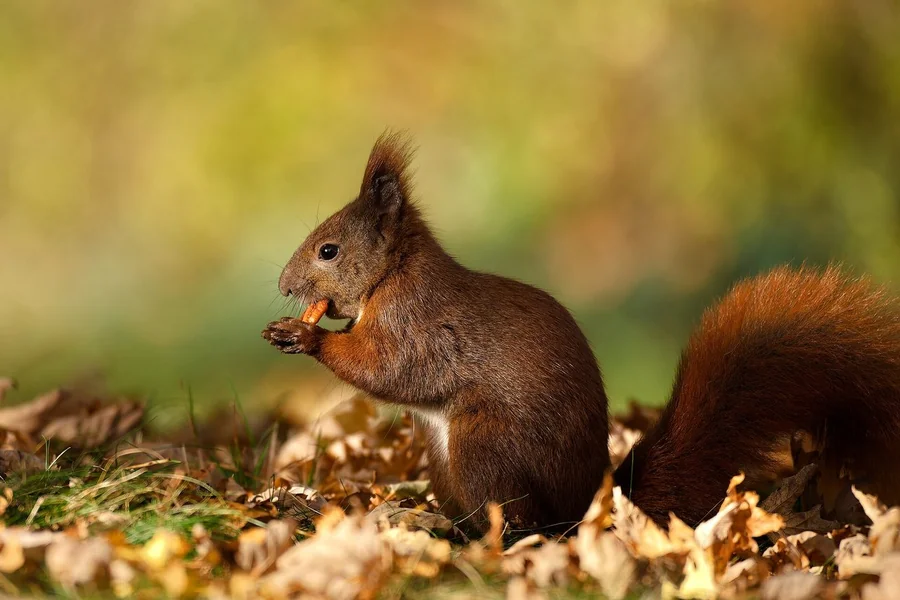
Tree squirrel — bushier tail; no chipmunk face stripes
AI-generated educational wildlife portrait — World Animal Rescue Network
Chipmunk vs Squirrel: At a Glance
| Feature | Chipmunk | Squirrel |
|---|---|---|
| Family | Sciuridae (squirrels) | Sciuridae (squirrels) |
| Relation | A type of squirrel | Everyday tree/ground forms |
| Face stripes | Bold light/dark facial stripes | Tree squirrels usually lack face stripes |
| Cheek pouches | Large — food transport | Absent in tree squirrels |
| Typical weight | Often ~50–120 g | Grey squirrel often ~400–600 g |
| Nest/den | Burrows in the ground | Dreys in trees or dens in cavities |
| Climbing | Capable; more terrestrial | Strongly arboreal (tree squirrels) |
| Tail | Less bushy than many tree squirrels | Often very bushy |
| Diet | Seeds, nuts, fruits, fungi, insects | Seeds, nuts, buds, fruit, fungi |
| Hibernation | Many chipmunks hibernate/torpor | Many tree squirrels cache, stay active |
Size and physical differences
Chipmunks are smaller: often about 20–30 cm including the tail and roughly 50–120 g, while many grey squirrels weigh 400–600 g.
Chipmunk versus squirrel is a hierarchy question dressed up as a rivalry. Chipmunks sit inside Sciuridae alongside tree squirrels, ground squirrels and marmots. Calling them non-squirrels is like calling a terrier not a dog. What people want is how to tell a chipmunk from the tree squirrel on the bird feeder.
Stripes and cheek pouches do that job. Chipmunks show light-and-dark facial stripes and stuff food into expansive cheek pouches for transport to burrows. Grey and red tree squirrels lack that face pattern, have different body proportions, and spend more time in the canopy. Once the “chipmunks are squirrels” correction is clear, the field marks stay memorable.
This comparison sticks to marks you can use without laboratory gear: size, shape, behaviour and the words people actually type into a search box. Scientific names are given where they prevent a regional mix-up. Where published measurements disagree, this page gives the range rather than a single tidy figure that implies more certainty than the sources support.
Correction first: chipmunks are squirrels
The family Sciuridae is diverse. Chipmunks (Tamias and related) are one branch. Online quizzes that treat “chipmunk or squirrel” as exclusive categories teach a false tree of life. Better phrasing: chipmunk or tree squirrel. Field observers should treat colour alone as weak evidence and combine it with shape, behaviour and habitat before naming what they see. Where published measurements disagree, this page gives the range rather than a single tidy figure that implies more certainty than the sources support. Field observers should treat colour alone as weak evidence and combine it with shape, behaviour and habitat before naming what they see. Where published measurements disagree, this page gives the range rather than a single tidy figure that implies more certainty than the sources support. Field observers should treat colour alone as weak evidence and combine it with shape, behaviour and habitat before naming what they see. Where published measurements disagree, this page gives the range rather than a single tidy figure that implies more certainty than the sources support.
Stripes and pouches
Facial stripes that continue through the eye are the classic chipmunk billboard. Cheek pouches let them move many seeds per trip to underground larders. Tree squirrels carry food in the mouth one item at a time and cache in scattered spots. Field observers should treat colour alone as weak evidence and combine it with shape, behaviour and habitat before naming what they see. Where published measurements disagree, this page gives the range rather than a single tidy figure that implies more certainty than the sources support. Field observers should treat colour alone as weak evidence and combine it with shape, behaviour and habitat before naming what they see. Where published measurements disagree, this page gives the range rather than a single tidy figure that implies more certainty than the sources support.
Where they spend the day
Chipmunks duck into burrows and run along logs and stone walls. Tree squirrels use trunks and branches as highways and build leafy dreys. You will see grey squirrels cross telephone wires; chipmunks rarely make that commute. Field observers should treat colour alone as weak evidence and combine it with shape, behaviour and habitat before naming what they see. Where published measurements disagree, this page gives the range rather than a single tidy figure that implies more certainty than the sources support. Field observers should treat colour alone as weak evidence and combine it with shape, behaviour and habitat before naming what they see. Where published measurements disagree, this page gives the range rather than a single tidy figure that implies more certainty than the sources support.
Winter strategies
Many chipmunks enter torpor and rely on stored food in the burrow. Grey squirrels stay active through winter in much of their range, living off caches. The strategies look different at a snowy feeder. Field observers should treat colour alone as weak evidence and combine it with shape, behaviour and habitat before naming what they see. Where published measurements disagree, this page gives the range rather than a single tidy figure that implies more certainty than the sources support. Field observers should treat colour alone as weak evidence and combine it with shape, behaviour and habitat before naming what they see. Where published measurements disagree, this page gives the range rather than a single tidy figure that implies more certainty than the sources support. Field observers should treat colour alone as weak evidence and combine it with shape, behaviour and habitat before naming what they see. Where published measurements disagree, this page gives the range rather than a single tidy figure that implies more certainty than the sources support.
Regional species clutter
North America has multiple chipmunk species; Eurasia has the Siberian chipmunk, now invasive in some European woodlands. Tree squirrels likewise vary. Local field guides beat generic cartoons. Field observers should treat colour alone as weak evidence and combine it with shape, behaviour and habitat before naming what they see. Where published measurements disagree, this page gives the range rather than a single tidy figure that implies more certainty than the sources support. Field observers should treat colour alone as weak evidence and combine it with shape, behaviour and habitat before naming what they see. Where published measurements disagree, this page gives the range rather than a single tidy figure that implies more certainty than the sources support. Field observers should treat colour alone as weak evidence and combine it with shape, behaviour and habitat before naming what they see. Where published measurements disagree, this page gives the range rather than a single tidy figure that implies more certainty than the sources support.
Did you know?
The “chip” in chipmunk is often linked to their chip-chip alarm calls — sound, not woodworking.
Chipmunk vs Squirrel: FAQs
Is a chipmunk a squirrel?
How can I tell a chipmunk from a tree squirrel?
Which is smaller?
Do chipmunks climb trees?
Do squirrels have cheek pouches?
Do chipmunks hibernate?
Help protect animals
Learning about animals can help more people understand their needs. WARN raises funds for eligible animal-welfare organisations. Read the relevant appeal’s purpose, recipient status and fund terms, or share this free guide to raise awareness.