Wildlife Guide · Pakistan & Iran
Urial
Ovis vignei
Asia's ancient wild sheep — curved horns, rocky slopes, and a fight for survival
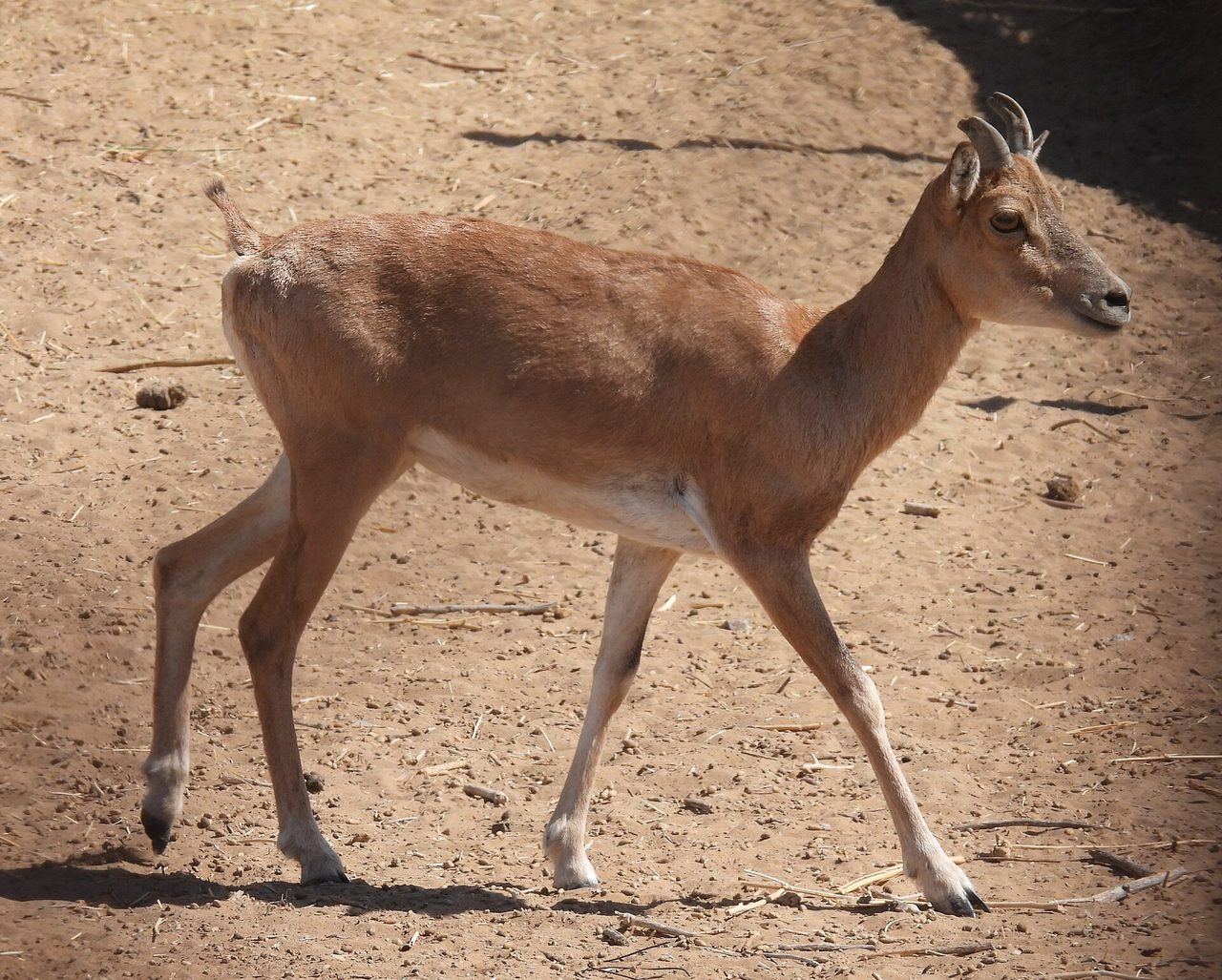
Photo: Carpodacus / Wikimedia Commons (CC BY-SA 4.0)
In brief
The urial (Ovis vignei) is a Vulnerable wild sheep of Central and South Asia, with around 30,000 individuals remaining and populations declining across most of its range due to poaching, habitat loss, and livestock competition.
Also in Animals A to Z · Animals that start with U
How you can help
You can support the related appeal — read its purpose, recipient status and fund terms first — or give once to where it is needed most. Sharing accurate information helps too.
By WARN Research & Conservation TeamLast updated
The urial (Ovis vignei) is one of Asia's most distinctive wild sheep, inhabiting the rugged mountain ranges and semi-arid steppes that stretch from Iran and Pakistan through Central Asia to the Kashmir region. Males carry sweeping, outward-curved horns that can reach nearly a metre in length — a feature that has made them a target of trophy hunters for generations. Females are considerably smaller and hornless. Six subspecies are recognised, each adapted to its specific landscape, from the Punjab urial of Pakistan's Salt Range to the Ladakh urial of the high Himalayas. Classed as Vulnerable on the IUCN Red List since 2020, with a total population estimated at around 30,000 individuals and a declining trend, the urial faces relentless pressure from poaching, livestock competition, habitat degradation, and the slow encroachment of agriculture into its mountain strongholds.
~30,000
Total estimated population (IUCN 2020)
Up to 99 cm
Maximum recorded horn length in males
6
Recognised subspecies across the range
150–160 days
Gestation period (approximately 5 months)
Figures sourced from IUCN Red List — Ovis vignei (Urial) 2020 Assessment, CITES Appendices (February 2025) — official appendices PDF, Animal Diversity Web — Ovis aries vignei and other references on this page.
Urial: Quick Facts
| Also known as | Arkar, shapo, shapu |
|---|---|
| Adult male weight | 60–90 kg |
| Adult female weight | 30–50 kg |
| Shoulder height (male) | 80–90 cm |
| Horn length (max) | ~99 cm |
| Lifespan (wild) | 8–12 years |
| Gestation | 150–160 days |
| Litter size | 1 lamb (occasionally 2–3) |
| Rut season | November–December |
| Diet | Grasses, forbs, shrubs |
Scientific Classification
| Kingdom | Animalia |
|---|---|
| Phylum | Chordata |
| Class | Mammalia |
| Order | Artiodactyla |
| Family | Bovidae |
| Subfamily | Caprinae |
| Genus | Ovis |
| Species | Ovis vignei |
Conservation Status
- IUCN Status
- Vulnerable
- Population
- ~30,000 total individuals (~15,000 mature)
- Trend
- Decreasing
- Assessed
- 2020
- CITES
- Appendix I
Population fragmented across Central and South Asia; the Punjab urial subspecies in Pakistan's Salt Range and Kala Chitta hills is among the most range-restricted, with estimates varying by survey area.
Did you know?
A urial ram's horns never stop growing — each year adds a new growth ring that researchers can count to determine the animal's age, much like counting rings in a tree trunk.
Key Facts: Urial
- The urial is listed as Vulnerable on the IUCN Red List (2020) with a declining population trend across most of its range.
- Six subspecies are recognised; the Punjab urial of Pakistan's Salt Range is among the most restricted, with population estimates varying widely by survey area — from around 800 to over 3,400 individuals depending on methodology and extent of area surveyed.
- Males bear dramatic outward-curving horns up to 99 cm long; horn size drives dominance hierarchies during the November–December rut.
- Poaching — including the capture of lambs as pets and the illegal shooting of mature rams — is the primary short-term threat in Pakistan.
- Strict community-based game reserves in Pakistan's Salt Range have demonstrated that enforced protection can reverse local population declines.
- The species is listed on CITES Appendix I, prohibiting international commercial trade in specimens and their parts.
What is a urial?
The urial is a medium-to-large wild sheep belonging to the genus Ovis, the same group that includes the mouflon and the ancestors of domestic sheep. Adult males typically weigh 60–90 kg and stand around 80–90 cm at the shoulder, while females are noticeably lighter at 30–50 kg. The most arresting feature of a mature ram is his horns: sweeping outward and then curling back in a broad arc, they can exceed 99 cm in length and carry a basal circumference of up to 30 cm. Horn size is not merely decorative — it determines a ram's rank in the social hierarchy and therefore his breeding opportunities. Both sexes wear a reddish-brown to sandy coat that bleaches paler in summer and darkens in winter, providing effective camouflage against the tawny rock and scrub of their home ranges. Rams are further distinguished by a striking black ruff running from the throat to the chest, which becomes especially conspicuous during the autumn rut. Taxonomically, the urial sits within the family Bovidae, subfamily Caprinae, alongside ibex, markhor, and domestic sheep. Some authorities formerly treated the urial as a subspecies of the mouflon (Ovis aries), but current consensus — supported by molecular studies — recognises it as a full species, Ovis vignei, with six subspecies across its Central and South Asian range.
Where do urials live?
Urials occupy a broad but fragmented arc from northwestern Iran in the west, through Afghanistan, Pakistan, and the high valleys of Tajikistan and Uzbekistan, to the Ladakh region of northern India in the east. Within Pakistan alone, several subspecies overlap: the Punjab urial (Ovis vignei punjabiensis) is endemic to the Salt Range of Punjab province, the Ladakh urial (O. v. vignei) reaches into Gilgit-Baltistan, and the Afghan urial (O. v. cycloceros) ranges across Balochistan and the northwest. In Kazakhstan and Turkmenistan, the Transcaspian urial (O. v. arkal) inhabits the Ustyurt plateau. Despite this wide geographic spread, suitable habitat is increasingly restricted. Urials favour steep, rocky hillsides and grassy steppes at elevations ranging from near sea level to roughly 4,500 m, preferring open terrain that gives them sightlines against approaching predators. They move seasonally — descending to valley floors and foothills in winter where grasses and forbs remain accessible, and retreating to higher, cooler elevations in summer. This altitudinal migration exposes them to agricultural land, road networks, and herding communities, heightening conflict and the risk of disease transmission from domestic livestock. Population fragmentation — herds cut off from one another by roads, fields, and settlements — is now one of the defining challenges for the species.
What do urials eat and how do they behave?
Urials are strict herbivores, grazing on grasses, sedges, herbaceous plants, and shrubs depending on the season and elevation. In leaner months they will browse on woody shrubs and dried grasses. Like most wild bovids, they are selective feeders, targeting the most nutritious plant parts available, and they will forage for much of the daylight hours. Social organisation is segregated by sex outside the rut: ewes, lambs, and young animals form nursery herds, while older rams group together in bachelor bands. Dominance within ram groups is established through displays and ritualistic clashes — males charge and clash horns in contests that can produce audible impacts over considerable distances, though serious injury is rare. Predators include grey wolves, snow leopards, and golden eagles, with eagles targeting lambs specifically. Urials are alert and fast-moving; their first response to a threat is to run uphill over broken terrain where four-legged pursuers lose their speed advantage. The rut runs from late November through December, when dominant rams compete intensely for access to ewes. After a gestation of approximately 150–160 days, ewes give birth to one lamb — occasionally two or three in older females — in April or May. Lambs begin nibbling vegetation within their first month of life and are weaned after five to six months. In the wild, urials live around 8–12 years.
Why is the urial Vulnerable and what are the biggest threats?
The IUCN assessed the urial as Vulnerable in 2020, estimating approximately 15,000 mature individuals (with a total population of around 30,000) and documenting a declining population trend. The species qualifies for Vulnerable status primarily because of a suspected reduction of at least 30 percent over three generations driven by ongoing exploitation and habitat deterioration. Poaching is the most acute short-term threat. In the Eastern Salt Range of Pakistan, peer-reviewed research found that roughly a quarter of the annual lamb crop was removed by poachers, and virtually all mature rams older than six years had been eliminated by illegal shooting. The capture of lambs as pets by local communities is a particular problem, removing juveniles before they can contribute to breeding. Habitat loss compounds hunting pressure: expanding agriculture, road construction, new settlements, and deliberate vegetation burning (to improve grazing for livestock) steadily erode and fragment urial range. Competition with domestic livestock reduces available forage, and close contact with sheep and goats exposes urials to diseases to which they have limited immunity. Climate variability also threatens high-altitude subspecies by shifting vegetation zones and reducing the reliability of seasonal forage. Trophy hunting, while regulated in some range states, has historically removed a disproportionate number of prime breeding males. The Punjab urial is among the most affected subspecies, with its entire global range restricted to the Salt Range and Kala Chitta hills, and population estimates varying considerably across surveys depending on the area sampled.
What conservation efforts are protecting the urial?
Despite the pressures, targeted conservation in Pakistan has demonstrated that recovery is possible when enforcement is coupled with community engagement. The Kalabagh Game Reserve in Punjab enforces strict anti-poaching regulations and maintains low human population pressure near urial habitat; comparative studies show significantly healthier population age structures there compared to unprotected areas in the eastern Salt Range. Community-based organisations operating private game reserves in the Potohar region have adopted a model where trophy hunting of old males is auctioned — with permit fees reaching USD 20,000–25,000 in recent auction cycles — and proceeds flow directly to local communities and conservation management. A 2024–25 survey at Kalabagh estimated 532 Punjab urials at an average density of 8.9 animals per square kilometre, suggesting stabilisation in protected zones. The species is listed on CITES Appendix I, meaning international commercial trade in urials and their parts is prohibited, reducing the market for illegally taken animals. In Iran, Tajikistan, and India, protected area networks provide some refuge for other subspecies, and transboundary collaboration — though limited — is increasingly discussed in conservation literature. Captive breeding programmes for the Punjab urial are under development as a genetic insurance policy. Education and awareness programmes in Pakistani schools and communities are also helping to shift local attitudes toward the urial from a harvested resource to a wildlife heritage asset worth protecting.
What WARN Does
WARN publishes this guide for education and is developing support through assessed animal-welfare grants. A species range, source citation or photograph does not establish a recipient or funding agreement. Check /about/where-your-money-goes/#grant-register for published grant and payment records; records not yet published must not be read as zero activity. Browse /appeals/ for the purposes currently available to support.
Every urial that survives in Pakistan's Salt Range or the mountains of Gilgit-Baltistan depends on active protection on the ground. Supporting WARN helps sustain the kind of community-based wildlife work in Pakistan that is proving most effective at turning the tide for species like the urial.
How can I help save the urial?
Explore practical ways to support the urial, from everyday choices and sharing reliable information to reviewing a related appeal before giving.
Explore ways to support
Read the related appeal’s purpose, recipient status and fund terms. Choose an affordable gift after checking what is proposed and what has been reported.
Ease the pressures
Avoid the wildlife trade and souvenirs, never buy wild animals as pets, and choose sustainable, habitat-friendly products — the threats behind the urial's decline fall when demand does.
Spread the word
Share accurate, sourced information about the urial. Wider awareness is what turns concern into lasting protection.
Urial: Frequently Asked Questions
How can I help save the urial?
Is the urial the same as a domestic sheep?
How many urial subspecies are there?
How big can a urial's horns get?
Why is the Punjab urial considered especially restricted?
What is being done to stop poaching of urials?
What do urials eat?
Where do urials live?
Are urials dangerous?
How long do urials live?
Sources & References
Population figures, conservation status and biological facts on this page are drawn from authoritative scientific and intergovernmental sources.
- IUCN Red List — Ovis vignei (Urial) 2020 Assessment
- CITES Appendices (February 2025) — official appendices PDF
- Animal Diversity Web — Ovis aries vignei
- Poaching, recruitment and conservation of Punjab urial — Wildlife Biology (BioOne)
- Population density of Punjab urial at Kalabagh Game Reserve (Zoo Botanica, 2025)
- Urial — Wikipedia
Terms used on this page
Plain-English definitions, from our wildlife and conservation glossary.
Latest Urial Stories
Quick, fact-checked reads on the urial — amazing facts, key questions and the threats it faces.
Briefings
Stray Dog Rescue in Pakistan: Why Mass Culling Cannot Solve Rabies
Tens of thousands of street dogs are killed in Pakistani cities each year — and rabies cases continue to rise. There is a humane alternative that actually works.
Read the storyGuides
How to Adopt a Dog: A Complete Guide to Dog Adoption and Rescue Dogs
Thinking of adopting a dog? Here is the complete guide to dog adoption, what to expect from rescue dogs, how to find a reputable rescue near you — and how to help the street dogs that cannot be adopted out of trouble.
Read the storyGuides
Dog Shelters, Animal Shelters and Dog Rescues: A Guide to Finding and Trusting One
What's the difference between a dog shelter, an animal shelter and a dog rescue? How do you find a good one near you, and what should you look for before you trust them with a rescue dog — or your money?
Read the storyExplore more animals
Discover more animals, their habitats and their conservation status in the WARN wildlife-guide library.