Wildlife Guide · Arctic Ocean & Bering and Chukchi Seas
Walrus
Odobenus rosmarus
The tusked giant of the Arctic ice.
Source: Global Animal Guide (WARN)
In brief
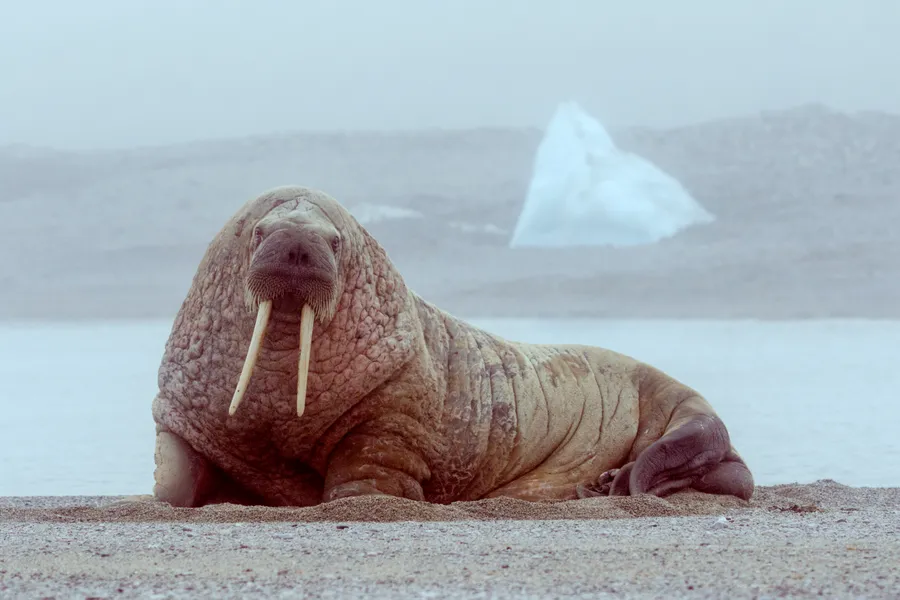
A walrus (Odobenus rosmarus) is a huge Arctic pinniped, or fin-footed marine mammal, famous for its long ivory tusks and bristly whiskered snout. It hauls out on sea ice and dives to the seabed to feed on clams, using sensitive whiskers to find shellfish in dark water.
Also in Animals A to Z · Animals that start with W
How you can help
You can support the related appeal — read its purpose, recipient status and fund terms first — or give once to where it is needed most. Sharing accurate information helps too.
By WARN Research & Conservation TeamLast updated
The walrus (Odobenus rosmarus) is an enormous Arctic pinniped instantly recognised by its long ivory tusks, bristly whiskered snout and folds of thick, blubbery skin. Spending its life around the shifting sea ice of the far north, it dives to the seabed to hoover up clams and other shellfish, sensing prey in dark, murky water with hundreds of exquisitely sensitive whiskers. Both males and females grow tusks, which they use to haul their huge bodies onto ice, spar for dominance and keep breathing holes open. Two subspecies share the Arctic: the Atlantic and the larger Pacific walrus. Listed as Vulnerable by the IUCN, the walrus faces an uncertain future as the sea ice it depends on continues to retreat.
Up to ~1,700 kg
Weight of a large Pacific male
Up to 1 m
Length of an adult's tusks
400-700
Sensitive whiskers on the snout
~112,500
Estimated mature walruses worldwide
Figures sourced from Walrus - Wikipedia, IUCN Red List: Odobenus rosmarus, CITES species database and other references on this page.
Walrus: Quick Facts
| Common name | Walrus |
|---|---|
| Scientific name | Odobenus rosmarus |
| Subspecies | Atlantic and Pacific walrus |
| Habitat | Arctic sea ice and shallow continental-shelf seas |
| Diet | Seabed clams and other bivalves; varied invertebrates |
| Weight | Up to ~1,700 kg (large Pacific males) |
| Length | About 2.2-3.5 m |
| Tusks | Elongated canines, up to ~1 m long, in both sexes |
| Lifespan | Around 20-30 years in the wild |
| IUCN status | Vulnerable (2021) |
Scientific Classification
| Kingdom | Animalia |
|---|---|
| Phylum | Chordata |
| Class | Mammalia |
| Order | Carnivora |
| Family | Odobenidae |
| Genus | Odobenus |
| Species | Odobenus rosmarus |
Conservation Status
- IUCN Status
- Vulnerable on the IUCN Red List, assessed in 2021. Once heavily depleted by commercial hunting for ivory, oil and hides, walruses are now threatened chiefly by the loss of Arctic sea ice driven by climate change, alongside disturbance from shipping and industrial activity.
- Population
- Approximately 112,500 mature individuals worldwide
- Trend
- Uncertain; sea-ice loss is expected to drive future decline
- Assessed
- 2021
- CITES
- CITES Appendix III (listed by Canada)
Both subspecies depend on sea ice for resting, feeding and rearing calves, making them especially sensitive to a warming Arctic.
Key Facts: Walrus
- The walrus is a huge Arctic pinniped with long tusks grown by both sexes.
- Its bristly whiskers, numbering in the hundreds, detect clams on the dark seabed.
- Tusks are elongated canine teeth used for hauling out, dominance and keeping ice holes open.
- Two subspecies exist: the Atlantic walrus and the larger Pacific walrus.
- The IUCN lists the walrus as Vulnerable, with sea-ice loss the leading concern.
- A thick blubber layer up to 15 cm deep insulates it against Arctic cold.
What do walruses look like?
Walruses are among the largest pinnipeds, dwarfed only by elephant seals. A big Pacific male can weigh up to roughly 1,700 kg and stretch around 3 to 3.5 metres long, while Atlantic walruses and females are noticeably smaller, with females weighing about two-thirds as much as males. Their most famous feature is the pair of long tusks, which are simply enormously elongated upper canine teeth. Present in both sexes, these can reach about a metre in length and weigh several kilograms, with males generally growing the longest, thickest tusks. The broad muzzle carries a dense moustache of 400 to 700 stiff whiskers, or vibrissae, arranged in rows and used to feel for food. Beneath the wrinkled, sparsely haired skin lies a blubber layer up to 15 cm thick, providing both insulation and an energy store. Skin colour shifts with temperature and activity, appearing pale and greyish in cold water but flushing pink or cinnamon-brown when blood returns to the surface after the animal warms up on land or ice.
What do walruses eat and how do they find food?
Walruses are benthic foragers, meaning they feed on the seabed rather than chasing fast prey in open water. Their overwhelming preference is for bivalve molluscs, especially clams, though their varied diet includes more than 60 genera of marine animals such as worms, snails, shrimps and sea cucumbers. Diving to the seafloor, often in cold, dark or sediment-clouded water where sight is little use, a walrus relies on its remarkable whiskers to detect and identify shellfish by touch. Once a clam is found, the walrus is thought to extract the soft body using powerful suction, sometimes squirting jets of water to expose buried prey, rather than crunching through shells. Contrary to a common myth, the tusks are not used to dig up food. An adult may eat thousands of clams in a single feeding bout, and this seabed grazing makes walruses important members of Arctic shelf ecosystems. Because they feed in relatively shallow continental-shelf waters, walruses depend on sea ice positioned over productive feeding grounds, using floes as resting platforms between dives.
Why are walruses threatened?
The walrus is classified as Vulnerable on the IUCN Red List, assessed in 2021, with a global population estimated at around 112,500 mature individuals. The central concern is climate change and the loss of Arctic sea ice. Walruses, particularly Pacific females and calves, traditionally rest on floating ice above their feeding grounds; as that ice retreats earlier and further north, animals are forced to haul out in dense crowds on land. These overcrowded beaches can lead to dangerous stampedes that crush calves, and they may sit far from the best feeding areas. Historically, commercial hunting for ivory, oil and hides drastically reduced walrus numbers, and while regulated subsistence hunting by Arctic peoples continues, the unsustainable slaughter of past centuries has largely ended. The walrus is listed on CITES Appendix III by Canada, helping to regulate international trade in walrus ivory. Disturbance from shipping, industrial activity and oil and gas development in a warming, more accessible Arctic adds further pressure on a species closely tied to a rapidly changing habitat.
Walrus vs seal vs sea lion
| Feature | Walrus | Seal (true seal) | Sea lion |
|---|---|---|---|
| Family | Odobenidae | Phocidae | Otariidae |
| Tusks | Yes, long ivory tusks | No | No |
| External ear flaps | No | No | Yes |
| Hind flippers | Can rotate to walk on land | Cannot rotate; shuffle on belly | Can rotate to walk on land |
| Typical size | Very large, up to ~1,700 kg | Small to large | Medium to large |
| Whiskers | Hundreds, highly sensitive | Sensitive but fewer | Sensitive but fewer |
What WARN Does
WARN does not run field projects dedicated to walruses, which live across the remote Arctic, far beyond the countries where our partners work. Producing this free, carefully sourced guide is part of our educational mission to help people understand wildlife and the pressures it faces. The habitat loss and climate change that threaten the walrus are the same forces harming the animals WARN does protect on the ground.
If this guide deepened your wonder at the Arctic's tusked giant, a small gift helps fund the free education and frontline animal care at the heart of WARN's work.
How can I help save the walrus?
Explore practical ways to support the walrus, from everyday choices and sharing reliable information to reviewing a related appeal before giving.
Explore ways to support
Read the related appeal’s purpose, recipient status and fund terms. Choose an affordable gift after checking what is proposed and what has been reported.
Ease the pressures
Avoid the wildlife trade and souvenirs, never buy wild animals as pets, and choose sustainable, habitat-friendly products — the threats behind the walrus's decline fall when demand does.
Spread the word
Share accurate, sourced information about the walrus. Wider awareness is what turns concern into lasting protection.
Walrus: Frequently Asked Questions
How can I help save the walrus?
Are walrus tusks teeth?
What do walruses eat?
How big do walruses get?
Are walruses endangered?
What is the difference between a walrus and a seal or sea lion?
Where do walruses live?
Are walrus dangerous?
How long do walrus live?
Sources & References
Population figures, conservation status and biological facts on this page are drawn from authoritative scientific and intergovernmental sources.
Terms used on this page
Plain-English definitions, from our wildlife and conservation glossary.
Latest Walrus Stories
Quick, fact-checked reads on the walrus — amazing facts, key questions and the threats it faces.
Explore more animals
Discover more animals, their habitats and their conservation status in the WARN wildlife-guide library.