Wildlife Guide · Pakistan
Working Donkey
Equus africanus asinus (Linnaeus, 1758)
The quiet engine of the developing world — carrying loads no one else will.
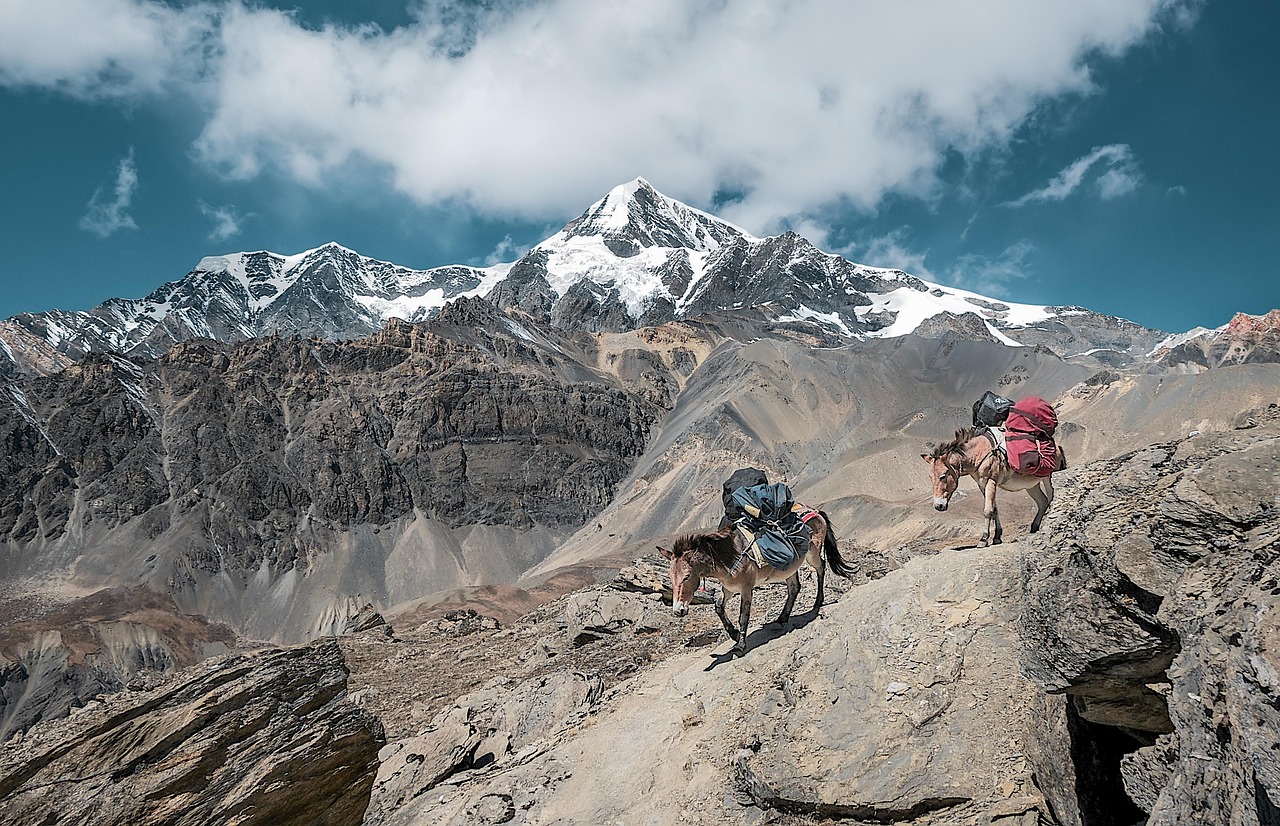
Existing WARN site asset
In brief
A working donkey is a domesticated donkey (Equus africanus asinus) used to carry loads, pull carts, or turn mills; it descends from the Critically Endangered African wild ass, and while the species itself is not threatened, individual working donkeys in regions such as Pakistan commonly suffer from overloading, ill-fitting harnesses, and limited veterinary access.
Also in Animals A to Z · Animals that start with W
By WARN Research & Conservation TeamLast updated
The working donkey (Equus africanus asinus) is the domesticated descendant of the African wild ass, kept for around 5,000 years to carry loads, pull carts, and turn mills. Roughly 50 million live worldwide, the vast majority in low-income regions of Asia and Africa where they remain essential to family income. In Pakistan — home to about 5.9 million donkeys — they haul bricks, water, and goods, and their welfare hinges on harness fit, load limits, and access to basic veterinary care.
~50 million
Donkeys worldwide, most in low-income Asia and Africa
~5.9 million
Donkeys in Pakistan (Pakistan Economic Survey 2023-24)
87%
Of surveyed Pakistani working donkeys carried over half their body weight (Frontiers, 2022)
12-15 yrs
Typical life expectancy for working donkeys in poorer regions, vs 30-50 yrs in good conditions
Figures sourced from IUCN Red List — Equus africanus (African wild ass), Critically Endangered, e.T7949A45170994 (2015), CITES — Appendices (Equus africanus, Appendix I), Frontiers in Veterinary Science (2022) — Welfare Concerns for Mounted Load Carrying by Working Donkeys in Pakistan and other references on this page.
Working Donkey: Quick Facts
| Lifespan | 12-15 yrs working in poorer regions; 30-50 yrs in good conditions |
|---|---|
| Weight | ~80-225 kg (varies by breed; median ~110 kg in Pakistan working study) |
| Height | ~90-145 cm at the shoulder (withers) |
| Diet | Herbivore — high-fibre, low-sugar forage (straw, coarse grasses) |
| Gestation | ~12 months (range 11-14 months) |
| Young per birth | Usually one foal |
| Top speed | ~24-40 km/h (15-25 mph) in short bursts |
| Baby name | Foal |
| Group name | Drove or herd |
| CITES | Domestic donkey not listed; wild ancestor Equus africanus on Appendix I |
Scientific Classification
| Kingdom | Animalia |
|---|---|
| Phylum | Chordata |
| Class | Mammalia |
| Order | Perissodactyla |
| Family | Equidae |
| Genus | Equus |
| Species | Equus africanus |
| Subspecies | Equus africanus asinus (Linnaeus, 1758) — the domesticated donkey |
Conservation Status
- IUCN Status
- Not Evaluated (domesticated). Wild ancestor, the African wild ass Equus africanus, is Critically Endangered.
- Population
- ~50 million domestic donkeys worldwide; ~5.9 million in Pakistan. The wild African wild ass numbers around 200 or fewer mature individuals.
- Trend
- Domestic donkey: stable to increasing (rising in Pakistan). Wild African wild ass: decreasing.
- Assessed
- Domestic form not assessed; African wild ass last assessed 2014 (published 2015)
- CITES
- Domestic donkey not CITES-listed; African wild ass (Equus africanus) listed on CITES Appendix I
The donkey is a domesticated animal, so the IUCN does not assign it a threat category. Its welfare, not its survival as a species, is the conservation-relevant concern. The Critically Endangered status applies only to the wild African wild ass from which it descends.
Did you know?
Donkeys have such a strong sense of self-preservation that they would rather stop and think than flee from danger — the trait we unfairly call 'stubbornness' is really careful risk-assessment, and it is one reason they make such steady, sure-footed pack animals.
Key Facts: Working Donkey
- The working donkey is a domesticated subspecies, Equus africanus asinus, not a wild or threatened species — it is listed as Not Evaluated on the IUCN Red List because domesticated animals are generally not assessed.
- Its wild ancestor, the African wild ass (Equus africanus), is Critically Endangered, with perhaps 200 or fewer mature individuals left, and is protected under CITES Appendix I; the domestic donkey is not CITES-listed.
- Around 50 million donkeys live worldwide; Pakistan holds about 5.9 million, one of the largest and steadily growing national populations.
- In a 2022 study of working donkeys in Pakistan, 87% carried loads exceeding half their body weight, and donkeys used to move bricks were about 2.5 times more likely to have moderate-to-deep skin lesions.
- Welfare for working donkeys depends on load limits, well-fitted harnesses and pads, water, shade, hoof care, and access to a vet — needs that are routinely unmet at remote brick kilns.
- Donkeys are intelligent, stoic, and herd-bonded; they mask pain and fear, so visible exhaustion or a wound often signals a problem that began much earlier.
Is the Working Donkey Endangered?
No — the working donkey is a domesticated animal, not a wild species in decline. With roughly 50 million worldwide and numbers in countries like Pakistan rising year on year, the donkey is abundant. That is why the IUCN Red List records the domestic form as Not Evaluated: conservation assessments target wild populations. The honest welfare story is different from a conservation one. The animal that does need conservation is the donkey's wild ancestor, the African wild ass (Equus africanus), assessed by the IUCN as Critically Endangered with as few as 200 mature individuals remaining and a continuing decline driven by hunting, drought, and competition with livestock. So when people ask 'how many donkeys are left,' the answer splits in two: the working donkey is in no danger of extinction, while the wild ass it came from very nearly is.
Behaviour and Biology
Donkeys evolved in the dry uplands of north-east Africa, and that desert ancestry shapes them. They are sure-footed, drought-tolerant, and able to digest coarse, fibrous forage that would not sustain a horse. They are also famously stoic: unlike horses, donkeys tend not to flee from a threat but to freeze and assess, which is often mistaken for stubbornness. This same trait means they hide pain and illness well, so a donkey that looks 'fine' can be carrying an untreated wound, lameness, or dental problem. Socially they bond strongly, sometimes forming lifelong attachments to a companion, and separation can cause real distress. A female (jenny) carries a single foal for about 12 months, and donkeys can live 30 years or more when well cared for.
The Welfare Problems of Working Donkeys
The threats to a working donkey are not predators or habitat loss but daily working conditions. Overloading is the central problem: a 2022 study of working donkeys in Pakistan found that 87% carried more than half their body weight, with some estimated to carry over 150% of it. Ill-fitting or improvised harnesses and pack saddles rub against skin under heavy loads, producing girth galls, back sores, and open wounds; donkeys hauling bricks were around 2.5 times more likely than others to have moderate-to-deep skin lesions. Add heat stress, dehydration, untreated lameness, poor nutrition, overgrown or cracked hooves, and a lack of vaccination or parasite control, and the result is chronic, preventable suffering. Many brick kilns sit outside towns, far from any veterinary service, so problems compound before help ever arrives.
What Working-Donkey Rescue Involves
Helping working donkeys is rarely about removing them from work — for many families the donkey is the difference between income and hardship. Effective welfare work meets owners where they are: free or low-cost mobile veterinary clinics that treat wounds, lameness, colic, and parasites; farrier and dental care; and practical fixes like properly padded harnesses and clear, locally credible guidance on safe load limits, rest, water, and shade. Education matters as much as treatment, because most harm is preventable and owners generally want their animal to stay sound and earning. The most durable model pairs hands-on clinics with training that leaves a community able to keep its donkeys healthy long after a visit ends.
Working Donkey vs Its Wild Ancestor, the African Wild Ass
| Feature | Working Donkey (Equus africanus asinus) | African Wild Ass (Equus africanus) |
|---|---|---|
| Status | Domesticated — Not Evaluated by IUCN | Critically Endangered (IUCN, 2015) |
| Population | ~50 million worldwide | ~200 or fewer mature individuals |
| CITES listing | Not listed | Appendix I |
| Range | Worldwide, mainly Asia and Africa | Horn of Africa (e.g. Eritrea, Ethiopia, Somalia) |
| Relationship to people | Kept and worked by humans for ~5,000 years | Wild; threatened by hunting and livestock competition |
| Main concern | Welfare: overloading, harness sores, vet access | Survival: extinction risk in the wild |
What WARN Does
WARN publishes this guide for education and is developing support through assessed animal-welfare grants. A species range, source citation or photograph does not establish a recipient or funding agreement. Check /about/where-your-money-goes/#grant-register for published grant and payment records; records not yet published must not be read as zero activity. Browse /appeals/ for the purposes currently available to support.
In Pakistan, a working donkey is often a family's entire livelihood — and the difference between a sound animal and a suffering one can be a padded harness, a treated wound, or a single visit from a vet. Your gift funds WARN's local partner teams in Pakistan to deliver exactly that care, right where it is needed.
Working Donkey: Frequently Asked Questions
How long do working donkeys live?
What do donkeys eat?
How big is a donkey and how much can it safely carry?
Are donkeys dangerous or just stubborn?
How many donkeys are there in the world?
What is a baby donkey called?
Where do donkeys live?
Sources & References
Population figures, conservation status and biological facts on this page are drawn from authoritative scientific and intergovernmental sources.
- IUCN Red List — Equus africanus (African wild ass), Critically Endangered, e.T7949A45170994 (2015)
- CITES — Appendices (Equus africanus, Appendix I)
- Frontiers in Veterinary Science (2022) — Welfare Concerns for Mounted Load Carrying by Working Donkeys in Pakistan
- Pakistan Economic Survey 2023-24 — donkey population reaches 5.9 million (Business Standard report)
- Wikipedia — Donkey (lifespan, gestation, biology overview)
- Animal Diversity Web — Equus asinus
- Mammal Diversity Database — Equus asinus (Domestic Ass)
Terms used on this page
Plain-English definitions, from our wildlife and conservation glossary.
Latest Working Donkey Stories
Quick, fact-checked reads on the working donkey — amazing facts, key questions and the threats it faces.
Species
12 Amazing Facts About the Working Donkey, the Quiet Engine of the Developing World
From 5,000 years of service to a desert-built body that hides pain, here are 12 facts about the working donkey and the welfare story behind 50 million of them.
Read the storySpecies
Donkey vs Mule vs Horse: Key Differences Explained
Donkeys, mules and horses look related for good reason, but they differ in chromosomes, temperament, diet and lifespan. Here is a clear, accurate breakdown.
Read the storySpecies
How Much Can a Donkey Safely Carry? The Working-Donkey Load Problem
A donkey should carry no more than about half its body weight, yet most working donkeys studied in Pakistan carried far more. Here is what the science says.
Read the storyExplore more animals
Discover more animals, their habitats and their conservation status in the WARN wildlife-guide library.