Twelve jellyfish facts, fact-checked
Jellyfish are medusozoan cnidarians, not fish. This briefing is a satellite of the full jellyfish wildlife guide, which has the skip list, comparison table and programme honesty. WARN does not run a jellyfish programme.
1. They are not fish
Jellyfish belong to phylum Cnidaria with corals and sea anemones. They have no backbone, gills or fins. “Sea jelly” is clearer English; “jellyfish” is the search term.
2. No brain, heart, bones or blood
A nerve net coordinates the bell. Some groups have rhopalia that sense light and orientation. Oxygen can diffuse through thin tissue.
3. The body is mostly water
A stranded jelly shrinks as it dries. “About 95% water” is the usual teaching figure, not a lab assay of every species.
4. Jellyfish-like animals predate dinosaurs
Fossils of jellyfish-like animals appear in the record more than 500 million years ago. That is not a claim one living moon jelly is 500 million years old.
5. “Immortal” is not unkillable
Turritopsis dohrnii can revert from adult medusa to polyp (Smithsonian NEMESIS). It can still be eaten or killed by disease. It is a hydrozoan, not a giant true jelly.
6. Stinging cells can fire after the animal dies
Nematocysts discharge on contact, including on tentacles washed up on sand. Do not treat a stranded bell as a toy.
7. The Portuguese man o’ war is not a true jellyfish
NOAA files Physalia physalis as a siphonophore colony with a gas-filled float, not a scyphozoan medusa. It still stings. First aid is not the same as for tropical box jellyfish.
8. Comb jellies are not jellyfish
Comb jellies are ctenophores. They swim with ciliated comb rows and do not fire cnidarian nematocysts. Gelatinous plankton is a habitat grouping, not a family tree.
9. Box jellyfish have real eyes
Cubozoans have multiple eyes, including lensed ones, and can navigate rather than only drift. Chironex and Irukandji-risk species are the tropical Australian medical emergency — not every temperate moon jelly.
10. Urine does not help a sting
It can make things worse by triggering unfired nematocysts. ANZCOR Guideline 9.4.5: vinegar for 30 seconds in tropical Australia when the sting may be box jellyfish or Irukandji-risk; do not use vinegar on bluebottles (Physalia). Severe stings need emergency care. This article is not a substitute for local lifeguard advice.
11. Blooms are not a global extinction badge
Seasonal swarms are normal for many species. Extra-large blooms are linked, in some places, to warmer water, nutrient runoff and fewer fish predators. There is no IUCN badge for “jellyfish” as a group. Most species are unassessed.
12. Leatherbacks eat jellyfish
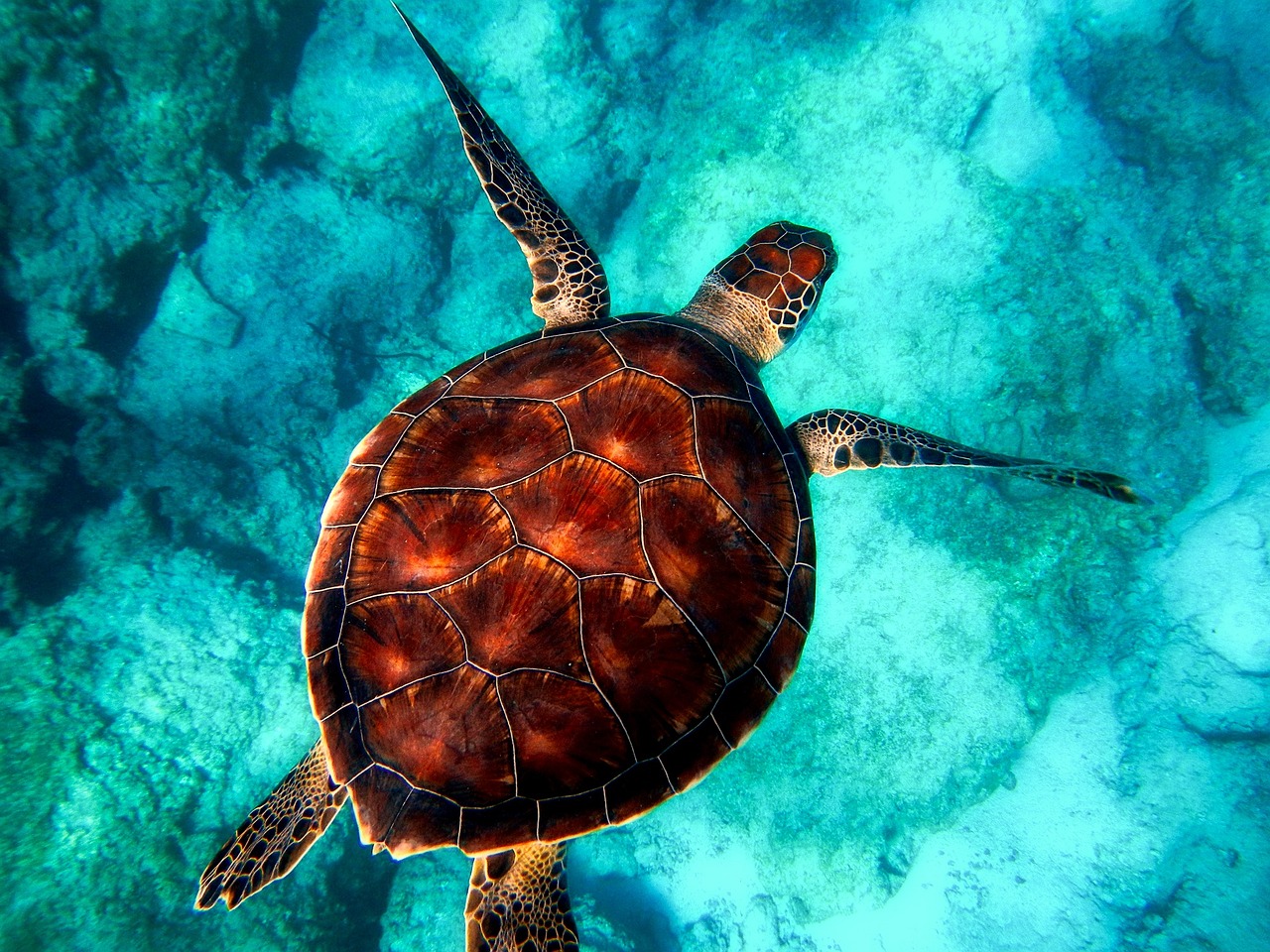
Sea turtles, especially leatherbacks, take gelatinous prey. That is ecology, not a WARN jelly-control programme. Turtle guide: sea turtle. Plastic bags can resemble bells — a pollution story, not a medusa census.
Read the full jellyfish wildlife guide for IUCN status, population context and sources — or donate to WARN to help fund the partner teams protecting wildlife on the ground.