Wildlife Guide · Indonesia & Malaysia
Sea Turtle
Cheloniidae and Dermochelyidae (superfamily Chelonioidea)
Seven ancient ocean wanderers navigating a sea of modern threats.
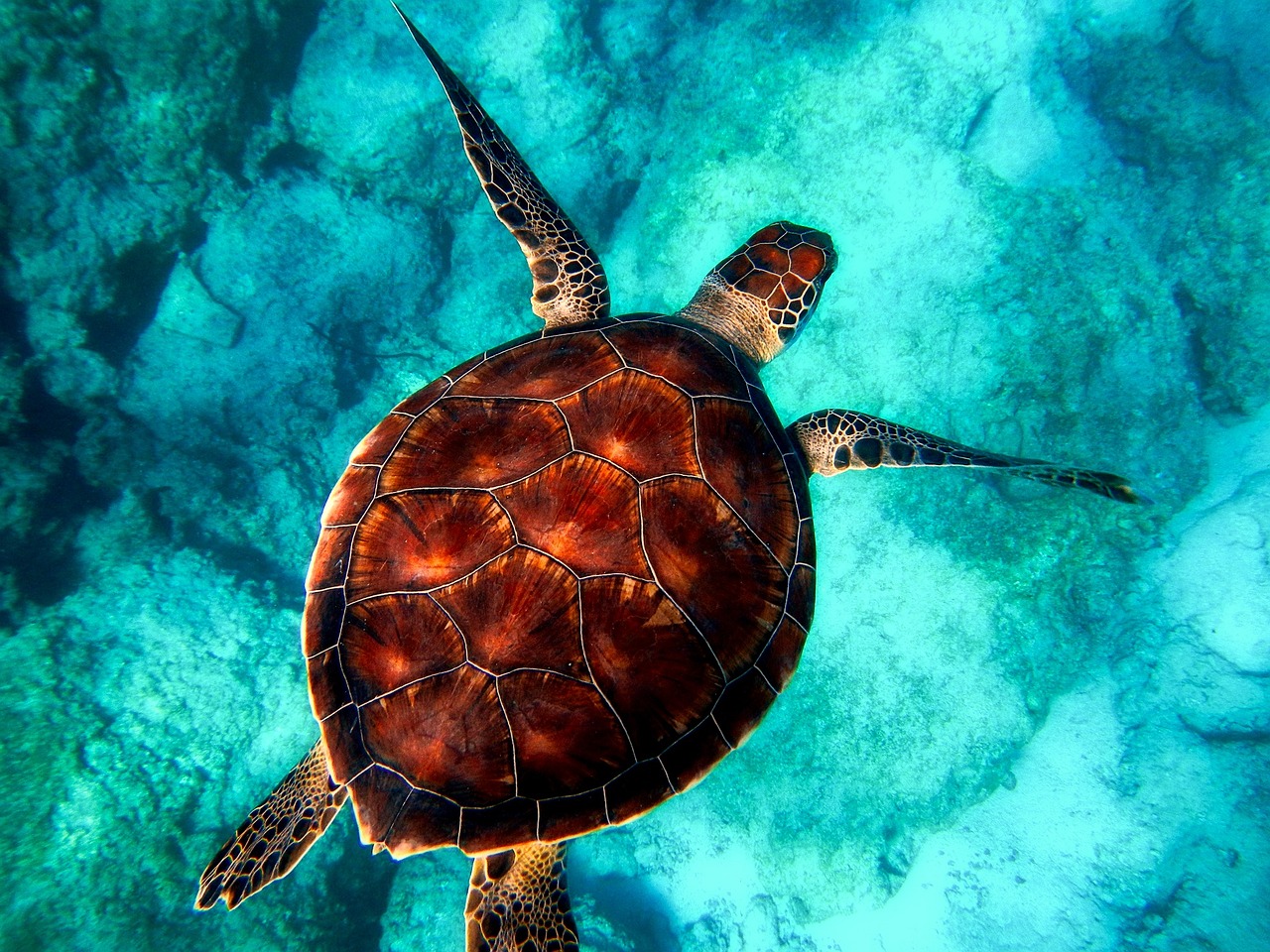
Existing WARN site asset
In brief
Sea turtles are a group of seven species of large, long-lived marine reptiles whose conservation status ranges from Least Concern to Critically Endangered, with most species threatened by fishing bycatch, egg poaching, plastic pollution and coastal development.
Also in Animals A to Z · Animals that start with S
How you can help
You can symbolically adopt a sea turtle from £5 a month — a donation to WARN’s sea turtle appeal, with a personalised certificate you can keep or give as a gift — or give once to where it is needed most.
By WARN Research & Conservation TeamLast updated
Sea turtles are air-breathing marine reptiles that have crossed the world's oceans for more than 100 million years. The seven living species fall into two families: the hard-shelled Cheloniidae (green, loggerhead, hawksbill, flatback, Kemp's ridley and olive ridley) and the leathery-shelled Dermochelyidae, represented only by the giant leatherback. They migrate thousands of kilometres between feeding grounds and the very beaches where they hatched, returning decades later to nest. Today their survival is shaped almost entirely by human pressure: accidental capture in fishing gear, egg poaching, plastic pollution and coastal light that disorients hatchlings. Several species nest on beaches inside WARN partner countries, where protecting eggs and reducing bycatch can change a population's future.
7
Living species worldwide
100+ million yrs
Time sea turtles have existed
1 in ~1,000
Hatchlings that reach adulthood
All 7
Species on CITES Appendix I
Figures sourced from IUCN Red List of Threatened Species, IUCN Red List - Green Turtle (Chelonia mydas), Wikipedia - Sea turtle and other references on this page.
Sea Turtle: Quick Facts
| Lifespan | Often 70+ years in the wild |
|---|---|
| Weight | 35 kg (Kemp's ridley) up to ~640 kg (leatherback) |
| Size | Shell ~60 cm to over 1.8 m by species |
| Diet | Varies: seagrass, algae, sponges, jellyfish, crabs and molluscs |
| Incubation | About 45 to 70 days in beach sand |
| Young | Roughly 50 to 130 eggs per clutch, several clutches a season |
| Baby name | Hatchling |
| Group name | A bale (collective term for turtles) |
| Top speed | Up to about 35 km/h in short bursts |
| CITES | All 7 species on Appendix I (no commercial trade) |
Scientific Classification
| Kingdom | Animalia |
|---|---|
| Phylum | Chordata |
| Class | Reptilia |
| Order | Testudines |
| Superfamily | Chelonioidea |
| Families | Cheloniidae and Dermochelyidae |
| Species | 7 living species |
Conservation Status
- IUCN Status
- Varies by species: Least Concern to Critically Endangered
- Population
- Not reported as a single global figure; assessed per species and per nesting subpopulation
- Trend
- Mixed; some populations recovering (e.g. green turtle) while others decline
- Assessed
- Green turtle reassessed 2025; other species assessed 2018-2024
- CITES
- Appendix I (all seven species)
The IUCN evaluates each sea turtle species, and often each regional subpopulation, separately. The hawksbill and Kemp's ridley are Critically Endangered, the loggerhead is Endangered, the leatherback and olive ridley are Vulnerable, the green turtle became Least Concern in 2025, and the flatback is Data Deficient.
Did you know?
A sea turtle's sex is decided by temperature, not genes: warmer nest sand tends to produce females and cooler sand produces males, so a hot beach can hatch a clutch that is almost entirely female.
Key Facts: Sea Turtle
- There are seven living sea turtle species, split between the hard-shelled Cheloniidae and the single leathery-shelled leatherback in Dermochelyidae.
- Conservation status varies sharply: the hawksbill and Kemp's ridley are Critically Endangered, the loggerhead is Endangered, the leatherback and olive ridley are Vulnerable, the green turtle was reassessed to Least Concern in 2025, and the flatback is Data Deficient.
- Accidental capture in fishing gear (bycatch) is the single largest threat to sea turtles globally.
- Egg poaching, plastic pollution, hunting and artificial beach lighting that disorients hatchlings add further pressure.
- All seven species are listed on CITES Appendix I, banning commercial international trade.
- Major nesting beaches lie in WARN partner countries including Indonesia, Malaysia and Brazil, where protection efforts directly affect survival.
The seven species and how they differ
Six sea turtle species belong to the hard-shelled family Cheloniidae: the green turtle (Chelonia mydas), loggerhead (Caretta caretta), hawksbill (Eretmochelys imbricata), flatback (Natator depressus), Kemp's ridley (Lepidochelys kempii) and olive ridley (Lepidochelys olivacea). The seventh, the leatherback (Dermochelys coriacea), is the sole member of Dermochelyidae and the largest of all, reaching well over 1.8 metres and 600 kilograms with a flexible, ridged carapace rather than a bony shell. Diets and habitats differ by species: greens graze seagrass and algae as adults, hawksbills feed on sponges among coral reefs, leatherbacks specialise in jellyfish, and ridleys and loggerheads take crabs, molluscs and other invertebrates. The Kemp's ridley is the rarest and most range-restricted, nesting mainly in the western Gulf of Mexico, while the flatback is confined to the Australian continental shelf.
Why most sea turtles are threatened
The greatest single danger is bycatch: turtles drown or are injured when caught in trawls, gillnets and longlines set for other catch. On nesting beaches, eggs are dug up for food or sale, and females and juveniles are still hunted for meat and for hawksbill shell. Plastic pollution is lethal because floating bags and film resemble jellyfish, and ingested debris blocks the gut. Coastal development brings artificial light that draws hatchlings away from the sea toward roads and predators, while rising sand temperatures from a warming climate skew hatchling sex ratios toward females. Because turtles take decades to mature and return to specific beaches to nest, populations recover slowly and a single damaged nesting site can set a population back for years.
Signs of recovery where protection works
Sea turtles show that sustained protection pays off. In October 2025 the IUCN reassessed the green turtle from Endangered to Least Concern after global nesting numbers rose by more than a quarter since the 1970s, driven by decades of beach protection, egg-collection bans and bycatch-reduction measures in countries including Mexico and Brazil. The downlisting applies to the species as a whole; several regional subpopulations, such as those in the Indian Ocean, remain threatened and still need active management. The lesson is consistent across species: guarding nesting beaches, removing turtles from fishing gear and keeping hatchling corridors dark can move a population from decline toward growth.
The seven sea turtle species at a glance
| Species | Scientific name | IUCN status | Main diet |
|---|---|---|---|
| Green turtle | Chelonia mydas | Least Concern (2025) | Seagrass and algae |
| Loggerhead | Caretta caretta | Endangered | Crabs, molluscs, invertebrates |
| Hawksbill | Eretmochelys imbricata | Critically Endangered | Sponges on coral reefs |
| Kemp's ridley | Lepidochelys kempii | Critically Endangered | Crabs and other crustaceans |
| Olive ridley | Lepidochelys olivacea | Vulnerable | Crustaceans, molluscs, jellyfish |
| Leatherback | Dermochelys coriacea | Vulnerable | Jellyfish and soft-bodied prey |
| Flatback | Natator depressus | Data Deficient | Soft corals, sea cucumbers, jellyfish |
What WARN Does
WARN publishes this guide for education and is developing support through assessed animal-welfare grants. A species range, source citation or photograph does not establish a recipient or funding agreement. Check /about/where-your-money-goes/#grant-register for published grant and payment records; records not yet published must not be read as zero activity. Browse /appeals/ for the purposes currently available to support.
Your gift helps WARN partners on nesting coasts in Indonesia, Malaysia, Brazil and beyond guard turtle eggs from poachers, free turtles tangled in fishing gear, and keep hatchling beaches dark so the next generation reaches the sea.
Sea Turtle: Frequently Asked Questions
How many species of sea turtle are there?
Are sea turtles endangered?
What is the biggest threat to sea turtles?
What is the largest sea turtle?
How long do sea turtles live?
What do sea turtles eat?
Where do sea turtles live?
Are sea turtles dangerous?
How big is a sea turtle?
Sources & References
Population figures, conservation status and biological facts on this page are drawn from authoritative scientific and intergovernmental sources.
Terms used on this page
Plain-English definitions, from our wildlife and conservation glossary.
Latest Sea Turtle Stories
Quick, fact-checked reads on the sea turtle — amazing facts, key questions and the threats it faces.
Briefings
Kalimantan forest fires 2026: orangutans, smoke and how to help
What official reports say about Kalimantan’s forest fires, Sempurna the orangutan, smoke and wildlife rescue—and how to help through informed giving or sharing.
Read the storyBriefings
Three Rehabilitated Orangutans Released Back Into the Wild in East Kalimantan
Three Bornean orangutans — Bagus, Eboni and Ruby — were released into a protected forest in East Kutai, East Kalimantan, on 23 June 2026, after years of rehabilitation following rescue from the illegal pet trade. All three are Critically Endangered Pongo pygmaeus.
Read the storySpecies
Why Are Orangutans Endangered? Palm Oil, Deforestation and the Rescue Crisis in Borneo
Orangutans are endangered because of a single dominant cause: deforestation. All three remaining species have been reduced to small, fragmented populations in what remains of Borneo's and Sumatra's lowland and peat-swamp forests — and the crisis is getting worse, not better.
Read the storyExplore more animals
Discover more animals, their habitats and their conservation status in the WARN wildlife-guide library.