Thailand's wildlife-tourism industry attracts millions of visitors a year, but a large share of its venues are not what they appear. Behind the photo-op smile of a chained elephant or a sedated tiger sit welfare practices the international animal-welfare community has documented for decades.
The problem
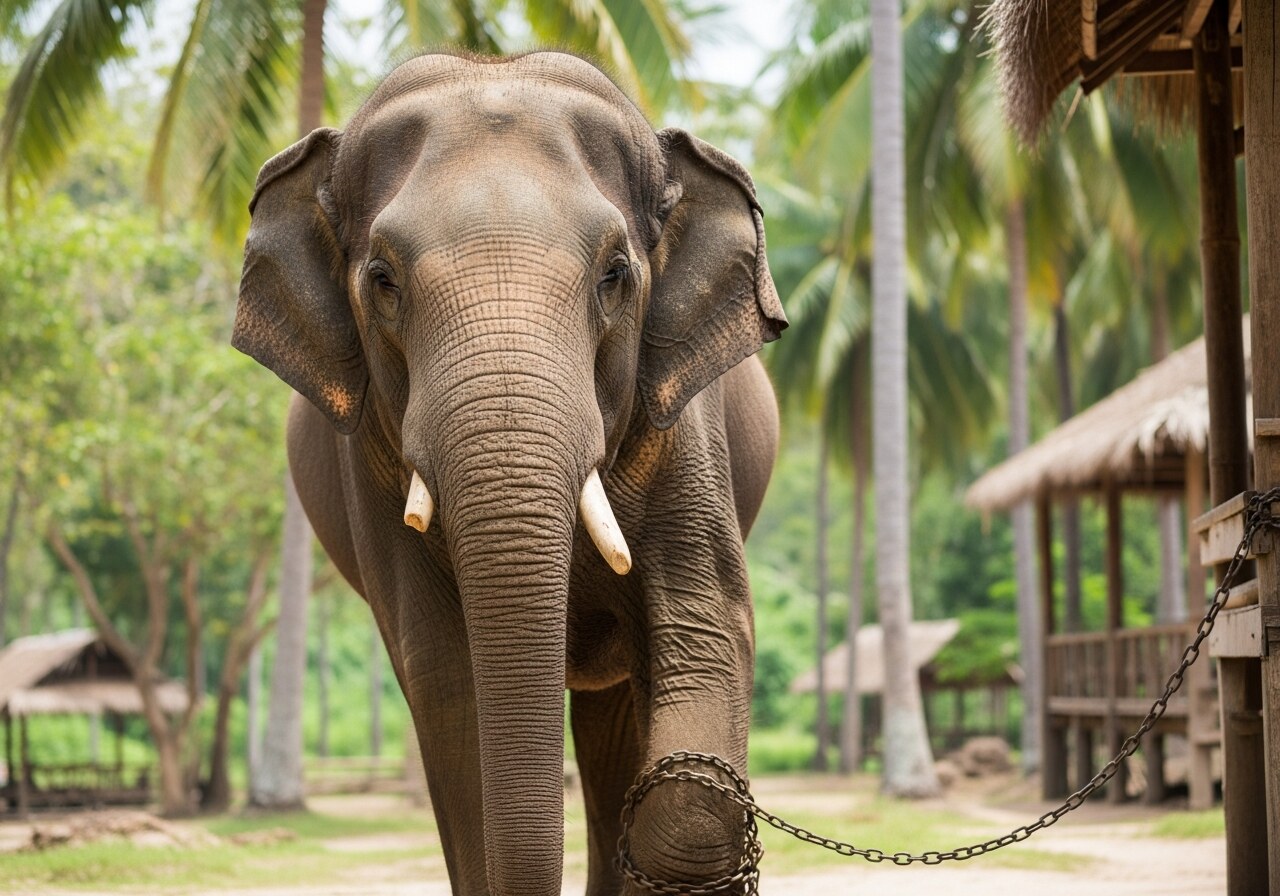
- Thousands of elephants are held in Thai tourism venues, many subjected to severe traditional training practices as juveniles.
- Sedation is routinely used in tiger and big-cat photo venues to keep adult animals docile around tourists.
- Slow lorises offered to tourists for handling often have their teeth clipped without anaesthetic — a procedure with a high mortality rate.
- True sanctuaries do not offer rides, baths, performances, or hands-on contact with adult predators.
How to spot an ethical sanctuary
Genuine sanctuaries observe four principles: no breeding, no public contact with dangerous animals, no performances, and no buying or selling of wildlife. If a venue advertises elephant rides, baby-tiger photos, or slow-loris cuddles, it is not a sanctuary.
What WARN is preparing to do
Our Thailand programme will support the retirement of bears, macaques, and lorises out of tourism operations into species-appropriate sanctuary care. We are also building consumer-education resources to help tourists pick venues that do not cause harm. Your support is what makes this work possible.
We need your support to make this happen
World Animal Rescue Network is at the launch stage of this work. We do not yet have rescue numbers to share — and that is exactly why your support matters now. Every donation helps us put trained teams on the ground, secure veterinary supplies and equipment, and reach the first animals before they are lost.
Donate today to fund our first deployments, or sponsor an animal to back a specific species through rehabilitation. You can also join the network as a volunteer, fundraiser, or monthly supporter.