Cat Breed · United States
Exotic Shorthair
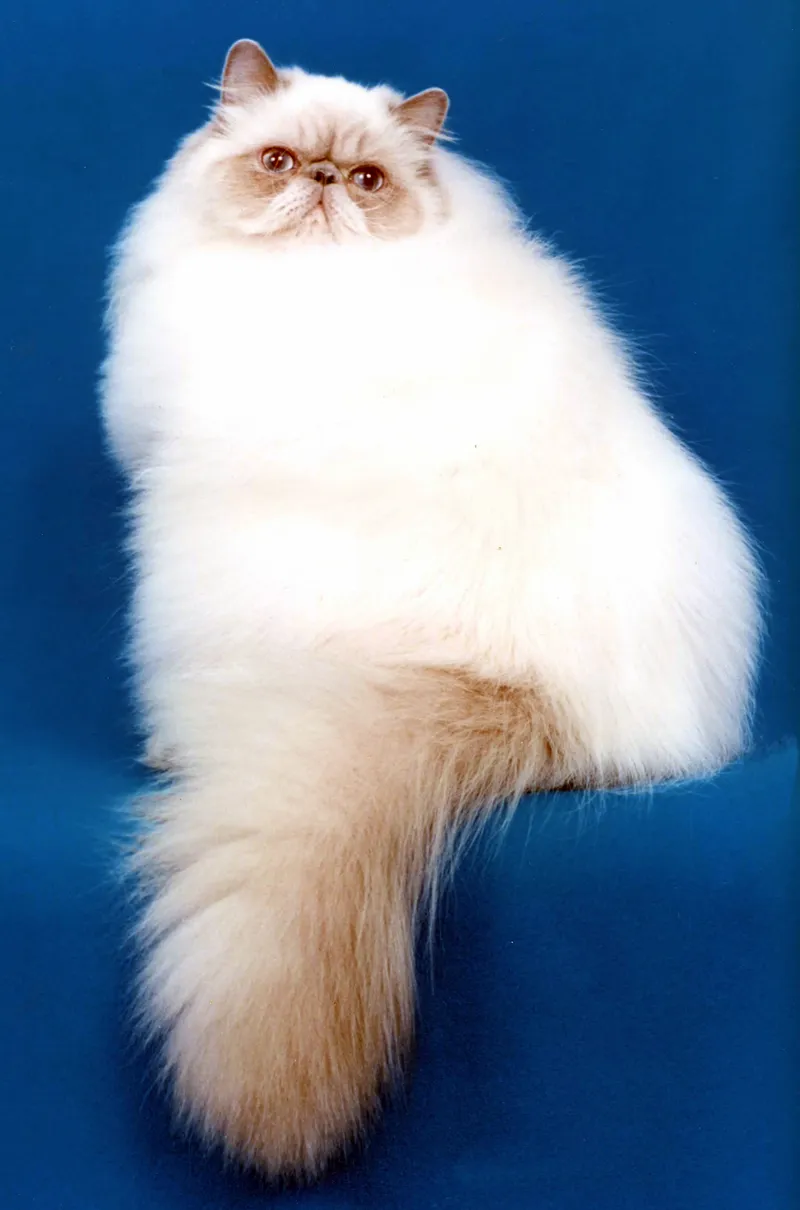
The 'lazy man's Persian' — flat face with a plush short coat.
By WARN Research & Conservation TeamLast updated
In brief
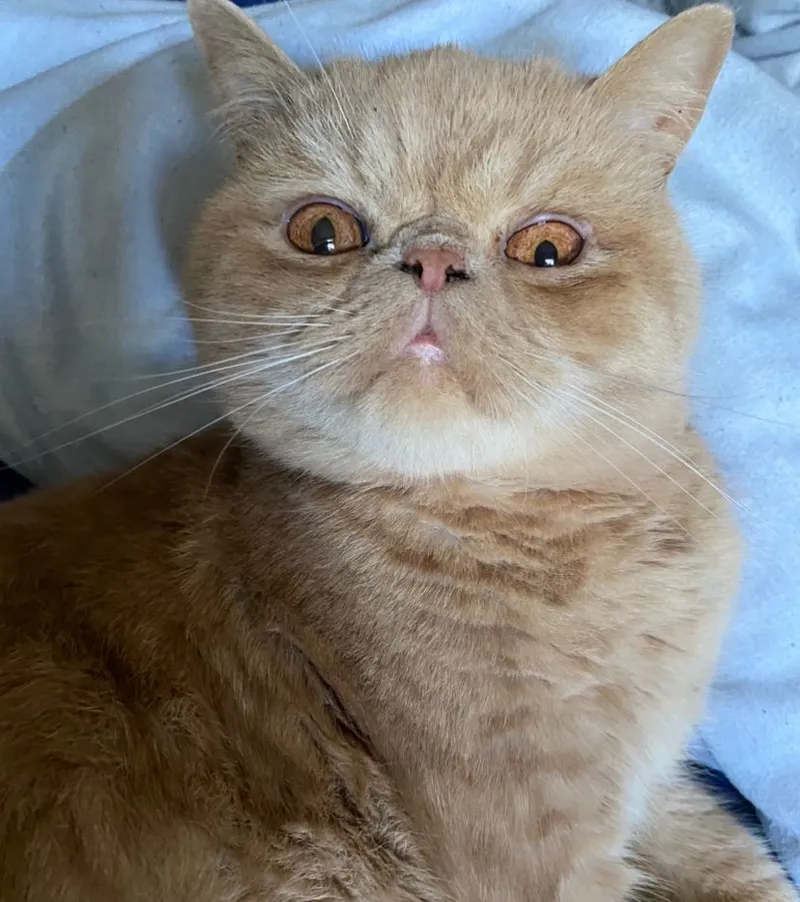
The Exotic Shorthair is a medium, calm and affectionate cat, essentially a Persian in a short, plush coat, with the same flat face and sweet, gentle nature. Nicknamed 'the lazy man's Persian', it offers Persian looks and temperament with far less grooming.
What are the key facts about a Exotic Shorthair?
The Exotic Shorthair is a cat breed from United States: medium (3–6 kg), calm, affectionate, gentle. The 'lazy man's Persian' — flat face with a plush short coat.
| Origin | United States |
|---|---|
| Size | Medium (3–6 kg) |
| Weight | Typically 3-6 kg (7-13 lb), with a cobby, heavy-boned build. |
| Lifespan | 13–17 years |
| Coat | Short to medium, dense, soft and plush, standing slightly away from the body like teddy-bear fur. It needs far less work than a Persian's, but a quick comb two or three times a week reduces shedding and matting; facial folds should be wiped to keep them clean. |
| Temperament | Calm, affectionate, gentle |
| Good with | A gentle, easy-going companion that suits families, quieter children, flats and homes with other calm pets. Its placid, undemanding nature makes it ideal for first-time owners and people seeking a low-energy lap cat. Because of its flat face it should be kept indoors or in safe, temperate conditions. |
Is a Exotic Shorthair a good cat for you?
A Exotic Shorthair is a good cat when your home matches a gentle, easy-going companion that suits families, quieter children, flats and homes with other calm pets. its placid, undemanding nature makes it ideal for first-time owners and people seeking a low-energy lap cat. because of its flat face it should be kept indoors or in safe, temperate conditions.. It is a calm, affectionate, gentle medium (3–6 kg) breed from United States. Short skulls also mean heat, flying and exercise are not casual.
The 'lazy man's Persian' — flat face with a plush short coat. That one-line pitch is not a care plan. Factor grooming (Short to medium, dense, soft and plush, standing slightly away from the body like teddy-bear fur. It needs far less work than a Persian's, but a quick comb two or three times a week reduces shedding and matting; facial folds should be wiped to keep them clean.), typical adult size (Typically 3-6 kg (7-13 lb), with a cobby, heavy-boned build.), and the health issues listed below before you pay a deposit.
Meet adults of the breed, not only puppies or kittens, and prefer rescue or health-screened homes. A Exotic Shorthair that looks right in a photo can still be the wrong animal for a small flat, a full-time office job, or a household that wanted a low-energy companion.
What is a Exotic Shorthair?
The 'lazy man's Persian' — flat face with a plush short coat. Origin is United States; coat or markings are described as Short to medium, dense, soft and plush, standing slightly away from the body like teddy-bear fur. It needs far less work than a Persian's, but a quick comb two or three times a week reduces shedding and matting; facial folds should be wiped to keep them clean..
Kennel and registry labels describe a type. Individual Exotic Shorthairs still vary, and rescue animals may be mixes.
Where does the Exotic Shorthair come from?
Exotic Shorthairs come from United States. The Exotic Shorthair arose in the United States in the late 1950s and 1960s when breeders crossed Persians with American Shorthairs (and other shorthairs) to introduce new traits.
Rather than a separate breed, the resulting plush-coated, Persian-type cats were recognised as the Exotic Shorthair from 1966. Persian outcrossing has continued to maintain type, so the Exotic is effectively a short-haired Persian sharing the same standard apart from coat length.
That origin still shows. A Exotic Shorthair is medium (3–6 kg) and calm, affectionate, gentle, typically living 13–17 years. Use the history as context for care and conservation, not as folklore to repeat without sources.
How much care does a Exotic Shorthair need?
Plan 13–17 years of food, vet care, grooming and time. A Exotic Shorthair is medium (3–6 kg) (Typically 3-6 kg (7-13 lb), with a cobby, heavy-boned build.) from United States, with coat care described as short to medium, dense, soft and plush, standing slightly away from the body like teddy-bear fur. it needs far less work than a persian's, but a quick comb two or three times a week reduces shedding and matting; facial folds should be wiped to keep them clean..
Match daily exercise to the calm, affectionate, gentle temperament rather than to Instagram.
Grooming follows the coat, not a generic clip: Short to medium, dense, soft and plush, standing slightly away from the body like teddy-bear fur. It needs far less work than a Persian's, but a quick comb two or three times a week reduces shedding and matting; facial folds should be wiped to keep them clean.. Keep the animal lean; extra weight is a joint and heart tax, especially in a medium cat.
Budget for unexpected vet bills. The health section below is why “cheap to buy” is not the same as cheap to keep.
What surprises people about the Exotic Shorthair?
A few details about the breed, alongside the practical care information in this guide.
- The Exotic Shorthair is judged to the same breed standard as the Persian, differing only in coat length.
- It is nicknamed 'the lazy man's Persian' because it needs much less grooming than its long-haired counterpart.
- Because both parents can carry the long-hair gene, two Exotic Shorthairs can produce long-haired kittens, sometimes called 'Exotic Longhairs'.
- Its dense, springy coat stands out from the body, giving it a rounded, teddy-bear appearance.
What health issues should you know about in a Exotic Shorthair?
Health concerns to discuss with your vet, including changes to watch for and everyday care. This is general guidance, not veterinary advice — always speak to your vet.
Brachycephalic airway syndrome
Short skull shape narrows airways, causing snoring, exercise intolerance, and heat sensitivity.
Care: Avoid hot weather exercise, use harnesses not collars, and discuss surgical options with a vet if breathing is severely affected.
Eye conditions
Breed-related eye problems may include cataracts, progressive retinal atrophy, or cherry eye.
Care: Regular eye checks and prompt vet attention for redness or cloudiness help preserve vision.
Dental disease
Plaque and tartar build-up leads to gum infection and tooth loss.
Care: Brush teeth regularly and schedule professional dental cleanings as your vet advises.
Who should skip a Exotic Shorthair?
Skip a Exotic Shorthair if you are hot climates, frequent flying, or homes that cannot manage heat risk. This United States cat is medium (3–6 kg) and calm, affectionate, gentle — the mismatch is usually lifestyle, not a missing accessory.
This page is allowed to say no. Skip if you are hot climates, frequent flying, or homes that cannot manage heat risk.
A different cat breed on this site may fit. Wanting “a Exotic Shorthair” after a film or a colour photo is not a reason to ignore the skip list.
What are the hidden catches with a Exotic Shorthair?
The hidden cost of a Exotic Shorthair is usually not the purchase price. It is years of care, the health list on this page, and the mismatch between a calm, affectionate, gentle animal and a busy home.
The impulse-buy catch
A Exotic Shorthair from United States is often sold on looks. Coat, colour and size are not a temperament test. Meet the adult animal, ask about health screening, and walk away from pressure sales.
The breathing and heat catch
Exotic Shorthairs with shortened skulls overheat and tire faster. Avoid hot-weather exercise, use a harness, and treat noisy breathing as a veterinary issue, not a breed quirk.
The brachycephalic airway syndrome catch
Short skull shape narrows airways, causing snoring, exercise intolerance, and heat sensitivity. Avoid hot weather exercise, use harnesses not collars, and discuss surgical options with a vet if breathing is severely affected.
The eye conditions catch
Breed-related eye problems may include cataracts, progressive retinal atrophy, or cherry eye. Regular eye checks and prompt vet attention for redness or cloudiness help preserve vision.
How does a Exotic Shorthair compare with Himalayan and Russian Blue?
A Exotic Shorthair is not interchangeable with Himalayan and Russian Blue. Compare origin, size, lifespan and temperament before you choose — those four lines prevent most regret.
| Cat fact | Exotic Shorthair | Himalayan | Russian Blue |
|---|---|---|---|
| Origin | United States | United States | Russia |
| Size | Medium (3–6 kg) | Medium (3–6 kg) | Medium (3–5 kg) |
| Lifespan | 13–17 years | 13–17 years | 13–17 years |
| Temperament | Calm, affectionate, gentle | Calm, sweet, indoor-loving | Shy, gentle, intelligent |
What is the verdict on the Exotic Shorthair?
Choose a Exotic Shorthair only if the care, skip-if and health sections still look like your life after a week of thinking. Otherwise pick a different cat or wait. Rescue is usually the better first door than a waiting-list puppy or kitten.
If the match is real, budget for 13–17 years of vet care and do not skip health screening. If it is not, walking away is the kind choice — for you and for the animal.
Every cat deserves a chance
Whatever breed you love, countless cats live without a home or care. A symbolic adoption or a gift to WARN funds community-cat welfare — neutering, vaccination and treatment for cats most people never see.