Wildlife Guide · Australia & Indonesia
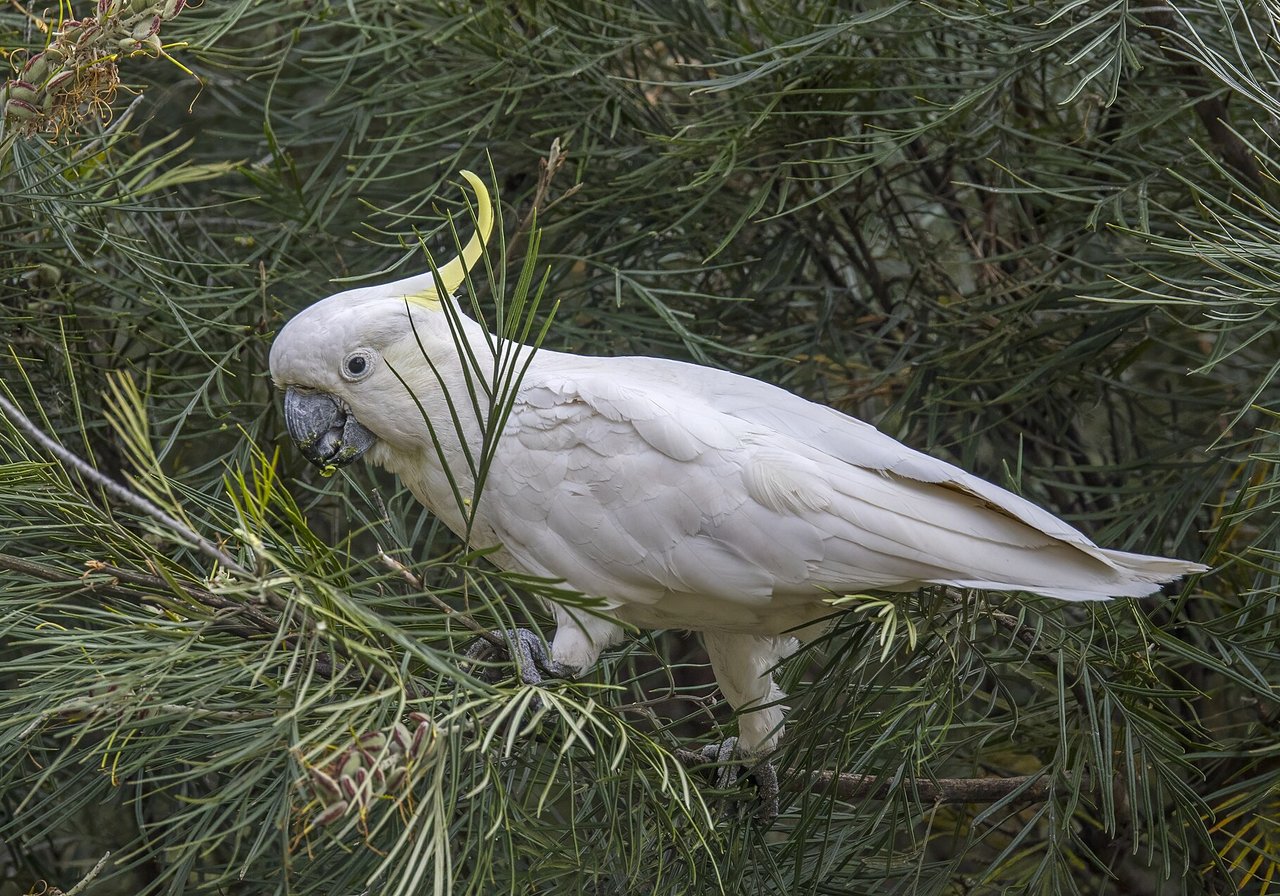
Cockatoo
Family Cacatuidae — 21 species in 4 genera (Cacatua, Calyptorhynchus, Callocephalon, Nymphicus)
Crested parrots of Australasia — loud, long-lived and deeply threatened by trade.
Source: Wikimedia Commons
In brief
Cockatoos are crested parrots (family Cacatuidae) with 21 species across Australasia — intelligent and long-lived birds threatened by illegal trapping for the pet trade, with several Indonesian species Critically Endangered.
Also in Animals A to Z · Animals that start with C
By WARN Research & Conservation TeamLast updated
Cockatoos are parrots of the family Cacatuidae, distinguished by erectile crests, often pale plumage and powder-down feather maintenance. Twenty-one species occur mainly in Australia, Indonesia and Oceania — from the familiar sulphur-crested cockatoo to the Critically Endangered yellow-crested cockatoo of Indonesia. Cockatoos are intelligent, social and among the longest-lived parrots. They are heavily trapped for the pet trade, especially in Indonesia and East Timor, where wild populations of several species have collapsed.
21
Living cockatoo species
CITES I
Most wild-sourced trade restricted
60–80 yrs
Potential lifespan of large cockatoos
CR
Yellow-crested and other species Critically Endangered
Figures sourced from IUCN Red List — yellow-crested cockatoo, IUCN Red List — Carnaby's black cockatoo, Smithsonian National Zoo — cockatoo and other references on this page.
Cockatoo: Quick Facts
| Family | Cacatuidae (21 species) |
|---|---|
| Distinctive trait | Erectile crest and powder-down |
| Range | Australia, Indonesia, Oceania |
| Lifespan | Up to 60–80 years (large species) |
| Trade | Most species CITES Appendix I |
| Critically Endangered | Yellow-crested cockatoo among others |
Scientific Classification
| Kingdom | Animalia |
|---|---|
| Phylum | Chordata |
| Class | Aves |
| Order | Psittaciformes |
| Family | Cacatuidae |
Conservation Status
- IUCN Status
- Varies by species. Yellow-crested cockatoo is Critically Endangered; salmon-crested cockatoo is Critically Endangered; Carnaby's black cockatoo is Endangered; sulphur-crested is Least Concern in much of Australia.
- Population
- Yellow-crested: 1,000–2,499 mature individuals; many Australian species in tens of thousands but declining regionally
- Trend
- Decreasing for trade-hit Indonesian species; mixed elsewhere
- Assessed
- Varies (e.g. yellow-crested 2018)
- CITES
- Most cockatoos on CITES Appendix I
Island-endemic cockatoos face higher extinction risk than widespread Australian species.
Key Facts: Cockatoo
- Cockatoos are parrots with movable crests — they raise feathers when alarmed or excited.
- Indonesia is a critical range country; trapping for export devastated yellow-crested and salmon-crested cockatoos.
- Cockatoos are louder and more demanding than many parrots — unsuitable for typical flats or busy households.
- Powder-down produces a fine dust that can trigger allergies; a consideration for captive care.
- Palm cockatoo — largest cockatoo — uses tools to drum on hollow trees in courtship displays.
- WARN links cockatoo welfare to broader parrot anti-trafficking work in Brazil and Colombia and education in Malaysia and Indonesia.
What is a cockatoo?
Cockatoos form a distinct branch of the parrot order native primarily to Australasia. Unlike many colourful parrots, most cockatoos wear white, black or pink plumage with striking crests. They lack the oil gland used by many birds for preening, instead producing powder-down that cleans feathers — visible as dust in aviaries.
Genera include Cacatua (white cockatoos such as sulphur-crested and umbrella), Calyptorhynchus (black cockatoos of Australia), Callocephalon (gang-gang) and Nymphicus (cockatiel — the smallest cockatoo). Sizes range from the 30 cm cockatiel to the 60 cm palm cockatoo.
Cockatoos pair bond strongly and roost communally. Large flocks of galahs or corellas can aggregate in agricultural landscapes, sometimes creating conflict with farmers — a management challenge distinct from endangered island species.
Intelligence, vocalisation and welfare
Cockatoos excel at manipulation: unscrewing fixtures, opening latches and destroying timber is common in captivity without enrichment. They learn screams and phrases, using loud contact calls natural to open woodland — behaviour that becomes problematic in apartments.
Wild birds spend hours foraging, chewing bark and extracting seeds. Captive cockatoos need large aviaries, chewable branches and social partners. Single birds often develop self-mutilation and feather loss.
Lifespans of 40 to 80 years mean rehoming crises when owners age or relocate. Sanctuaries report cockatoos among the most surrendered large parrots.
Trade and conservation
The yellow-crested cockatoo (Cacatua sulphurea) exemplifies trade-driven collapse: once common across Indonesia and East Timor, trapping for the cage-bird market reduced wild numbers by over 80 percent in three generations. The species is Critically Endangered, with fewer than 2,500 mature individuals. Similar patterns affect the salmon-crested cockatoo of the Moluccas.
Australian black cockatoos face habitat loss as old-growth forest is cleared for agriculture; Carnaby's black cockatoo is Endangered. CITES lists most cockatoos on Appendix I, banning commercial international trade in wild specimens.
Recovery requires nest guarding, export enforcement, community awareness and sustainable ecotourism. Captive breeding supplies legal birds but cannot replace wild populations without habitat security.
Cockatoos and people
In Australia cockatoos are cultural icons — sometimes celebrated, sometimes cursed for crop damage. In Indonesia they symbolise status and spiritual connection, which fuels demand despite legal protection.
Responsible engagement supports accredited sanctuaries and rejects social-media markets selling unregistered birds. Tourists should avoid venues offering cockatoo photo ops tied to unknown sourcing.
WARN's parrot appeal connects to cockatoo conservation through shared trafficking routes and welfare standards. Readers learning about cockatoos should explore the parrot hub guide and macaw pages for the wider Psittaciformes picture.
What WARN Does
WARN supports parrot anti-trafficking and rehabilitation in Brazil and Colombia and publishes free education reaching readers in Indonesia and Malaysia — key cockatoo range states. Confiscated parrots and cockatoos receive triage at partner centres; this guide explains why crested birds belong in forest canopies, not smuggler's crates.
If this guide helps you understand wildlife and the pressures it faces, a gift to WARN supports habitat protection and free public education in our partner countries.
Cockatoo: Frequently Asked Questions
How many cockatoo species are there?
Are cockatoos parrots?
Why are yellow-crested cockatoos Critically Endangered?
How long do cockatoos live?
Are cockatoos good pets?
What is the largest cockatoo?
What do cockatoos eat?
Where do cockatoos live?
Are cockatoos dangerous?
How big is a cockatoo?
Sources & References
Population figures, conservation status and biological facts on this page are drawn from authoritative scientific and intergovernmental sources.
Terms used on this page
Plain-English definitions, from our wildlife and conservation glossary.
Latest Cockatoo Stories
Quick, fact-checked reads on the cockatoo — amazing facts, key questions and the threats it faces.
Briefings
Kalimantan forest fires 2026: orangutans, smoke and how to help
What official reports say about Kalimantan’s forest fires, Sempurna the orangutan, smoke and wildlife rescue—and how to help through informed giving or sharing.
Read the storyBriefings
Three Rehabilitated Orangutans Released Back Into the Wild in East Kalimantan
Three Bornean orangutans — Bagus, Eboni and Ruby — were released into a protected forest in East Kutai, East Kalimantan, on 23 June 2026, after years of rehabilitation following rescue from the illegal pet trade. All three are Critically Endangered Pongo pygmaeus.
Read the storySpecies
Why Are Orangutans Endangered? Palm Oil, Deforestation and the Rescue Crisis in Borneo
Orangutans are endangered because of a single dominant cause: deforestation. All three remaining species have been reduced to small, fragmented populations in what remains of Borneo's and Sumatra's lowland and peat-swamp forests — and the crisis is getting worse, not better.
Read the storyExplore more animals
Discover more animals, their habitats and their conservation status in the WARN wildlife-guide library.