Wildlife Guide · Western North America & Central America
Cougar
Puma concolor (Linnaeus, 1771)
The Americas' silent stalker — more widespread than any other wild cat.
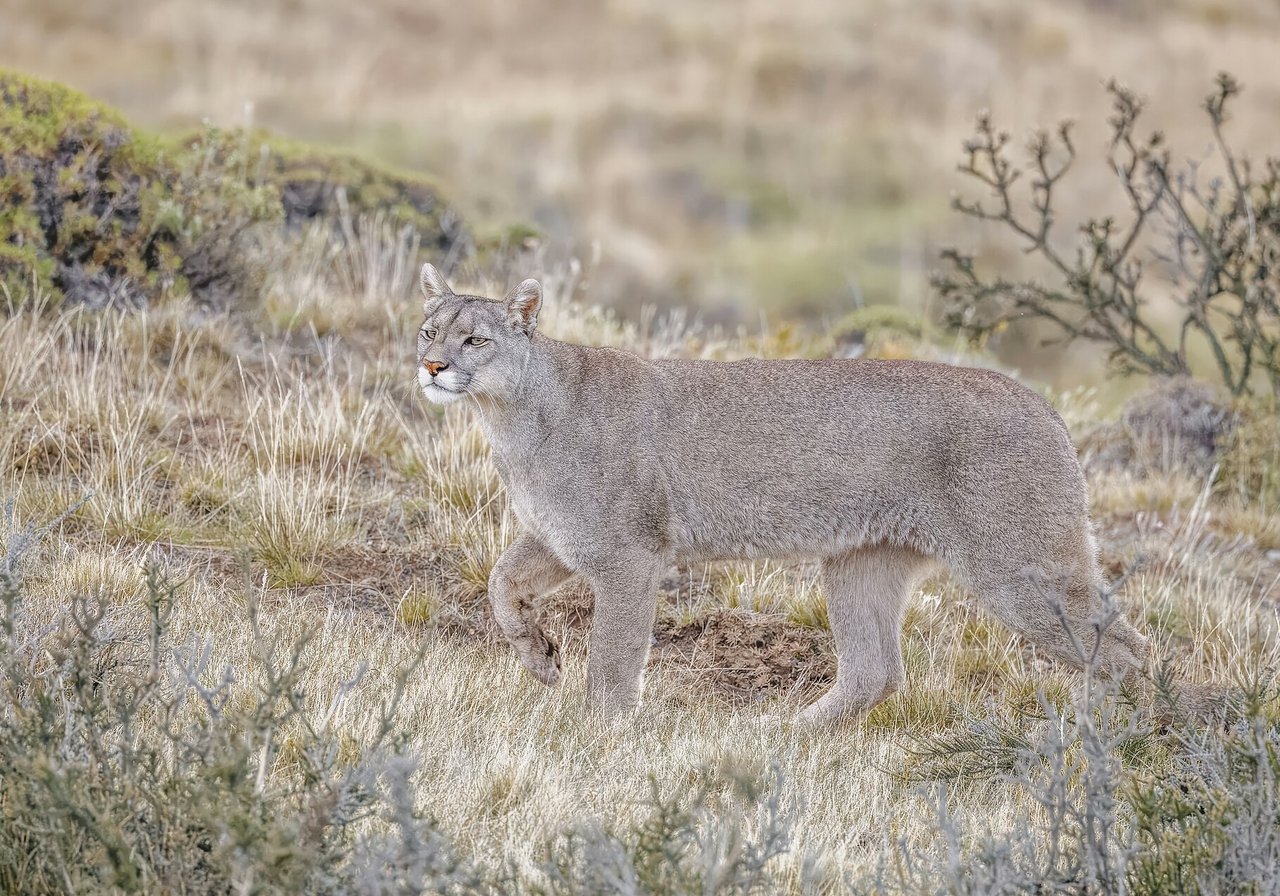
Source: Wikimedia Commons
In brief
The cougar (Puma concolor) — also known as puma or mountain lion — is a large solitary cat native to the Americas, listed as Least Concern by the IUCN; it is the most widespread wild cat in the Western Hemisphere but faces habitat loss and human conflict in many regions.
Also in Animals A to Z · Animals that start with C
By WARN Research & Conservation TeamLast updated
The cougar — also called puma, mountain lion, panther and catamount — is a large, solitary felid native to the Americas from the Canadian Yukon to the southern Andes. It is the most widely distributed wild cat in the Western Hemisphere and among the largest predators on the continent. Cougars occupy an extraordinary range of habitats, from coastal rainforest and desert scrub to alpine meadows and suburban woodland edges. Although listed as Least Concern globally, many populations face habitat fragmentation, road mortality and conflict with livestock owners. In parts of North America, cougars are recolonising former range as deer populations recover, bringing them into renewed contact with people.
Least Concern
IUCN Red List status (2014 assessment)
8 subspecies
Recognised across North and South America
64–220 cm
Head-and-body length (males larger)
Appendix II
CITES listing for most populations
Figures sourced from IUCN Red List — Puma concolor, CITES — Checklist of CITES Species, Smithsonian National Zoo — puma facts .
Cougar: Quick Facts
| Common names | Cougar, puma, mountain lion, panther |
|---|---|
| Weight | 29–100 kg (females smaller than males) |
| Diet | Carnivorous — mainly deer and ungulates |
| Social structure | Solitary except mothers with kittens |
| Lifespan | Up to ~13 years in the wild; longer in captivity |
| CITES | Appendix II (most populations) |
Scientific Classification
| Kingdom | Animalia |
|---|---|
| Phylum | Chordata |
| Class | Mammalia |
| Order | Carnivora |
| Family | Felidae |
| Genus | Puma |
| Species | Puma concolor (Linnaeus, 1771) |
Conservation Status
- IUCN Status
- Least Concern globally (IUCN, 2014). The Florida panther subspecies is Critically Endangered; the eastern cougar was declared extinct in 2018.
- Population
- No global estimate; tens of thousands across the Americas with stable or increasing trends in parts of western North America
- Trend
- Stable globally; decreasing locally where habitat is fragmented
- Assessed
- 2014
- CITES
- Appendix II (most populations)
Regional subspecies and isolated populations may warrant separate assessment.
Key Facts: Cougar
- Cougar, puma, mountain lion and panther all refer to the same species — Puma concolor.
- It is the most widespread wild cat in the Americas, ranging from Canada to Patagonia.
- Cougars are solitary ambush hunters, feeding mainly on deer and other ungulates.
- They are capable long-distance travellers; radio-tracked individuals have crossed hundreds of kilometres.
- Human conflict and road kills are the main threats in developed parts of their range.
- Cougars rarely attack people; incidents are extremely rare compared with domestic dog bites.
Names, taxonomy and range
Puma concolor belongs to the genus Puma, separate from the Panthera big cats. Its many common names reflect regional history: 'cougar' from a Tupi word via French, 'puma' from Quechua, 'mountain lion' from early North American settlers, and 'panther' in the south-eastern United States. Eight subspecies are generally recognised, from the North American cougar to the smaller southern Andean forms.
The species once ranged across nearly all of North America but was eradicated from the eastern United States by the early twentieth century. Today, confirmed breeding populations exist again in parts of the Midwest and are occasionally documented east of the Mississippi.
Ecology and hunting behaviour
Cougars are obligate carnivores and keystone predators. A single adult may require a deer-sized prey item every one to two weeks. They hunt by stealth, using cover to approach within striking distance before a short burst of speed. Kills are often cached under leaf litter or snow and revisited over several days.
Home ranges vary enormously: males may patrol 150–1,000 km² depending on prey density, while females occupy smaller territories, often overlapping with several males. Females raise kittens alone, teaching them to hunt over roughly 18 months before independence.
Cougars and people
As cougars recolonise areas near towns and suburbs, encounters with people increase — though attacks remain statistically rare. Most incidents involve young, dispersing males or habituated animals near feeding sites. Wildlife agencies recommend securing livestock at night, removing deer-attracting food sources near homes, and never running if a cougar is encountered. Road mortality is a significant source of death in fragmented landscapes; wildlife crossings and reduced speed limits in known corridors reduce fatalities. Trophy hunting is permitted in some western US states and Canadian provinces under regulated quotas.
Conservation status and threats
The IUCN lists the cougar as Least Concern globally because of its vast range and overall stable population. However, the eastern cougar subspecies (P. c. couguar) was declared extinct in 2018, and the Florida panther (P. c. coryi) remains Critically Endangered with fewer than 200 adults. Habitat fragmentation isolates populations, reducing genetic diversity and increasing inbreeding in small remnants such as the Florida panther. CITES lists most cougar populations on Appendix II, allowing regulated trade. Protecting connected habitat and reducing road mortality are the most effective conservation tools for regional populations.
What WARN Does
WARN publishes this cougar guide as free public education. Our field work focuses on threatened species in partner countries; cougars illustrate how large predators persist alongside people when habitat remains connected and conflict is managed responsibly.
If this guide helps you understand wildlife and the pressures it faces, a gift to WARN supports habitat protection and free public education in our partner countries.
Cougar: Frequently Asked Questions
What is the difference between a cougar and a mountain lion?
Are cougars dangerous to humans?
Where do cougars live?
What do cougars eat?
How big is a cougar?
Are cougars endangered?
How long do cougars live?
Sources & References
Population figures, conservation status and biological facts on this page are drawn from authoritative scientific and intergovernmental sources.
Terms used on this page
Plain-English definitions, from our wildlife and conservation glossary.
Latest Cougar Stories
Quick, fact-checked reads on the cougar — amazing facts, key questions and the threats it faces.
Species
12 Amazing Facts About the Jaguar, the Americas' Biggest Cat
From a skull-piercing bite to a love of swimming, here are 12 fascinating, fact-checked things that make the jaguar the most powerful cat in the Americas.
Read the storySpecies
11 Amazing Facts About the Pink River Dolphin (the Amazon's Blushing Boto)
From a head that swivels 90 degrees to a blush built from battle scars, here are 11 true facts about the Amazon's pink river dolphin, the largest freshwater dolphin on Earth.
Read the storySpecies
Pink River Dolphin vs Tucuxi: How to Tell the Two Amazon Dolphins Apart
Both swim the same Amazon waters, but the pink boto and the grey tucuxi are only distant cousins. Here is how to tell them apart at a glance.
Read the storyExplore more animals
Discover more animals, their habitats and their conservation status in the WARN wildlife-guide library.