Hamster Breed · Mongolia & China (wild species)
Roborovski
The smallest and fastest pet hamster — better watched than cuddled.
By WARN Research & Conservation TeamLast updated
In brief
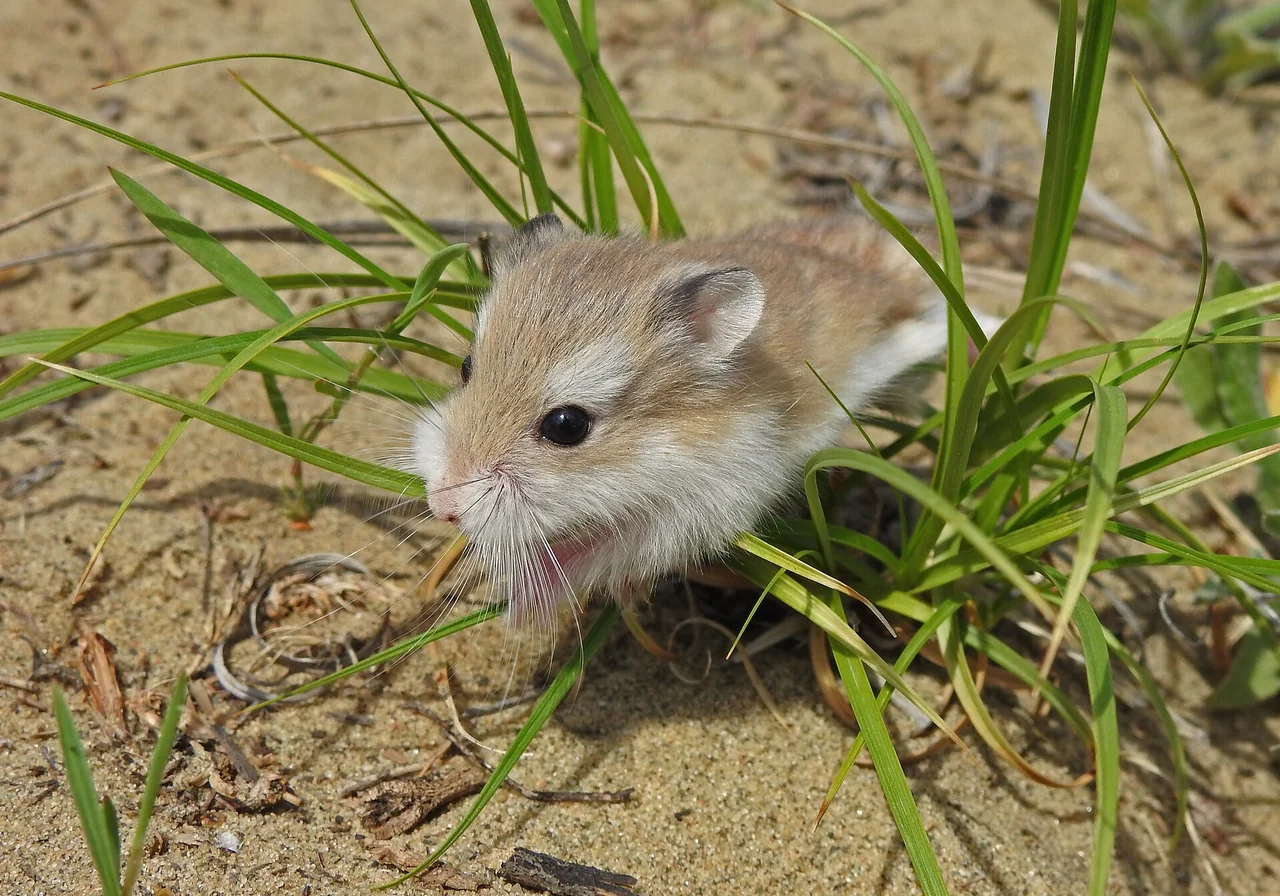
The Roborovski dwarf hamster is the smallest and fastest pet hamster — a desert Phodopus roborovskii better observed than handled. Its defining trait is group tolerance when raised together, with tiny 16 cm wheels, sand baths and secure 6 mm bar spacing.
What are the key facts about a Roborovski?
The Roborovski is a hamster breed from Mongolia & China (wild species): tiny (20–30 g), extremely fast, social in groups, hard to handle. The smallest and fastest pet hamster — better watched than cuddled.
| Origin | Mongolia & China (wild species) |
|---|---|
| Size | Tiny (20–30 g) |
| Adult weight | 20–30 g (0.7–1 oz); 4–5 cm body length excluding tail |
| Lifespan | 1.5–3 years (species-dependent) |
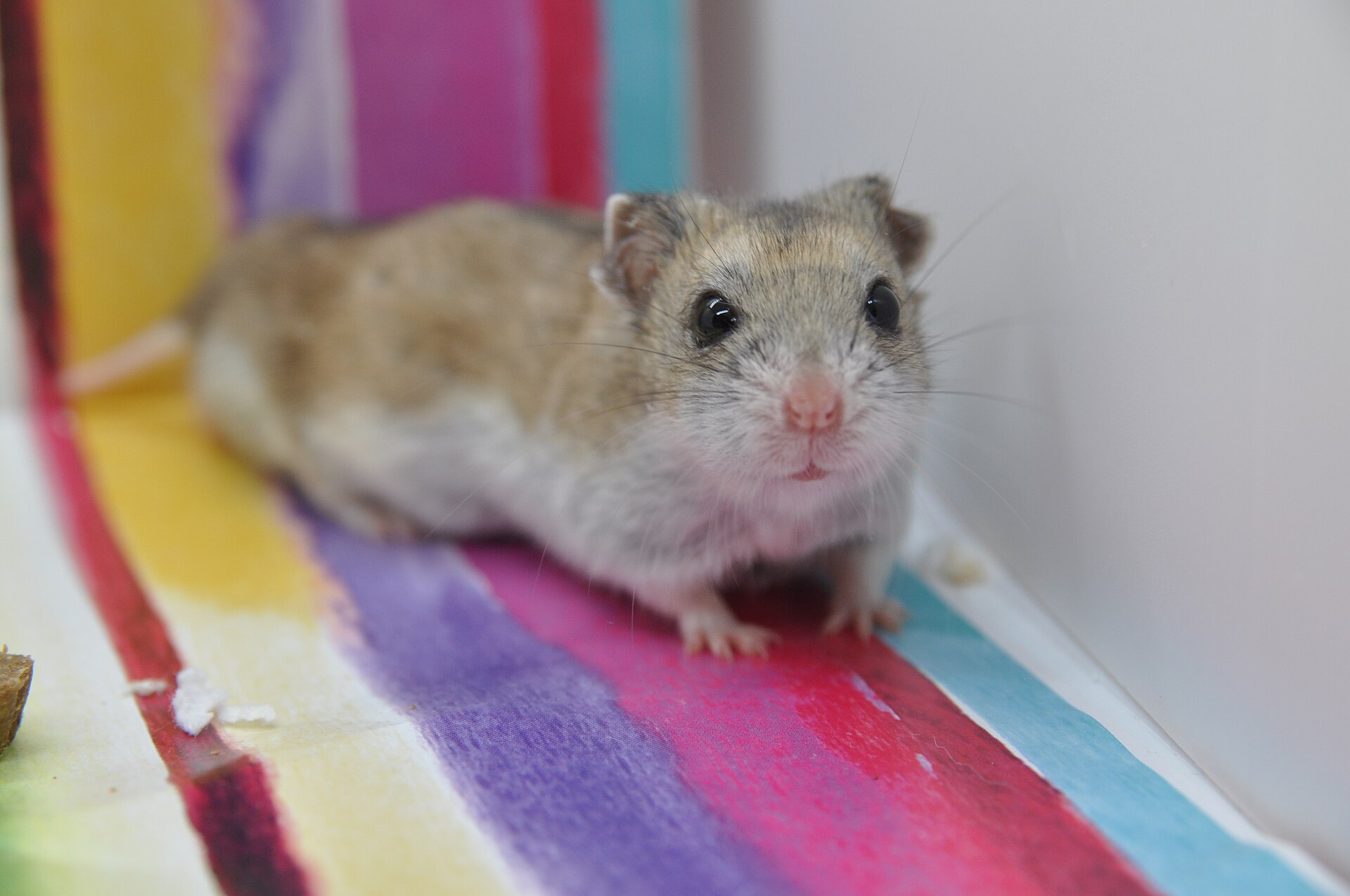
| Coat & colour | Sandy agouti with white belly and distinctive white eyebrows; husky and platinum morphs in captivity. No dorsal stripe like Campbell's. Coat maintained via sand bathing, not water. |
| Temperament | Extremely fast, social in groups, hard to handle |
| Best suited to | Patient keepers who enjoy watching rather than cuddling — same-sex groups possible if raised together, with backup cages ready for sudden splits. |
Is a Roborovski a good hamster for you?
A Roborovski is a good hamster when your home matches patient keepers who enjoy watching rather than cuddling — same-sex groups possible if raised together, with backup cages ready for sudden splits.. It is a extremely fast, social in groups, hard to handle tiny (20–30 g) breed from Mongolia & China (wild species).
The smallest and fastest pet hamster — better watched than cuddled. That one-line pitch is not a care plan. Factor grooming (Sandy agouti with white belly and distinctive white eyebrows; husky and platinum morphs in captivity. No dorsal stripe like Campbell's. Coat maintained via sand bathing, not water.), typical adult size (20–30 g (0.7–1 oz); 4–5 cm body length excluding tail), and the health issues listed below before you pay a deposit.
Meet adults of the breed, not only puppies or kittens, and prefer rescue or health-screened homes. A Roborovski that looks right in a photo can still be the wrong animal for a small flat, a full-time office job, or a household that wanted a low-energy companion.
What is a Roborovski?
The smallest and fastest pet hamster — better watched than cuddled. Origin is Mongolia & China (wild species); coat or markings are described as Sandy agouti with white belly and distinctive white eyebrows; husky and platinum morphs in captivity. No dorsal stripe like Campbell's. Coat maintained via sand bathing, not water..
Kennel and registry labels describe a type. Individual Roborovskis still vary, and rescue animals may be mixes.
Where does the Roborovski come from?
Roborovskis come from Mongolia & China (wild species). Roborovski dwarf hamsters were described from the Gobi Desert in 1903 and entered the Western pet trade in the 1990s.
They are among the least handleable hamsters, rarely sitting still for more than seconds. British welfare groups recommend Roborovskis for adults and teens accepting observational pets. Attempting to tame through daytime grabbing causes chronic stress. Large floor space relative to body size matters more than vertical tubes.
That origin still shows. A Roborovski is tiny (20–30 g) and extremely fast, social in groups, hard to handle, typically living 1.5–3 years (species-dependent). Use the history as context for care and conservation, not as folklore to repeat without sources.
How much care does a Roborovski need?
Plan 1.5–3 years (species-dependent) of food, vet care, grooming and time. A Roborovski is tiny (20–30 g) (20–30 g (0.7–1 oz); 4–5 cm body length excluding tail) from Mongolia & China (wild species), with coat care described as sandy agouti with white belly and distinctive white eyebrows; husky and platinum morphs in captivity. no dorsal stripe like campbell's. coat maintained via sand bathing, not water..
Match daily exercise to the extremely fast, social in groups, hard to handle temperament rather than to Instagram.
Grooming follows the coat, not a generic clip: Sandy agouti with white belly and distinctive white eyebrows; husky and platinum morphs in captivity. No dorsal stripe like Campbell's. Coat maintained via sand bathing, not water.. Keep the animal lean; extra weight is a joint and heart tax, especially in a tiny (20–30 g) hamster.
Budget for unexpected vet bills. The health section below is why “cheap to buy” is not the same as cheap to keep.
What surprises people about the Roborovski?
A few details about the breed, alongside the practical care information in this guide.
- Roborovskis are the fastest hamsters — they sprint rather than walk across enclosures.
- White 'eyebrows' distinguish them from other dwarf species at a glance.
- Groups can coexist if raised together, unlike Syrians — still monitor for fights.
- They were named after Vsevolod Roborovski, who explored Central Asia in the 1890s.
What health issues should you know about in a Roborovski?
Health concerns to discuss with your vet, including changes to watch for and everyday care. This is general guidance, not veterinary advice — always speak to your vet.
Wet tail
Less common than in Syrians but still an emergency when stress triggers diarrhoea.
Care: Immediate exotics vet care and warmth.
Respiratory infections
Dust and ammonia irritate tiny airways quickly.
Care: Paper bedding, ventilation and prompt veterinary antibiotics.
Obesity
High-fat mixes without sprint space cause weight gain despite activity.
Care: Balanced dwarf mix, large floor area and sand bath enrichment.
Who should skip a Roborovski?
Skip a Roborovski if you are homes that cannot match a extremely fast, social in groups, hard to handle tiny (20–30 g) hamster from Mongolia & China (wild species). This Mongolia & China (wild species) hamster is tiny (20–30 g) and extremely fast, social in groups, hard to handle — the mismatch is usually lifestyle, not a missing accessory.
This page is allowed to say no. Skip if you are homes that cannot match a extremely fast, social in groups, hard to handle tiny (20–30 g) hamster from Mongolia & China (wild species).
A different hamster breed on this site may fit. Wanting “a Roborovski” after a film or a colour photo is not a reason to ignore the skip list.
What are the hidden catches with a Roborovski?
The hidden cost of a Roborovski is usually not the purchase price. It is years of care, the health list on this page, and the mismatch between a extremely fast, social in groups, hard to handle animal and a busy home.
The impulse-buy catch
A Roborovski from Mongolia & China (wild species) is often sold on looks. Coat, colour and size are not a temperament test. Meet the adult animal, ask about health screening, and walk away from pressure sales.
The wet tail catch
Less common than in Syrians but still an emergency when stress triggers diarrhoea. Immediate exotics vet care and warmth.
The respiratory infections catch
Dust and ammonia irritate tiny airways quickly. Paper bedding, ventilation and prompt veterinary antibiotics.
How does a Roborovski compare with Chinese and Teddy Bear?
A Roborovski is not interchangeable with Chinese and Teddy Bear. Compare origin, size, lifespan and temperament before you choose — those four lines prevent most regret.
| Hamster fact | Roborovski | Chinese | Teddy Bear |
|---|---|---|---|
| Origin | Mongolia & China (wild species) | China & Mongolia (wild species) | Domestic (long-haired Syrian line) |
| Size | Tiny (20–30 g) | Small (30–45 g) | Medium (100–200 g) |
| Lifespan | 1.5–3 years (species-dependent) | 1.5–3 years (species-dependent) | 1.5–3 years (species-dependent) |
| Temperament | Extremely fast, social in groups, hard to handle | Solitary, timid, long-tailed | Gentle, solitary, needs grooming |
What is the verdict on the Roborovski?
Choose a Roborovski only if the care, skip-if and health sections still look like your life after a week of thinking. Otherwise pick a different hamster or wait. Rescue is usually the better first door than a waiting-list puppy or kitten.
If the match is real, budget for 1.5–3 years (species-dependent) of vet care and do not skip health screening. If it is not, walking away is the kind choice — for you and for the animal.
Small pets, big responsibility
Hamsters live short but full lives — Syrian hamsters need solitary housing with deep bedding and wheels sized for their backs. These guides help owners meet welfare basics.