Wildlife Guide · Brazil
Hyacinth Macaw
Anodorhynchus hyacinthinus
The cobalt giant of the Pantanal — the largest flying parrot on Earth.
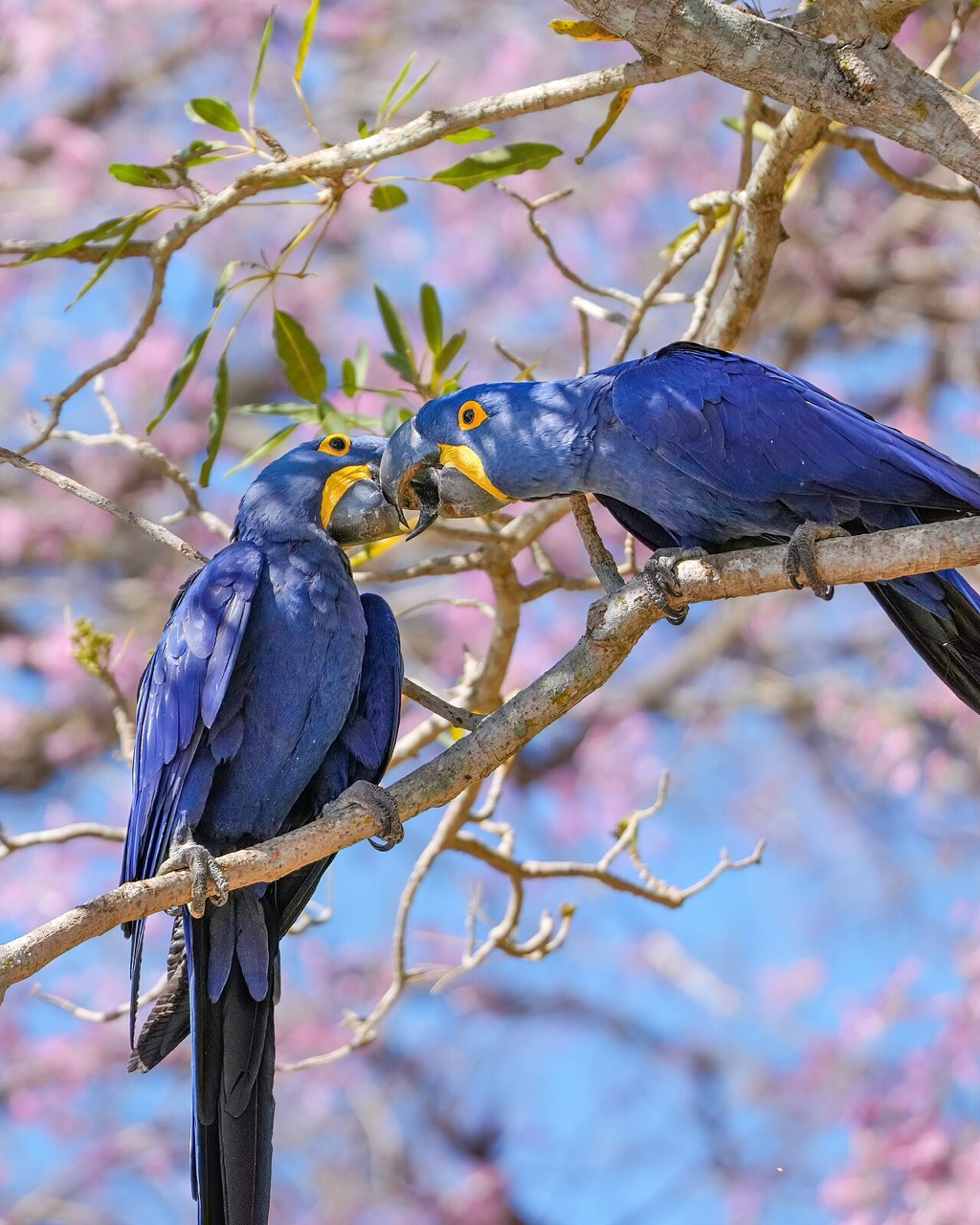
Source: Wikimedia Commons via Wikipedia “Hyacinth macaw”
In brief
A Hyacinth Macaw is the world's largest flying parrot — a roughly one-metre-long, cobalt-blue bird from central South America, especially Brazil's Pantanal, that uses its powerful beak to crack hard palm nuts; it is listed as Vulnerable by the IUCN.
Also in Animals A to Z · Animals that start with H
How you can help
You can support the related appeal — read its purpose, recipient status and fund terms first — or give once to where it is needed most. Sharing accurate information helps too.
By WARN Research & Conservation TeamLast updated
The Hyacinth Macaw (Anodorhynchus hyacinthinus) is the world's largest flying parrot, a metre-long bird wrapped in brilliant cobalt-blue plumage and marked with vivid yellow around the eye and lower beak. Native to central South America, it is a palm-nut specialist whose stronghold is Brazil's Pantanal wetlands. The IUCN classifies it as Vulnerable, with habitat loss, wildfire and historic trapping for the pet trade as its main threats.
~1 m
Body length — largest flying parrot
~4,300
Mature individuals left (IUCN, 2021)
1.2–1.7 kg
Adult weight
Appendix I
CITES — strictest trade protection
Figures sourced from IUCN Red List — Anodorhynchus hyacinthinus (Vulnerable, 2021), BirdLife International DataZone — Hyacinth Macaw factsheet, CITES — Appendices (Appendix I listing) and other references on this page.
Hyacinth Macaw: Quick Facts
| Lifespan | ~30–50 years in the wild; 50+ in captivity |
|---|---|
| Weight | 1.2–1.7 kg |
| Length | ~1 m (3 ft 3 in) — largest flying parrot |
| Diet | Palm-nut specialist (acuri, bocaiuva), seeds, fruit |
| Incubation | About one month (~28–30 days) |
| Eggs per clutch | 1–2 eggs |
| Fledging | Around 110 days |
| Baby name | Chick (nestling / fledgling) |
| Group name | Flock |
| CITES | Appendix I |
Scientific Classification
| Kingdom | Animalia |
|---|---|
| Phylum | Chordata |
| Class | Aves |
| Order | Psittaciformes |
| Family | Psittacidae |
| Genus | Anodorhynchus |
| Species | Anodorhynchus hyacinthinus (Latham, 1790) |
Conservation Status
- IUCN Status
- Vulnerable
- Population
- ~4,300 mature individuals (about 6,500 birds in total)
- Trend
- Decreasing
- Assessed
- 2021
- CITES
- Appendix I
Globally Vulnerable on the IUCN Red List; following the catastrophic 2020 Pantanal fires, Brazilian authorities have moved to reassess the species as Endangered at the national level.
Did you know?
The Hyacinth Macaw's beak is powerful enough to crack open palm nuts and even coconuts that resist a machete — one of the strongest bites of any bird on Earth.
Key Facts: Hyacinth Macaw
- At around one metre from head to tail, the Hyacinth Macaw is the longest parrot species and the largest macaw in the world.
- Its core stronghold is Brazil's Pantanal, the planet's largest tropical wetland, with smaller populations in the Cerrado and eastern Amazon fringe.
- It is a palm-nut specialist, relying heavily on acuri and bocaiuva palm nuts that few other animals can crack.
- In the Pantanal it nests almost exclusively in cavities of the manduvi tree, making it dependent on a single tree species for breeding.
- The IUCN lists it as Vulnerable with roughly 4,300 mature individuals and a declining trend (assessed 2021).
- Trapping for the cage-bird trade once devastated wild numbers; today habitat loss and wildfire are the leading pressures.
Why it is threatened
The Hyacinth Macaw was pushed to a low of an estimated few thousand birds in the late 1980s, largely by intense trapping for the international cage-bird trade. CITES Appendix I protection and on-the-ground nest monitoring helped numbers recover, and in 2014 the species was downlisted from Endangered to Vulnerable. But the recovery remains fragile. The IUCN's 2021 assessment estimates around 4,300 mature individuals and a decreasing population trend. The catastrophic Pantanal fires of 2020, which burned roughly a quarter of the wetland, destroyed nesting trees and roosts and prompted Brazilian authorities to reassess the species as Endangered at the national level, even as its global status stays Vulnerable.
Behaviour and ecology
This is a long-lived, slow-breeding bird: pairs raise only one or two eggs per clutch, incubation lasts roughly a month, and chicks do not fledge until around 110 days. Birds typically reach breeding age at about seven years and can live for several decades. The macaw's enormous beak is built for one job above all — cracking the rock-hard nuts of acuri and bocaiuva palms, a food source almost no competitor can exploit. In the Pantanal it depends heavily on the soft-cored manduvi tree (Sterculia apetala) for nest cavities, a tight ecological link that makes both breeding success and palm availability central to the species' survival.
Range and habitat
Hyacinth Macaws survive in three broadly separated regions of central South America. By far the largest is the Pantanal of south-western Brazil, extending into eastern Bolivia and northern Paraguay, which holds most of the world's population. Smaller numbers occur in the dry Cerrado woodlands and gallery forests of eastern Brazil and along the southern fringe of the Amazon basin. The birds favour palm savannas, seasonally flooded grasslands and forest edges where their food palms and nesting trees grow — landscapes increasingly fragmented by cattle ranching, agriculture and fire.
What rescue and recovery involve
Protecting Hyacinth Macaws is less about hands-on rehabilitation and more about safeguarding nests, trees and habitat. Effective work includes monitoring and protecting manduvi nest cavities, installing artificial nest boxes where natural ones are scarce, planting and protecting food and nesting palms, partnering with ranchers to reduce fire and habitat loss, and confiscating and rehabilitating birds taken illegally for the pet trade. Because the species breeds slowly, every successfully fledged chick matters, and long-term field monitoring is essential to track whether populations are holding or slipping.
Hyacinth Macaw vs. its blue Anodorhynchus relatives
| Feature | Hyacinth Macaw | Lear's (Indigo) Macaw | Glaucous Macaw |
|---|---|---|---|
| Scientific name | Anodorhynchus hyacinthinus | Anodorhynchus leari | Anodorhynchus glaucus |
| Size | ~1 m — largest flying parrot | ~75 cm | ~72 cm |
| Plumage | Deep cobalt blue | Darker indigo-blue | Pale greenish-blue |
| IUCN status | Vulnerable | Endangered | Critically Endangered (possibly extinct) |
| Stronghold | Brazil's Pantanal | Bahia, NE Brazil | Historic: S Brazil, Paraguay, Argentina |
| Yellow facial marks | Eye-ring and lower-beak patch | Larger yellow facial patch | Faint yellow markings |
What WARN Does
WARN publishes this guide for education and is developing support through assessed animal-welfare grants. A species range, source citation or photograph does not establish a recipient or funding agreement. Check /about/where-your-money-goes/#grant-register for published grant and payment records; records not yet published must not be read as zero activity. Browse /appeals/ for the purposes currently available to support.
A gift to WARN helps fund the Brazilian partners protecting the Pantanal's nesting trees and confronting the wildlife trade — the practical, local work that keeps the world's largest flying parrot in the sky.
How can I help save the hyacinth macaw?
Explore practical ways to support the hyacinth macaw, from everyday choices and sharing reliable information to reviewing a related appeal before giving.
Explore ways to support
Read the related appeal’s purpose, recipient status and fund terms. Choose an affordable gift after checking what is proposed and what has been reported.
Ease the pressures
Avoid the wildlife trade and souvenirs, never buy wild animals as pets, and choose sustainable, habitat-friendly products — the threats behind the hyacinth macaw's decline fall when demand does.
Spread the word
Share accurate, sourced information about the hyacinth macaw. Wider awareness is what turns concern into lasting protection.
Hyacinth Macaw: Frequently Asked Questions
How can I help save the hyacinth macaw?
How big is a Hyacinth Macaw?
How long do Hyacinth Macaws live?
What do Hyacinth Macaws eat?
How many Hyacinth Macaws are left?
Why is the Hyacinth Macaw endangered or vulnerable?
Are Hyacinth Macaws dangerous?
What is a baby Hyacinth Macaw called?
Where do hyacinth macaws live?
Sources & References
Population figures, conservation status and biological facts on this page are drawn from authoritative scientific and intergovernmental sources.
- IUCN Red List — Anodorhynchus hyacinthinus (Vulnerable, 2021)
- BirdLife International DataZone — Hyacinth Macaw factsheet
- CITES — Appendices (Appendix I listing)
- Mongabay — Habitat loss and fire push the hyacinth macaw back toward endangered status
- Prioritizing Conservation Areas for the Hyacinth Macaw (Evolutionary Applications, 2024)
- Encyclopedia of Life — Anodorhynchus hyacinthinus
Terms used on this page
Plain-English definitions, from our wildlife and conservation glossary.
Latest Hyacinth Macaw Stories
Quick, fact-checked reads on the hyacinth macaw — amazing facts, key questions and the threats it faces.
Species
11 Amazing Facts About the Hyacinth Macaw, the Cobalt Giant of the Pantanal
From a beak that cracks rock-hard palm nuts to a wingspan over four feet, here are 11 surprising, source-checked facts about the world's largest flying parrot.
Read the storySpecies
How Big and Strong Is a Hyacinth Macaw? Meet the World's Largest Flying Parrot
How long, how heavy, how wide its wings and how powerful its bite — a clear, source-checked answer to just how big the Hyacinth Macaw really is.
Read the storySpecies
Hyacinth Macaw vs Lear's Macaw: How to Tell the Two Blue Giants Apart
They are both big blue Brazilian macaws, but size, shade, face markings and rarity set them apart. Here is a clear, source-checked guide to the differences.
Read the storyExplore more animals
Discover more animals, their habitats and their conservation status in the WARN wildlife-guide library.