Lemur Species · Madagascar (north-west dry forest)
Coquerel's Sifaka
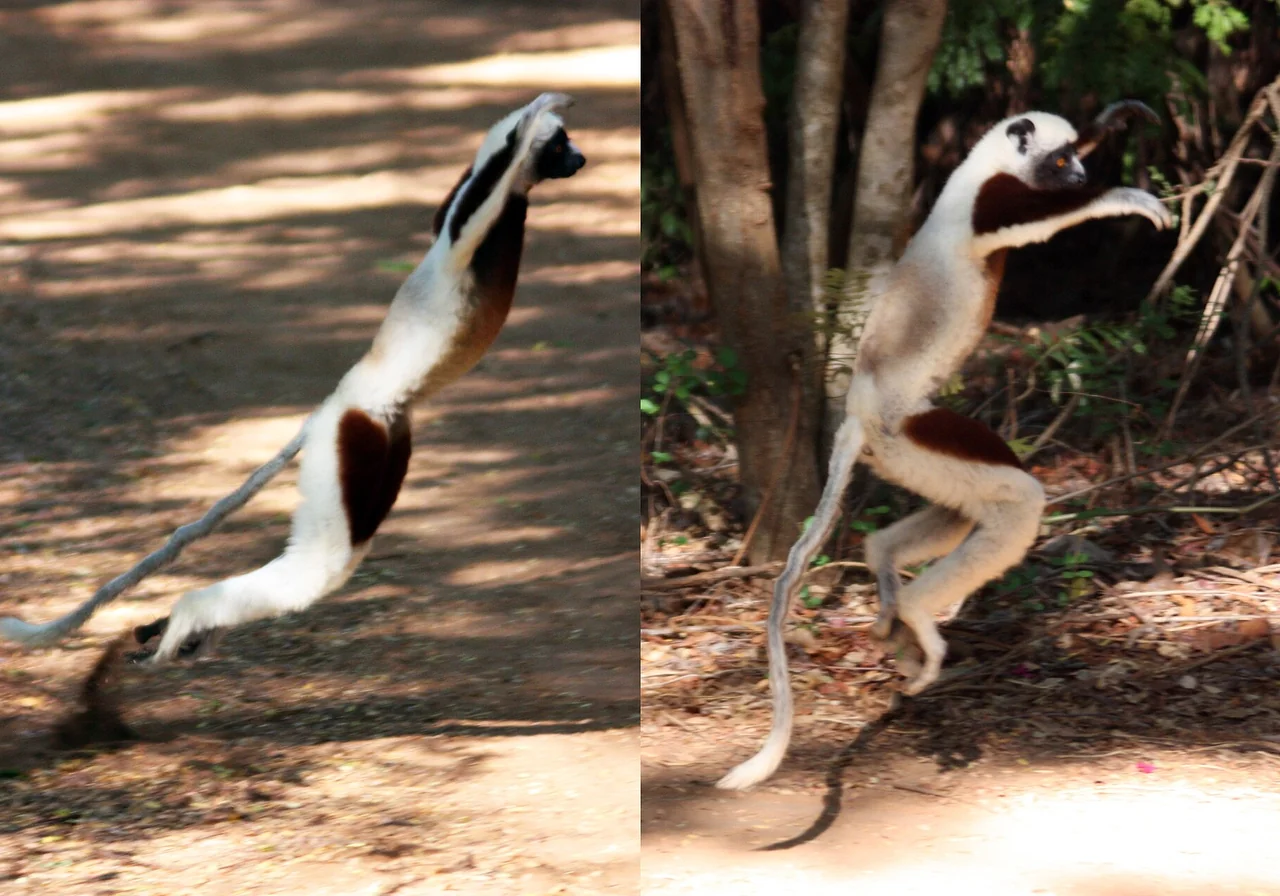
Dancing lemur — bounds sideways on two legs across open ground.
By WARN Research & Conservation TeamLast updated
In brief
Coquerel's Sifaka is the 'dancing lemur' of north-western Madagascar — a medium-sized vertical clinger that bounds sideways on two legs across open ground between forest patches. Its defining trait is spectacular leaping locomotion through dry deciduous forest now reduced to fragments. Critically Endangered and CITES Appendix I listed, it must never be kept as a pet.
What are the key facts about a Coquerel's Sifaka?
The Coquerel's Sifaka is a lemur species from Madagascar (north-west dry forest): medium (3.7 kg), diurnal, leaping, social. Dancing lemur — bounds sideways on two legs across open ground.
| Origin | Madagascar (north-west dry forest) |
|---|---|
| Size | Medium (3.7 kg) |
| Typical weight | 3.7–4.3 kg (8–9.5 lb); long hind limbs power leaps of over 9 metres between trees |
| Lifespan | 15–25 years (varies; mouse lemurs shorter) |
| Coat & markings | Creamy white body fur with chestnut-brown patches on the chest, shoulders and thighs; face is black and hairless. Dense fur protects against thorny spiny forest vegetation. Powerful legs and short arms suit vertical clinging and bipedal hopping on the ground — the 'dance' for which sifakas are famous. |
| Temperament | Diurnal, leaping, social |
| Conservation note | Wild conservation only — Coquerel's sifakas are CITES Appendix I listed and require continuous dry forest canopy and social groups of up to a dozen individuals. They cannot be kept in domestic settings. Support Ankarafantsika National Park and the Antrema biocultural reserve, and accredited zoos with managed Propithecus breeding programmes. |
Should you keep a Coquerel's Sifaka as a pet?
No. A Coquerel's Sifaka is a wild lemur from Madagascar (north-west dry forest), not a companion animal. Private keeping usually means an infant taken from a troop, a lifetime of unmet social needs, and often a legal offence.
People search this page because the Coquerel's Sifaka looks small, clever or “manageable” in photos. That is the trap. Wild primates need a troop, a range, and a diet that is not human leftovers. The Coquerel's Sifaka is from Madagascar (north-west dry forest); its conservation note on this page is wild conservation only — coquerel's sifakas are cites appendix i listed and require continuous dry forest canopy and social groups of up to a dozen individuals. they cannot be kept in domestic settings. support ankarafantsika national park and the antrema biocultural reserve, and accredited zoos with managed propithecus breeding programmes..
If you met a Coquerel's Sifaka in a selfie setting or a roadside stall, walk away and do not pay. Paying creates the next capture. Read this as a species briefing, then use the wildlife guide and the appeals linked at the bottom if you want to help the wild population.
What is a Coquerel's Sifaka?
Dancing lemur — bounds sideways on two legs across open ground. Origin is Madagascar (north-west dry forest); coat or markings are described as Creamy white body fur with chestnut-brown patches on the chest, shoulders and thighs; face is black and hairless. Dense fur protects against thorny spiny forest vegetation. Powerful legs and short arms suit vertical clinging and bipedal hopping on the ground — the 'dance' for which sifakas are famous..
Treat “species” here as a library label for a wild species or distinct form, not as a kennel-club product.
Where does the Coquerel's Sifaka come from?
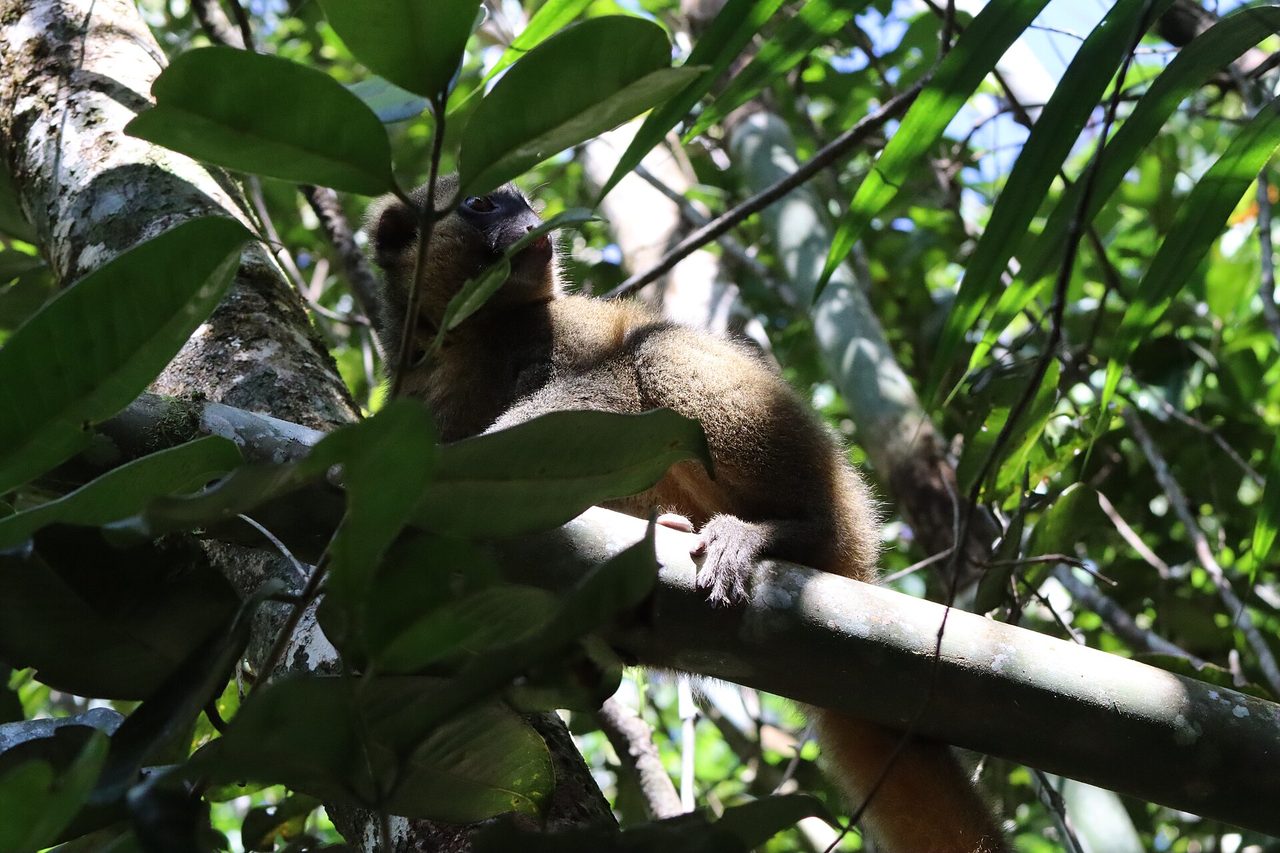
Coquerel's Sifakas come from Madagascar (north-west dry forest). Coquerel's sifaka (Propithecus coquereli) inhabits dry deciduous forest in north-western Madagascar — notably Ankarafantsika National Park and the Antrema forest near the coast.
Groups of six to ten individuals vertical-cling-leap through the canopy, descending to the ground to bound bipedally between trees too far apart to leap. They eat leaves, fruit, flowers and bark, shifting diet with the dry season. Slash-and-burn agriculture (tavy), charcoal production and logging have reduced north-western dry forest to isolated patches. Coquerel's sifaka cannot cross open farmland safely — ground crossing exposes them to dogs, humans and starvation between fragments. The species is Critically Endangered on the IUCN Red List and CITES Appendix I listed. An international managed breeding programme in accredited zoos maintains an insurance population, but reintroduction depends on forest restoration.
What does a Coquerel's Sifaka actually need?
A wild Coquerel's Sifaka needs the habitat and social system of Madagascar (north-west dry forest), not a spare room. Size (Medium (3.7 kg)) and a diurnal, leaping, social life history are why private keeping fails.
In the wild that means connected habitat, a diet the species evolved with, and distance from the pet and selfie trades. Captive “care sheets” for wild lemurs are how trafficking gets laundered as husbandry.
If you already work in accredited rescue, follow specialist protocols and licensing. Everyone else: do not acquire a Coquerel's Sifaka. Support habitat and anti-trafficking work instead.
What surprises people about the Coquerel's Sifaka?
A few details about the breed, alongside the practical care information in this guide.
- Coquerel's sifakas 'dance' — hopping sideways on two legs with arms raised when crossing open ground.
- They can leap over 9 metres horizontally between tree trunks in a single bound.
- Sifakas are named after a call sounding like 'shif-auk' — their alarm vocalisation.
- Groups defend core territories through scent-marking and vocal displays at dawn.
What health issues should you know about in a Coquerel's Sifaka?
Health concerns to discuss with your vet, including changes to watch for and everyday care. This is general guidance, not veterinary advice — always speak to your vet.
Habitat loss (wild)
Dry deciduous forest clearance for maize, cassava and charcoal isolates sifaka groups in fragments too small for long-term survival.
Care: Fund tavy alternatives and community reforestation in north-western Madagascar. Protected area expansion at Ankarafantsika is critical.
Hunting
Sifakas are hunted for bushmeat in some regions despite legal protection, particularly where forest income alternatives are scarce.
Care: Community conservation agreements linking forest protection to livelihood support reduce hunting pressure. Patrols in protected areas deter poaching.
Forest fragmentation
Ground crossing between isolated tree patches exposes sifakas to predation by feral dogs and human disturbance — a leading cause of mortality.
Care: Create forest corridors connecting fragments. Reforestation with native dry forest species reduces dangerous open-ground travel.
Who should skip a Coquerel's Sifaka?
Skip a Coquerel's Sifaka if you are anyone hoping to keep a Coquerel's Sifaka as a pet or photo prop. This Madagascar (north-west dry forest) lemur is medium (3.7 kg) and diurnal, leaping, social — the mismatch is usually lifestyle, not a missing accessory.
This page is allowed to say no. Skip if you are anyone hoping to keep a Coquerel's Sifaka as a pet or photo prop. Skip if you are anyone who will pay for a wild-caught or roadside animal. Skip if you are tourists looking for handling or selfies.
A different lemur species on this site may fit. Wanting “a Coquerel's Sifaka” after a film or a colour photo is not a reason to ignore the skip list.
What are the hidden catches with a Coquerel's Sifaka?
The hidden cost of a Coquerel's Sifaka is usually not the purchase price. It is years of care, the health list on this page, and the mismatch between a diurnal, leaping, social animal and a busy home.
The pet-trade catch
Cute infant Coquerel's Sifakas in ads were usually taken from wild families. The adult you cannot house is then dumped, euthanised, or passed on. Do not create that demand.
The tourism catch
Paying to hold, ride, or selfie with a Coquerel's Sifaka funds the next capture or a stressed ambassador animal. Distance and accredited viewing are the ethical default.
The habitat loss (wild) catch
Dry deciduous forest clearance for maize, cassava and charcoal isolates sifaka groups in fragments too small for long-term survival. Fund tavy alternatives and community reforestation in north-western Madagascar. Protected area expansion at Ankarafantsika is critical.
The hunting catch
Sifakas are hunted for bushmeat in some regions despite legal protection, particularly where forest income alternatives are scarce. Community conservation agreements linking forest protection to livelihood support reduce hunting pressure. Patrols in protected areas deter poaching.
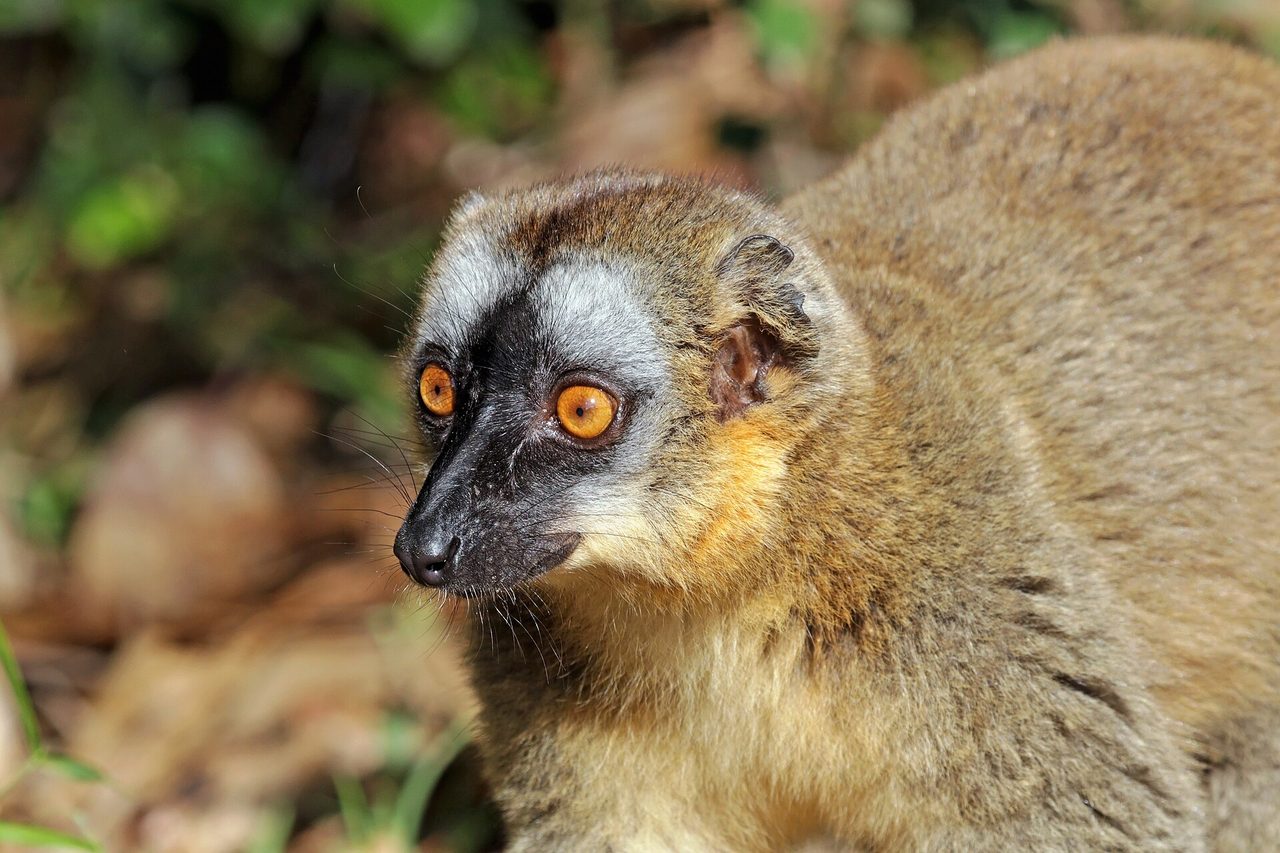
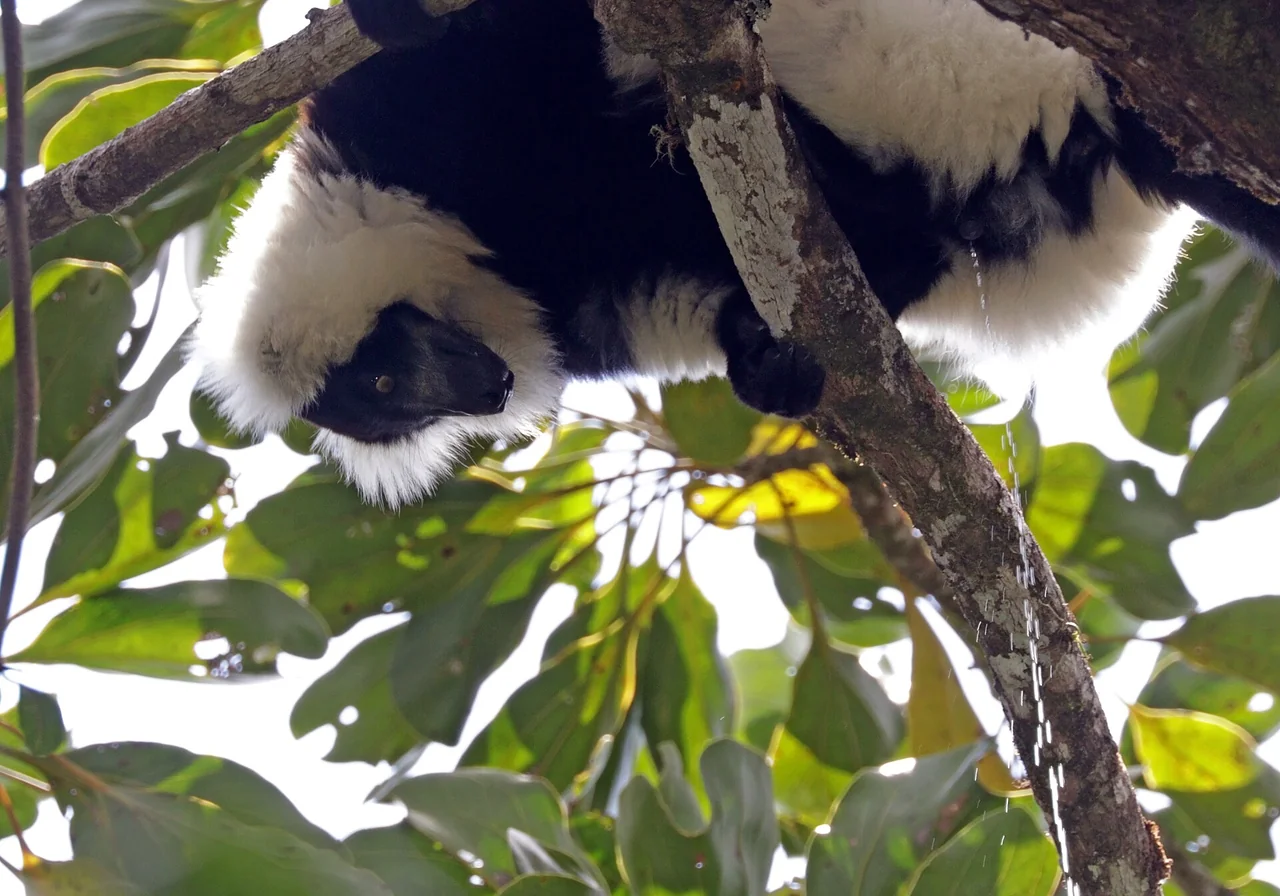
How does a Coquerel's Sifaka compare with Brown Lemur and Black-and-white Ruffed Lemur?
A Coquerel's Sifaka is not interchangeable with Brown Lemur and Black-and-white Ruffed Lemur. Compare origin, size, lifespan and temperament before you choose — those four lines prevent most regret.
| Lemur fact | Coquerel's Sifaka | Brown Lemur | Black-and-white Ruffed Lemur |
|---|---|---|---|
| Origin | Madagascar (north-west dry forest) | Madagascar (east & north-west) | Madagascar (eastern rainforest) |
| Size | Medium (3.7 kg) | Medium (2.5 kg) | Large (3.5 kg) |
| Lifespan | 15–25 years (varies; mouse lemurs shorter) | 15–25 years (varies; mouse lemurs shorter) | 15–25 years (varies; mouse lemurs shorter) |
| Temperament | Diurnal, leaping, social | Social, cathemeral, adaptable | Loud, frugivorous, nest-building |
What is the verdict on the Coquerel's Sifaka?
A Coquerel's Sifaka is a wild lemur to understand and protect, not a pet to acquire. If you came here to buy one, the verdict is no. If you came here to learn, use the species guide next.
Help looks like habitat, enforcement and refusing the trade — not a cage in a spare room. WARN is a CIC, not a charity; donate only if you want to fund partner work in our network countries, and do not expect Gift Aid.
Lemurs belong in Madagascar's forests
Every lemur species is CITES Appendix I and most are Endangered or Critically Endangered. Habitat protection — not the pet trade — is their only path to survival.