Wildlife Guide · Indonesia
Sumatran Rhino
Dicerorhinus sumatrensis
The smallest, hairiest rhino on Earth — and the last whisper of an Ice Age lineage.
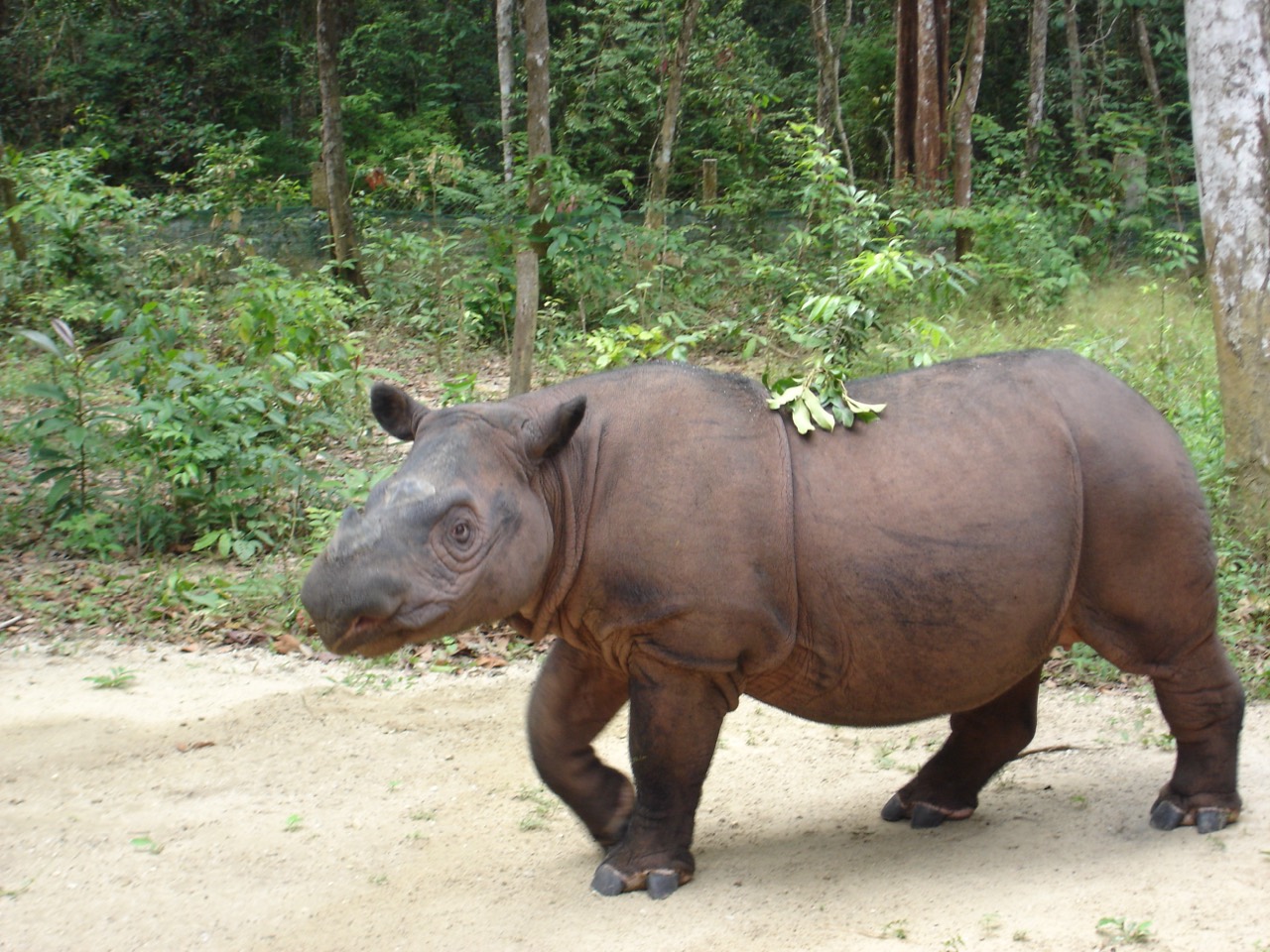
Source: Wikimedia Commons via Wikipedia “Sumatran rhinoceros”
In brief
A Sumatran rhino is the smallest, hairiest living rhinoceros — a two-horned, rainforest-dwelling species of Indonesia and the only surviving member of the genus Dicerorhinus, now Critically Endangered with fewer than roughly 50 individuals left.
Also in Animals A to Z · Animals that start with S
How you can help
You can support the related appeal — read its purpose, recipient status and fund terms first — or give once to where it is needed most. Sharing accurate information helps too.
By WARN Research & Conservation TeamLast updated
The Sumatran rhino (Dicerorhinus sumatrensis) is the smallest living rhinoceros and the only Asian rhino with two horns. A shy, solitary browser of Indonesia's dense rainforests, it is the last survivor of an ancient lineage closely related to the extinct woolly rhino — and, with fewer than about 50 animals remaining, one of the rarest large mammals alive.
~34–47
estimated rhinos left in the wild (IUCN)
2
horns — the only two-horned Asian rhino
15–16 mo
gestation; usually one calf every 3–4 years
Critically Endangered
IUCN Red List status (assessed 2020)
Figures sourced from IUCN Red List — Dicerorhinus sumatrensis (Sumatran Rhinoceros), International Rhino Foundation — Sumatran Rhino, IUCN — Last chance for the Sumatran rhino and other references on this page.
Sumatran Rhino: Quick Facts
| Lifespan | ~35–40 years (up to ~45) |
|---|---|
| Weight | 500–1,000 kg (avg ~700–800 kg) |
| Shoulder height | 112–145 cm |
| Body length | 2.4–3.2 m head-and-body |
| Diet | Browser — leaves, twigs, fruit, bark (100+ plant species) |
| Gestation | 15–16 months |
| Young per birth | 1 calf, every 3–4 years |
| Baby name | Calf |
| Group name | Crash (rhinos are largely solitary) |
| CITES | Appendix I |
Scientific Classification
| Kingdom | Animalia |
|---|---|
| Phylum | Chordata |
| Class | Mammalia |
| Order | Perissodactyla |
| Family | Rhinocerotidae |
| Genus | Dicerorhinus |
| Species | Dicerorhinus sumatrensis (Fischer, 1814) |
Conservation Status
- IUCN Status
- Critically Endangered
- Population
- ~34–47 individuals in the wild (fewer than ~50)
- Trend
- Decreasing
- Assessed
- 2020
- CITES
- Appendix I
Listed Critically Endangered by the IUCN (assessment published 2020). Field estimates cited around 34–47 animals; numbers are uncertain because the rhinos are so few and so dispersed across fragmented forest in Indonesia.
Did you know?
The Sumatran rhino is the closest living relative of the extinct woolly rhinoceros — its coat of coarse hair makes it a living echo of the Ice Age, and it is the only Asian rhino with two horns.
Key Facts: Sumatran Rhino
- It is the smallest living rhino and the only Asian rhino with two horns, weighing roughly 500–1,000 kg.
- Its reddish-brown body is patchily covered in coarse hair — unusual among rhinos — earning it the nickname 'hairy rhino'.
- It is the closest living relative of the extinct woolly rhinoceros and the sole survivor of the genus Dicerorhinus.
- Fewer than about 50 survive, in fragmented forest pockets of Sumatra and Borneo in Indonesia.
- Habitat loss and the isolation of tiny scattered groups — which struggle to find mates — are now the biggest threats, alongside a poaching legacy.
- A captive-breeding programme in Indonesia is central to the species' survival, having produced rare successful births.
Why the Sumatran rhino is so endangered
The Sumatran rhino has crashed by more than 80% over recent decades, driven first by relentless poaching for its horns and then by the loss and fragmentation of its lowland rainforest. The animals that remain are scattered across a handful of isolated pockets in Indonesia, separated by plantations, roads and human settlement. Because the species is solitary and naturally low in density, these tiny groups rarely encounter one another, so breeding has all but stalled in the wild. Females that go too long without mating can develop reproductive problems, compounding the decline. With perhaps only a few dozen animals left, the IUCN warns the species could vanish without urgent intervention.
Behaviour and ecology
This is a forest specialist — a shy, mostly solitary browser that feeds on saplings, leaves, twigs, fruit and bark from more than a hundred plant species, eating tens of kilograms a day. It frequents mineral licks and wallows in mud to cool down and protect its skin, and is a capable swimmer and climber of steep terrain. Sumatran rhinos communicate over distance with whistles, squeaks and other vocalisations, more vocal than their larger relatives. Two horns, fringed ears and that distinctive coat of coarse hair make it unmistakable among rhinos and link it visually to its Ice Age ancestors.
What rescue and recovery involve
Saving the Sumatran rhino now hinges on a two-pronged effort: protecting and monitoring the last wild animals, and bringing isolated individuals into a managed captive-breeding programme so that they can reproduce safely under expert care. In Indonesia, sanctuary teams track wild rhinos, run anti-poaching patrols, secure forest habitat, and provide round-the-clock veterinary support to breeding animals. Each successful birth is hard-won and significant given how few animals exist. This work depends on trained local rangers, veterinarians and sanctuary staff operating in remote, difficult forest — and on the sustained funding that keeps them in the field.
Sumatran rhino vs the other rhino species
| Feature | Sumatran rhino | Javan rhino | White rhino |
|---|---|---|---|
| Horns | Two | One | Two |
| Size | Smallest rhino | Medium | Largest rhino |
| Hair | Distinctly hairy | Nearly hairless | Nearly hairless |
| Range | Indonesia (Sumatra, Borneo) | Indonesia (Java) | Africa |
| IUCN status | Critically Endangered | Critically Endangered | Near Threatened |
What WARN Does
WARN publishes this guide for education and is developing support through assessed animal-welfare grants. A species range, source citation or photograph does not establish a recipient or funding agreement. Check /about/where-your-money-goes/#grant-register for published grant and payment records; records not yet published must not be read as zero activity. Browse /appeals/ for the purposes currently available to support.
With fewer than about 50 Sumatran rhinos left, every ranger patrol and veterinary shift in Indonesia counts. Supporting the Rhino Appeal helps WARN fund the local partner teams in Indonesia who protect and breed the last of this ancient species.
How can I help save the sumatran rhino?
Explore practical ways to support the sumatran rhino, from everyday choices and sharing reliable information to reviewing a related appeal before giving.
Explore ways to support
Read the related appeal’s purpose, recipient status and fund terms. Choose an affordable gift after checking what is proposed and what has been reported.
Ease the pressures
Avoid the wildlife trade and souvenirs, never buy wild animals as pets, and choose sustainable, habitat-friendly products — the threats behind the sumatran rhino's decline fall when demand does.
Spread the word
Share accurate, sourced information about the sumatran rhino. Wider awareness is what turns concern into lasting protection.
Sumatran Rhino: Frequently Asked Questions
How can I help save the sumatran rhino?
How many Sumatran rhinos are left?
How big is a Sumatran rhino?
What do Sumatran rhinos eat?
How long do Sumatran rhinos live?
Are Sumatran rhinos dangerous?
Why is the Sumatran rhino so special?
Where do sumatran rhinoceros live?
Sources & References
Population figures, conservation status and biological facts on this page are drawn from authoritative scientific and intergovernmental sources.
Terms used on this page
Plain-English definitions, from our wildlife and conservation glossary.
Latest Sumatran Rhino Stories
Quick, fact-checked reads on the sumatran rhino — amazing facts, key questions and the threats it faces.
Species
12 Amazing Facts About the Sumatran Rhino, the World's Hairiest Rhino
From its Ice Age ancestry to its whistling calls, here are 12 surprising facts about the Sumatran rhino — the smallest and rarest rhinoceros alive.
Read the storySpecies
How Big Is a Sumatran Rhino? Size, Weight and Lifespan Explained
How big, heavy and long-lived is the Sumatran rhino? Here are the numbers on the smallest rhinoceros on Earth, with how it compares to its giant cousins.
Read the storySpecies
Why Are Sumatran Rhinos Endangered — and What's Being Done to Save Them
With fewer than about 50 left, the Sumatran rhino is sliding toward extinction. Here's why — and why a breeding programme in Indonesia offers real hope.
Read the storyExplore more animals
Discover more animals, their habitats and their conservation status in the WARN wildlife-guide library.