Wildlife Guide · Worldwide — oceans, rivers, lakes and land on every continent except Antarctica
Turtle
Order Testudines — ~360 species of turtles, tortoises and terrapins
Armoured reptiles of land and water — ancient survivors under modern pressure.
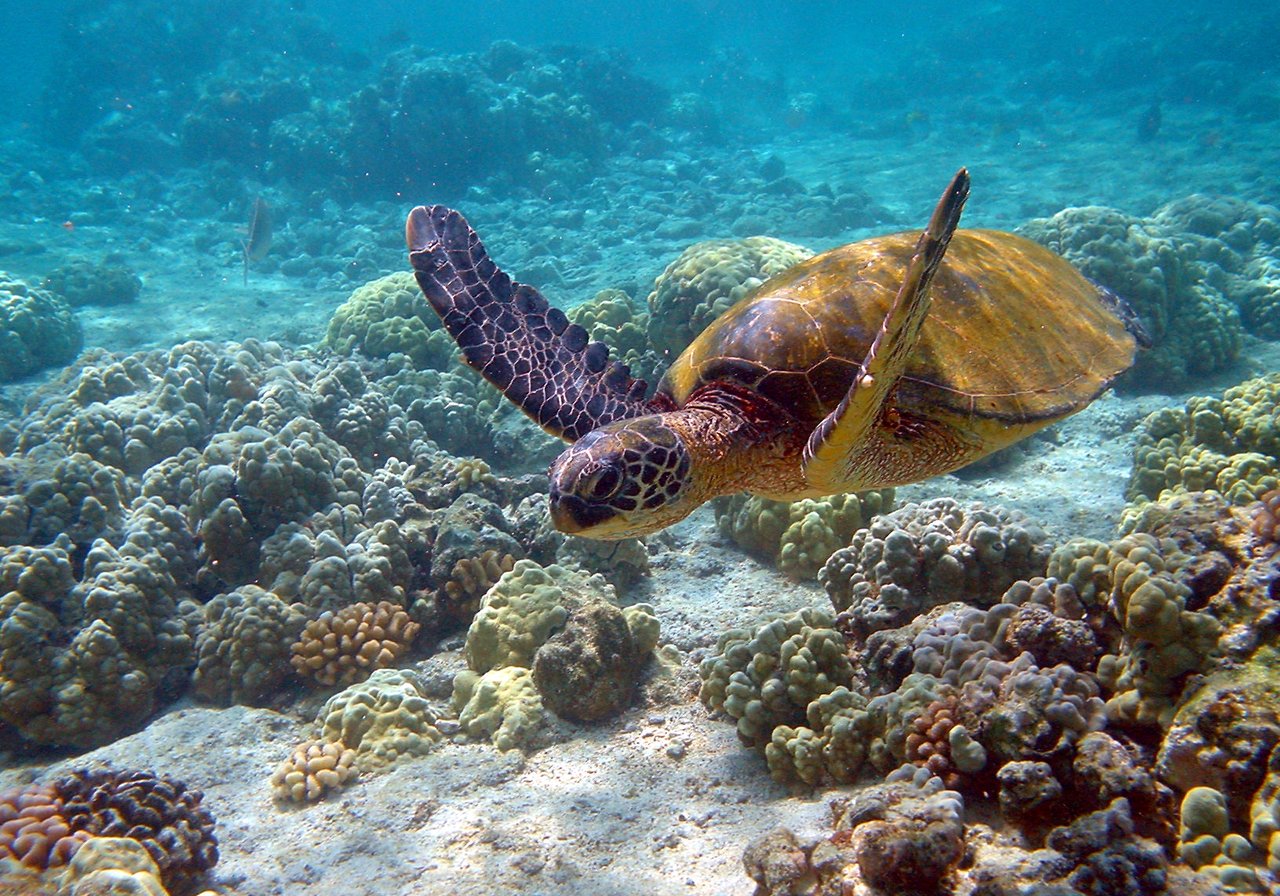
Source: Wikimedia Commons
In brief
Turtles (order Testudines) are ~360 species of shelled reptiles — sea turtles, freshwater terrapins and land tortoises — many Vulnerable to Critically Endangered from trade, bycatch and habitat loss.
Also in Animals A to Z · Animals that start with T
How you can help
You can symbolically adopt a sea turtle from £5 a month — a donation to WARN’s sea turtle appeal, with a personalised certificate you can keep or give as a gift — or give once to where it is needed most.
By WARN Research & Conservation TeamLast updated
Turtles are reptiles of the order Testudines, protected by a bony shell fused to the spine and ribs. Roughly 360 species include sea turtles, freshwater terrapins and land tortoises. They appeared over 200 million years ago and survive on every continent except Antarctica. Many species live decades or centuries. Today turtles are among the most threatened vertebrate groups — hunted for meat and shells, killed as bycatch, and losing nesting beaches to development and climate change. WARN's sea turtle guide covers marine species in detail; this hub introduces turtles as a whole.
360
Recognised turtle species worldwide
200+ Myr
Turtles on Earth — older than many dinosaurs
Half
Rough share of turtle species threatened (IUCN)
CITES I/II
Most freshwater and sea turtles regulated
Figures sourced from IUCN Red List — Testudines, Sea Turtle Conservancy, CITES — Checklist of CITES Species .
Turtle: Quick Facts
| Species | ~360 testudines worldwide |
|---|---|
| Groups | Sea turtles, terrapins, tortoises |
| Related guide | Sea turtle (marine species) |
| Shell | Fused to spine and ribs — part of skeleton |
| Main threats | Bycatch, trade, habitat loss, plastic |
| CITES | Appendix I for most sea turtles |
Scientific Classification
| Kingdom | Animalia |
|---|---|
| Class | Reptilia |
| Order | Testudines |
Conservation Status
- IUCN Status
- Roughly half of turtle species threatened; most sea turtles Endangered or Vulnerable.
- Population
- Varies — leatherback ~34,000 nesting females globally (declining)
- Trend
- Decreasing for many species; local recoveries where protected
- Assessed
- Varies by species
- CITES
- Appendix I for most sea turtles; Appendix II for some tortoises
Key Facts: Turtle
- Turtles include sea turtles, freshwater terrapins and land tortoises — one order, Testudines.
- The shell is part of the skeleton — not a removable coat.
- Sea turtles migrate thousands of kilometres between feeding and nesting beaches.
- WARN's sea turtle guide covers marine species; this hub covers all turtles.
- Plastic pollution, bycatch and egg poaching threaten sea turtles globally.
- Galápagos giant tortoises can live over 150 years.
Sea turtles, terrapins and tortoises
All turtles share a shelled body plan but occupy different worlds. Sea turtles — green, loggerhead, leatherback, hawksbill and others — have flipper-like limbs and salt glands. Freshwater terrapins and river turtles inhabit ponds, rivers and wetlands on every continent except Antarctica. Tortoises are land specialists with domed shells and columnar legs — Galápagos giants among the longest-lived vertebrates.
Temperature during egg incubation determines sex in many species — a climate change concern as beaches warm and produce female-biased broods. Nesting females return to the same beaches where they hatched, making beach protection critical.
WARN publishes a dedicated sea turtle wildlife guide; this page orients readers searching 'turtle' before they choose marine or freshwater detail.
Life history and migration
Sea turtle hatchlings scramble to the sea at night, guided by light horizons — artificial lighting on developed coasts disorients them. Decades later, mature females haul onto beaches to lay eggs in excavated nests. Leatherbacks dive deeper than 1,000 metres; green turtles graze seagrass meadows that store carbon.
Freshwater turtles bask on logs, omnivorously scavenging and controlling aquatic vegetation. Many hibernate in mud through winter. Tortoises graze arid land vegetation, storing water in bladders during drought.
Slow maturity — 20 to 30 years in some sea turtles — means populations recover slowly from mortality spikes.
Threats and conservation
Roughly half of turtle species are threatened on the IUCN Red List. Sea turtles face bycatch in shrimp trawls and longlines, plastic ingestion mistaking bags for jellyfish, egg poaching on nesting beaches and fibropapillomatosis disease linked to pollution. Freshwater turtles are eaten and traded as pets; tortoises are collected for illegal wildlife markets — radiated tortoise of Madagascar is Critically Endangered.
Marine protected areas, turtle excluder devices on nets, dark-beach lighting ordinances and community nest protection programmes show measurable recovery — green turtle populations increased in some regions after decades of work.
CITES Appendix I covers most sea turtles and many freshwater species.
Turtles and people
Turtles appear in mythology worldwide — carrying the world on their backs, symbolising longevity. Today they need dark nesting beaches, clean oceans and enforced trade bans. Supporting WARN's sea turtle appeal funds nest protection and bycatch reduction where partners operate.
Never buy tortoiseshell products — hawksbill shell trade remains illegal and drives poaching.
What WARN Does
WARN publishes this guide for education and is developing support through assessed animal-welfare grants. A species range, source citation or photograph does not establish a recipient or funding agreement. Check /about/where-your-money-goes/#grant-register for published grant and payment records; records not yet published must not be read as zero activity. Browse /appeals/ for the purposes currently available to support.
If this guide helps you understand wildlife and the pressures it faces, a gift to WARN supports habitat protection and free public education in our partner countries.
Turtle: Frequently Asked Questions
How many turtle species are there?
What is the difference between a turtle and a tortoise?
Are sea turtles endangered?
How long do turtles live?
Why do sea turtles eat plastic?
What do turtles eat?
Where do turtles live?
Are turtles dangerous?
How big is a turtle?
Sources & References
Population figures, conservation status and biological facts on this page are drawn from authoritative scientific and intergovernmental sources.
Terms used on this page
Plain-English definitions, from our wildlife and conservation glossary.
Explore more animals
Discover more animals, their habitats and their conservation status in the WARN wildlife-guide library.