Wildlife Guide · Tibet & China
Yak
Bos mutus (Przewalski, 1883)
The shaggy giant of the Himalayas — wild herds on the roof of the world.
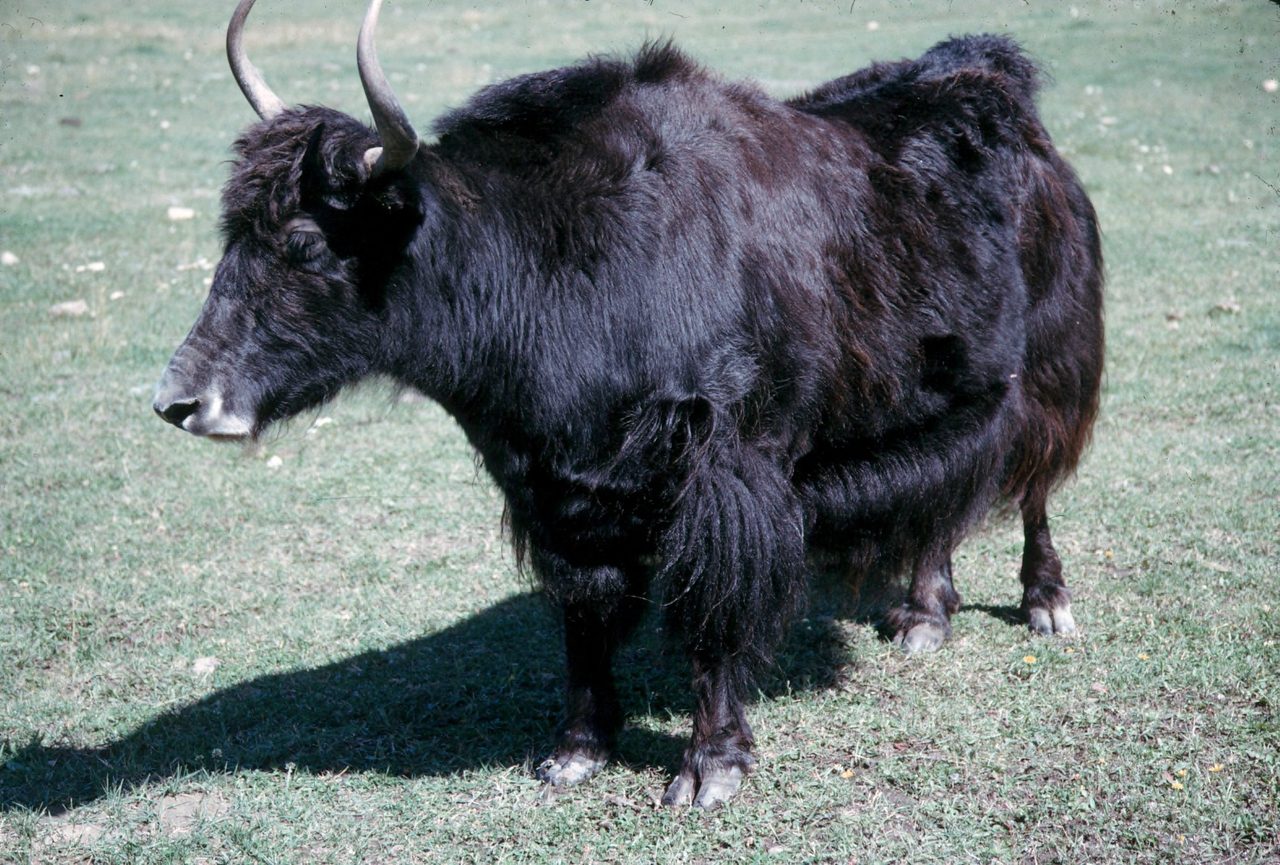
Photo: Garst, Warren, 1922-2016, photographer / Wikimedia Commons (CC BY-SA 4.0)
In brief
The wild yak (Bos mutus) is a Vulnerable high-altitude bovid of the Tibetan Plateau and Himalayas — ancestor of the domestic yak, threatened by hunting, hybridisation and habitat disturbance; remnant populations persist in Pakistan and Nepal.
Also in Animals A to Z · Animals that start with Y
How you can help
You can support the related appeal — read its purpose, recipient status and fund terms first — or give once to where it is needed most. Sharing accurate information helps too.
By WARN Research & Conservation TeamLast updated
The wild yak is a massive bovid of the high-altitude Tibetan Plateau and Himalayan ranges, adapted to life above 3,000 m where oxygen is thin and winters are brutal. Bos mutus is the ancestor of the domestic yak, which supports herding communities across Tibet, Nepal, Pakistan and Mongolia. Wild yaks weigh up to 1,000 kg with long shaggy black hair, curved horns and a humped shoulder profile. Listed as Vulnerable by the IUCN, wild yak populations have declined from hunting, hybridisation with domestic yaks and habitat disturbance. Pakistan's northern highlands hold remnant wild yak populations in the shadow of the Himalayas.
Vulnerable
IUCN Red List status (2016 assessment)
~10,000
Estimated wild yak population
1,000 kg
Maximum weight — large males
Appendix I
CITES listing — commercial trade banned
Figures sourced from IUCN Red List — Bos mutus, Encyclopaedia Britannica — yak, Wildlife Conservation Society — Tibetan Plateau .
Yak: Quick Facts
| Weight | 500–1,000 kg (males larger) |
|---|---|
| Altitude | Above 3,000 m on Tibetan Plateau and Himalayas |
| Domestic ancestor | Domestic yak descended from wild yak |
| Population | Roughly 7,000–10,000 mature wild individuals |
| Threat | Hunting and hybridisation with domestic yaks |
| CITES | Appendix I |
Scientific Classification
| Kingdom | Animalia |
|---|---|
| Phylum | Chordata |
| Class | Mammalia |
| Order | Artiodactyla |
| Family | Bovidae |
| Genus | Bos |
| Species | Bos mutus (Przewalski, 1883) |
Conservation Status
- IUCN Status
- Vulnerable (IUCN, 2016). Roughly 7,000–10,000 mature individuals.
- Population
- Roughly 7,000–10,000 mature individuals on Tibetan Plateau and Himalayas
- Trend
- Decreasing
- Assessed
- 2016
- CITES
- Appendix I
Hybridisation with domestic yaks threatens the wild gene pool.
Key Facts: Yak
- Wild yaks are the ancestor of domestic yaks supporting Himalayan herding communities.
- They survive at altitudes above 3,000 m where oxygen levels are roughly 60% of sea level.
- Wild yak populations have declined from hunting and hybridisation with domestic yaks.
- Pakistan's northern highlands hold remnant wild yak populations near the Himalayas.
- Wild yaks can weigh up to 1,000 kg with long shaggy hair insulating against -40°C winters.
- Domestic yaks outnumber wild yaks by millions — wild gene pool conservation is critical.
Life on the Tibetan Plateau
Wild yaks belong to the genus Bos alongside cattle, bison and gaur. Bos mutus is the largest native mammal of the Tibetan Plateau — adults weigh 500–1,000 kg with males substantially larger than females. Long shaggy black hair covers the body; a dense woolly undercoat insulates against temperatures below -40°C. Curved horns span up to 1 m in males.
Wild yaks inhabit alpine meadows, steppe and desert steppe above 3,000 m on the Tibetan Plateau and in the western Himalayas of India, Nepal and Pakistan. They descend to lower elevations in winter. Physiological adaptations include large lungs, efficient oxygen utilisation and a compact body that minimises heat loss.
Domestic yaks (Bos grunniens or Bos mutus grunniens — taxonomy debated) were domesticated from wild yaks at least 4,000 years ago. Millions of domestic yaks support pastoralist economies across Tibet, Nepal, Ladakh, Pakistan's Gilgit-Baltistan and Mongolia.
Herds, behaviour and ecology
Wild yaks form herds of females and young led by mature females. Males are solitary or form bachelor groups, joining female herds during the breeding season. Herds graze grasses, sedges and herbs on alpine meadows, migrating seasonally between summer high pastures and winter valleys.
Wild yaks are strong swimmers and can cross rivers when migrating. They use horns and bulk in defence against wolves and snow leopards — predators that also threaten domestic yak herds in Pakistan and Nepal. Calves are born in spring when grass growth resumes after winter.
Wild yaks play an ecological role as large grazers shaping alpine vegetation. Their dung fertilises meadows and supports invertebrate communities. Where wild yaks have declined, domestic yaks and livestock have altered grazing pressure on fragile alpine ecosystems.
Decline, hunting and hybridisation
Wild yak populations collapsed in the twentieth century from commercial hunting for meat and hides. The Tibetan Plateau held an estimated one million wild yaks in 1950; by the 1990s fewer than 15,000 remained. China's Chang Tang Nature Reserve — roughly 300,000 km² — anchors the largest remaining population.
Hybridisation with domestic yaks is a critical threat. Domestic males mate with wild females, diluting the wild gene pool. As pastoralism expands across the plateau, contact between wild and domestic herds increases. Conservation programmes promote separation and genetic monitoring.
In Pakistan's Gilgit-Baltistan and neighbouring Himalayan regions, remnant wild yak populations persist at the western edge of the range. Northern Pakistan's high-altitude communities depend on domestic yaks for transport, milk and fibre — the same landscapes where snow leopards and wild yaks overlap, connecting to WARN's regional coexistence education.
Conservation and recovery efforts
The IUCN lists wild yak as Vulnerable with an estimated 7,000–10,000 mature individuals and a decreasing population trend. China protects wild yaks in Chang Tang, Kekexili and Sanjiangyuan reserves. Anti-poaching patrols and firearms confiscation have reduced hunting pressure. CITES Appendix I bans commercial international trade.
Conservation genetics programmes track hybridisation rates and maintain pure wild yak bloodlines in captive facilities. Community engagement with Tibetan pastoralists promotes separation of domestic and wild herds. Nepal and India protect wild yaks in border regions with China.
Pakistan's northern conservation landscape — snow leopards, Marco Polo sheep and wild yaks — depends on maintaining low-disturbance high-altitude habitat. Infrastructure development and mining threaten the fragile alpine ecosystems wild yaks require.
What WARN Does
WARN supports coexistence education in Pakistan's northern highlands where wild yaks, snow leopards and herding communities share fragile alpine habitat. This yak guide is free public education about a Vulnerable high-altitude giant.
If this guide helps you understand wildlife and the pressures it faces, a gift to WARN supports habitat protection and free public education in our partner countries.
How can I help save the yak?
Explore practical ways to support the yak, from everyday choices and sharing reliable information to reviewing a related appeal before giving.
Explore ways to support
Read the related appeal’s purpose, recipient status and fund terms. Choose an affordable gift after checking what is proposed and what has been reported.
Ease the pressures
Avoid the wildlife trade and souvenirs, never buy wild animals as pets, and choose sustainable, habitat-friendly products — the threats behind the yak's decline fall when demand does.
Spread the word
Share accurate, sourced information about the yak. Wider awareness is what turns concern into lasting protection.
Yak: Frequently Asked Questions
How can I help save the yak?
What is the difference between wild and domestic yak?
Where do wild yaks live?
Are yaks endangered?
How do yaks survive extreme cold?
Do wild yaks live in Pakistan?
What do yaks eat?
Are yaks dangerous?
How long do yaks live?
How big is a yak?
Sources & References
Population figures, conservation status and biological facts on this page are drawn from authoritative scientific and intergovernmental sources.
Terms used on this page
Plain-English definitions, from our wildlife and conservation glossary.
Latest Yak Stories
Quick, fact-checked reads on the yak — amazing facts, key questions and the threats it faces.
Briefings
Stray Dog Rescue in Pakistan: Why Mass Culling Cannot Solve Rabies
Tens of thousands of street dogs are killed in Pakistani cities each year — and rabies cases continue to rise. There is a humane alternative that actually works.
Read the storyGuides
How to Adopt a Dog: A Complete Guide to Dog Adoption and Rescue Dogs
Thinking of adopting a dog? Here is the complete guide to dog adoption, what to expect from rescue dogs, how to find a reputable rescue near you — and how to help the street dogs that cannot be adopted out of trouble.
Read the storyGuides
Dog Shelters, Animal Shelters and Dog Rescues: A Guide to Finding and Trusting One
What's the difference between a dog shelter, an animal shelter and a dog rescue? How do you find a good one near you, and what should you look for before you trust them with a rescue dog — or your money?
Read the storyExplore more animals
Discover more animals, their habitats and their conservation status in the WARN wildlife-guide library.