Animal Comparison
Goat vs Sheep
Goats usually hold the tail up and browse leaves; sheep hold the tail down and graze grass. Horn shape, beards and behaviour help separate them.
By WARN Research & Conservation TeamLast updated
In brief — Goat vs Sheep
Tail up and browsing usually means goat; tail down and grazing usually means sheep.
Goats typically carry the tail up, browse leaves and twigs, and often have beards; sheep typically carry the tail down and graze grass. Horns, coats and flock behaviour differ by breed, but tail carriage and feeding style are the fastest everyday field marks between a goat and a sheep.
See the difference
Images are shown at different scales. Read each caption for the species, source and context.
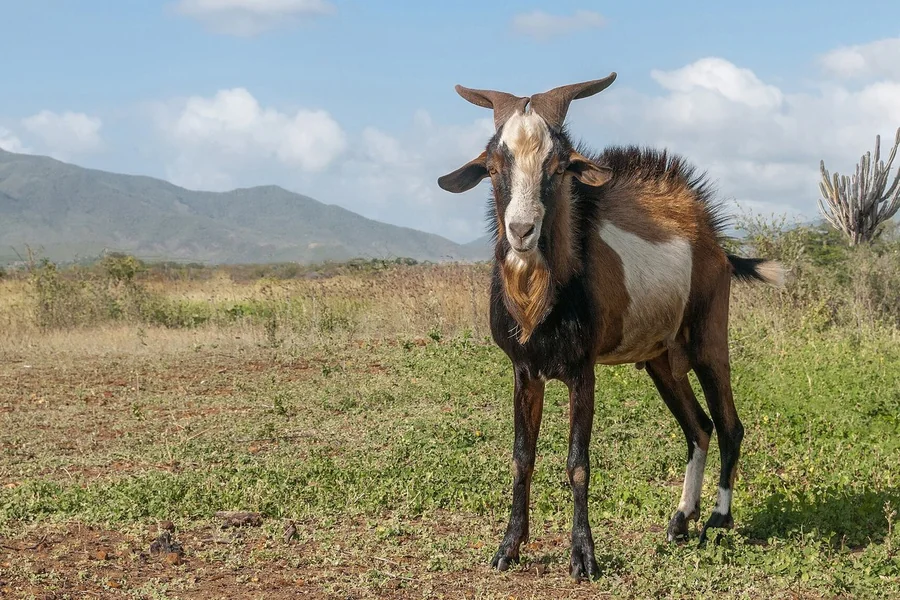
Goat — tail usually up; browser of leaves and shrubs
AI-generated educational wildlife portrait — World Animal Rescue Network
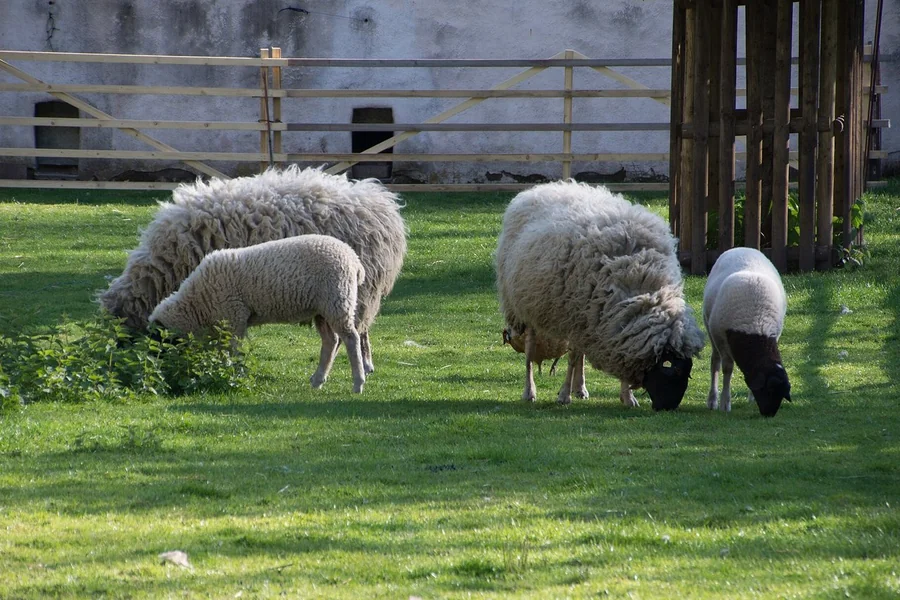
Sheep — tail usually down; grazer of grass
AI-generated educational wildlife portrait — World Animal Rescue Network
Goat vs Sheep: At a Glance
| Feature | Goat | Sheep |
|---|---|---|
| Genus (domestic) | Capra | Ovis |
| Tail carriage | Usually held up | Usually held down |
| Feeding style | Browser — leaves, shrubs, twigs | Grazer — grasses and forbs |
| Beard | Common in both sexes of many breeds | Usually absent |
| Upper lip | More mobile; splits more deeply | Less mobile browsing lip |
| Horns (general tendency) | Often scimitar or spiral upright | Often curl beside the head (rams) |
| Coat | Hair common; some fibre breeds | Wool common; hair sheep exist |
| Flocking | More independent, curious climbers | Stronger flocking drive |
| Chromosomes | 60 | 54 |
| Hybrid note | Sheep–goat hybrids very rare/usually sterile | Same — not freely interfertile |
Size and physical differences
Overlaps heavily by breed; many domestic sheep and goats both weigh roughly 20–100 kg depending on sex and type — breed matters more than the label.
Goats and sheep are both cloven-hoofed livestock in the family Bovidae, domesticated thousands of years ago, and similar enough that distant silhouettes confuse beginners. They are not the same species. Domestic goats descend mainly from the bezoar ibex lineage (Capra); domestic sheep from mouflon-related ancestors (Ovis). The practical differences show up in diet, tail carriage and how they use a landscape.
Those differences still matter on smallholdings and in wildlife settings where feral herds occur. A browser that strips shrubs is not managed like a grazer that crops turf. Horned individuals also differ in horn shape trends, though breed variation is wide enough that horns alone are a poor sole ID mark.
This comparison sticks to marks you can use without laboratory gear: size, shape, behaviour and the words people actually type into a search box. Scientific names are given where they prevent a regional mix-up. Where published measurements disagree, this page gives the range rather than a single tidy figure that implies more certainty than the sources support.
Tail and outline
From behind, tail carriage is the quickest tell in mixed farmyards. Goats usually cock the tail up; sheep hang it down. Combined with a more angular, inquisitive goat stance versus a denser woolly sheep rectangle, most domestic individuals sort quickly. Field observers should treat colour alone as weak evidence and combine it with shape, behaviour and habitat before naming what they see. Where published measurements disagree, this page gives the range rather than a single tidy figure that implies more certainty than the sources support. Field observers should treat colour alone as weak evidence and combine it with shape, behaviour and habitat before naming what they see. Where published measurements disagree, this page gives the range rather than a single tidy figure that implies more certainty than the sources support.
Browse versus graze
Goats are browsers. They prefer leaves, vines and shrubs and will stand on their hind legs to reach. Sheep are grazers built to crop grass close to the ground. Put both in the same paddock and the vegetation tells you who was there: goats leave a hedgerow looking mangled; sheep leave a lawn look. Field observers should treat colour alone as weak evidence and combine it with shape, behaviour and habitat before naming what they see. Where published measurements disagree, this page gives the range rather than a single tidy figure that implies more certainty than the sources support. Field observers should treat colour alone as weak evidence and combine it with shape, behaviour and habitat before naming what they see. Where published measurements disagree, this page gives the range rather than a single tidy figure that implies more certainty than the sources support.
Horns, beards and coats
Many goats have beards; sheep usually do not. Goat horns often rise and scimitar back; ram horns often curl beside the face — but breeding has created exceptions in both directions. Wool is stereotypically sheep, yet hair sheep exist and fibre goats such as angora produce mohair. Use coat as supporting evidence. Field observers should treat colour alone as weak evidence and combine it with shape, behaviour and habitat before naming what they see. Where published measurements disagree, this page gives the range rather than a single tidy figure that implies more certainty than the sources support. Field observers should treat colour alone as weak evidence and combine it with shape, behaviour and habitat before naming what they see. Where published measurements disagree, this page gives the range rather than a single tidy figure that implies more certainty than the sources support.
Behaviour around people and terrain
Goats are notorious climbers and investigators — gates, tables, hillsides. Sheep show stronger flocking and are less likely to pick a vertical route. Neither is stupid; they respond to different ecological niches that domestication never fully erased. Field observers should treat colour alone as weak evidence and combine it with shape, behaviour and habitat before naming what they see. Where published measurements disagree, this page gives the range rather than a single tidy figure that implies more certainty than the sources support. Field observers should treat colour alone as weak evidence and combine it with shape, behaviour and habitat before naming what they see. Where published measurements disagree, this page gives the range rather than a single tidy figure that implies more certainty than the sources support.
Wild relatives and feral herds
Wild Capra and Ovis species — ibex, markhor, mouflon, bighorn — clarify the split better than cute breed photos. Feral goats on islands strip native vegetation; sheep grazing systems reshape grassland. Management goals differ because the animals differ. Field observers should treat colour alone as weak evidence and combine it with shape, behaviour and habitat before naming what they see. Where published measurements disagree, this page gives the range rather than a single tidy figure that implies more certainty than the sources support. Field observers should treat colour alone as weak evidence and combine it with shape, behaviour and habitat before naming what they see. Where published measurements disagree, this page gives the range rather than a single tidy figure that implies more certainty than the sources support.
Why the comparison matters
People search for goat versus sheep because a wrong name leads to the wrong expectation — about danger, about care, about what lives in a local habitat. Getting the distinction right is how accurate advice and conservation reporting stay attached to the animal that is actually present. Field observers should treat colour alone as weak evidence and combine it with shape, behaviour and habitat before naming what they see. Conservation status also diverges inside everyday labels: a common garden species and a rare relative can share a common name while facing completely different pressures. Where published measurements disagree, this page gives the range rather than a single tidy figure that implies more certainty than the sources support. WARN publishes these comparisons so high-intent questions get a sourced answer instead of an unsourced listicle.
Did you know?
A goat’s reputation for eating anything is exaggerated — but its willingness to sample shirts and shrubs follows from being a browser, not a bin-lover by destiny.
Goat vs Sheep: FAQs
What is the easiest way to tell a goat from a sheep?
Do goats and sheep have the same horns?
Can goats and sheep mate?
Which is smarter?
Why do goats destroy hedges?
Are sheep just woolly goats?
Help protect animals
Learning about animals can help more people understand their needs. WARN raises funds for eligible animal-welfare organisations. Read the relevant appeal’s purpose, recipient status and fund terms, or share this free guide to raise awareness.