Wildlife Guide · Americas — United States, Mexico, Central and South America
Rattlesnake
Genera Crotalus and Sistrurus — ~36 species in the Americas
Pit vipers of the Americas — rattling warning before the strike.
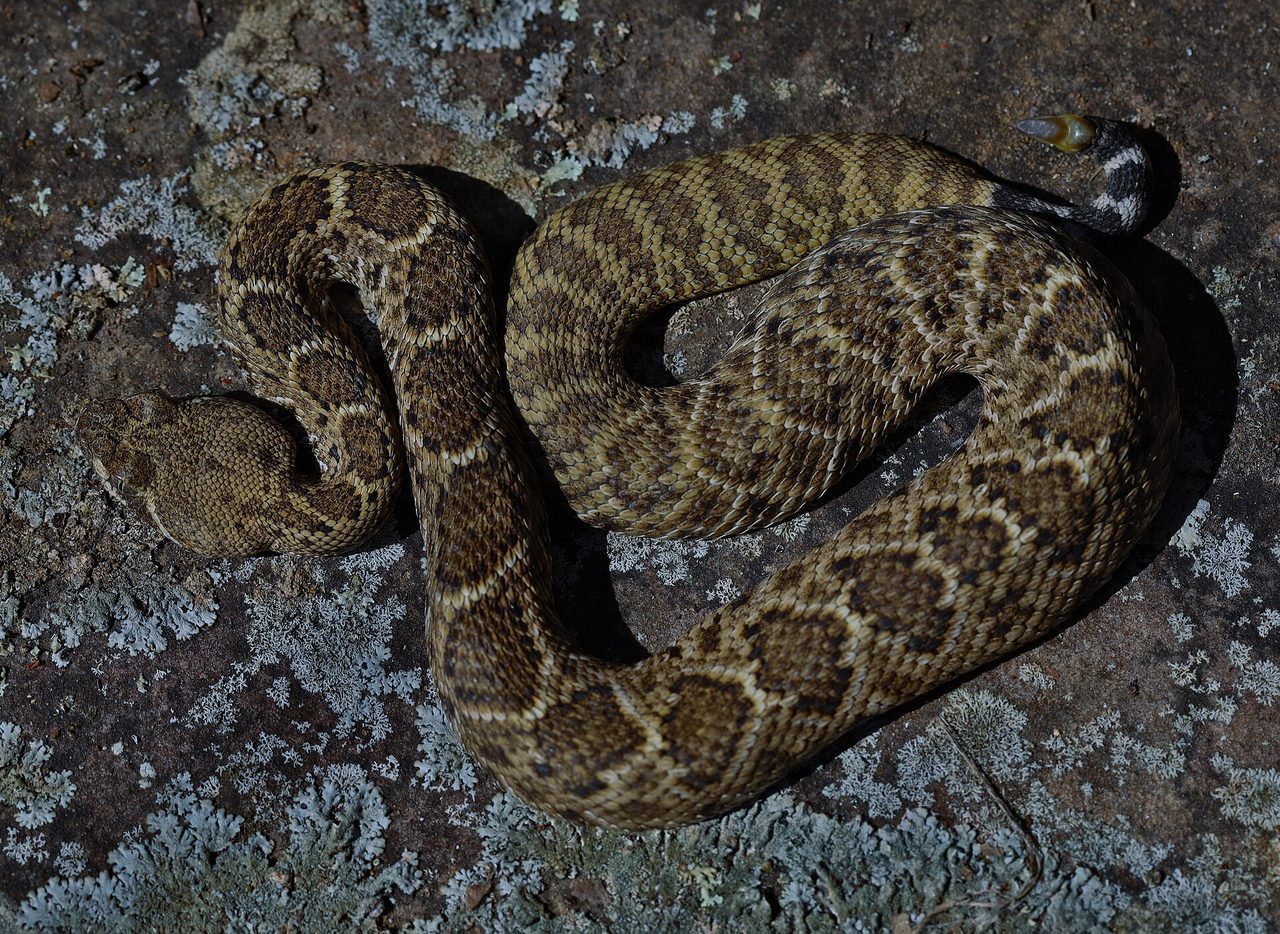
Photo: Peter Paplanus from St. Louis, Missouri / Wikimedia Commons (CC BY 2.0)
In brief
Rattlesnakes are American pit vipers (~36 species) with tail rattles and heat-sensing pits — venomous rodent controllers whose status varies from Least Concern to Endangered.
Also in Animals A to Z · Animals that start with R
By WARN Research & Conservation TeamLast updated
Rattlesnakes are pit vipers of genera Crotalus and Sistrurus, named for keratin rattle segments appended each time the snake sheds. Roughly 36 species inhabit deserts, grasslands and forests from Canada to Argentina. Heat-sensing pits between eye and nostril detect warm prey; haemotoxic and neurotoxic venom immobilises rodents. Rattlesnakes give birth to live young and are essential rodent controllers, yet face roadkill, roundups and habitat fragmentation across the Americas including Brazil and Colombia — WARN partner countries with diverse pit viper faunas.
36
Recognised rattlesnake species
2.4 m
Maximum length (eastern diamondback)
Pit viper
Heat-sensing loreal pits
Live birth
Ovoviviparous — bears live young
Figures sourced from IUCN Red List — Crotalus assessments, Smithsonian National Zoo — rattlesnake, Encyclopaedia Britannica — rattlesnake and other references on this page.
Rattlesnake: Quick Facts
| Species | ~36 in Americas |
|---|---|
| Rattle | Keratin segments added each shed |
| Heat pits | Detect infrared from prey |
| Reproduction | Live young (ovoviviparous) |
| Venom | Haemotoxic; some neurotoxic |
| Largest | Eastern diamondback — up to ~2.4 m |
Scientific Classification
| Kingdom | Animalia |
|---|---|
| Phylum | Chordata |
| Class | Reptilia |
| Order | Squamata |
| Family | Viperidae |
| Subfamily | Crotalinae (pit vipers) |
| Genera | Crotalus, Sistrurus |
Conservation Status
- IUCN Status
- Varies by species. Most widespread species Least Concern; island and range-restricted species Endangered or Critically Endangered.
- Population
- Unknown for most; local declines from roadkill and roundups
- Trend
- Decreasing for several species with restricted ranges
- Assessed
- Varies by species
- CITES
- Not listed as a group; international pet trade minimal
Road mortality is a major source of adult death near human development.
Key Facts: Rattlesnake
- The rattle is a warning device — added segment each shed; silent rattlesnakes still bite.
- Pit organs detect infrared radiation from warm-blooded prey.
- Most US snakebite fatalities involve rattlesnakes, yet deaths remain rare with care.
- Rattlesnake roundups in some US states harvest wild snakes controversially.
- Brazil and Colombia host relatives in the wider pit viper radiation — not true Crotalus.
- Freeze-dried rattles and novelty products drive minor trade; habitat loss is the main threat.
Pit vipers and the rattle
Rattlesnakes belong to Viperidae subfamily Crotalinae — pit vipers sharing heat-detecting loreal pits with copperheads and bushmasters. The rattle comprises interlocking keratin segments clicking when vibrated — an honest signal reducing surprise encounters.
Triangular heads house venom glands; vertical pupils aid nocturnal hunting. Colour patterns — diamonds, bands, blotches — camouflage against local substrate from desert sand to forest floor.
Juveniles born with pre-button shed into first rattle segment within days. Adults may retain multiple segments or break them in brush.
Venom, bite and medical care
Rattlesnake venom mixes haemotoxins damaging tissue and blood clotting with neurotoxins in some species — Mojave rattlesnake famously. Bites cause pain, swelling and systemic effects requiring hospital monitoring.
First aid emphasises immobilisation, removal of tight jewellery and urgent medical care — not tourniquets, cutting or suction. Antivenom availability in US and Mexican hospitals keeps mortality low despite thousands of bites yearly.
Dry bites without envenomation occur — snakes meter venom for prey, not always wasting it on defensive strikes.
Ecology and roundups
Rattlesnakes consume rodents, rabbits and ground birds, reducing hantavirus and crop damage vectors. They are prey for roadrunners, kingsnakes, hogs and raptors.
Spring denning aggregations in northern climates concentrate hundreds overwintering — vulnerable to development and deliberate destruction. Texas and Oklahoma roundups collect thousands annually for meat and entertainment, debated for sustainability and cruelty.
Several species are range-restricted: eastern massasauga Endangered in Canada; Santa Catalina rattlesnake Critically Endangered on one Mexican island.
Rattlesnakes and people
Hikers prevent bites by watching foot placement, avoiding hand holds in crevices and giving space when rattling is heard. Boots and trekking poles reduce risk in snake country.
In Brazil and Colombia, pit vipers such as fer-de-lance cause more medical cases than any true rattlesnake — different genera, similar caution. WARN education promotes regional snake awareness without universal fear.
Never collect wild rattlesnakes as pets. Secure property reduces rodent attraction that draws snakes near homes.
What WARN Does
WARN educates readers in Brazil and Colombia — nations with diverse pit vipers — alongside US-focused rattlesnake searchers. Free guides promote coexistence and habitat stewardship across partner countries.
If this guide helps you understand wildlife and the pressures it faces, a gift to WARN supports habitat protection and free public education in our partner countries.
Rattlesnake: Frequently Asked Questions
How many rattlesnake species are there?
Why do rattlesnakes rattle?
Are rattlesnake bites fatal?
Do rattlesnakes lay eggs?
What do rattlesnakes eat?
Where do rattlesnakes live?
Are rattlesnakes dangerous?
How long do rattlesnakes live?
How big is a rattlesnake?
Sources & References
Population figures, conservation status and biological facts on this page are drawn from authoritative scientific and intergovernmental sources.
Terms used on this page
Plain-English definitions, from our wildlife and conservation glossary.
Explore more animals
Discover more animals, their habitats and their conservation status in the WARN wildlife-guide library.