Wildlife Guide · Africa & India
Rhino
Family Rhinocerotidae — 5 living species in Africa and Asia
The armoured giants of Africa and Asia — five species, one horn trade, racing against extinction.
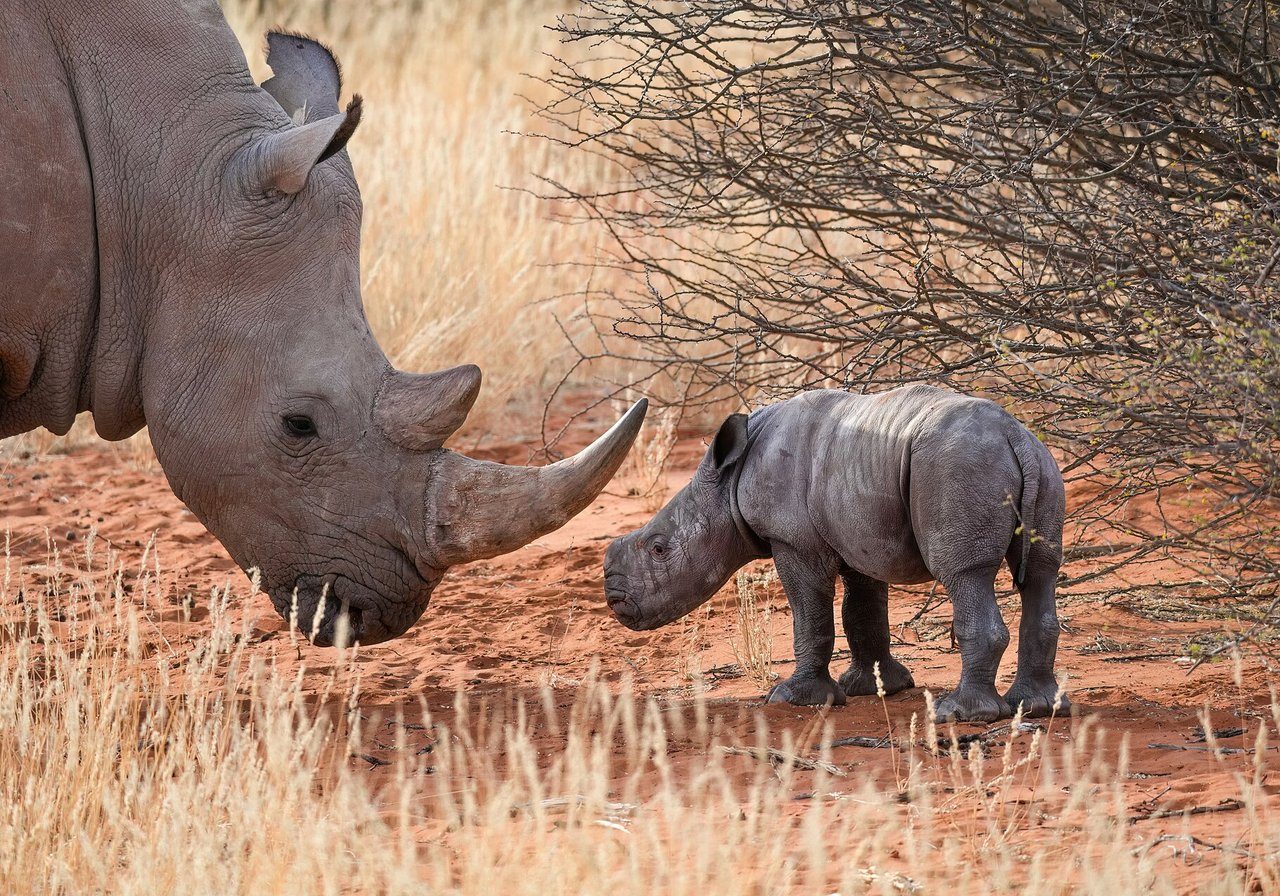
Source: Wikimedia Commons
In brief
Rhinoceroses are five living species of horned megaherbivores in Africa and Asia; all are threatened by poaching for keratin horn, with three species Critically Endangered including the Sumatran rhino with fewer than 50 individuals.
Also in Animals A to Z · Animals that start with R
By WARN Research & Conservation TeamLast updated
Rhinoceroses are massive herbivorous mammals of the family Rhinocerotidae, defined by one or two keratin horns on the snout and thick grey skin that looks like armour plating. Five species survive: white and black rhinos in Africa; greater one-horned, Javan and Sumatran rhinos in Asia. All are threatened — three are Critically Endangered. Rhino horn is made of keratin, the same protein as human fingernails, yet illegal trade drives poaching that kills more than a thousand rhinos annually in Africa alone. The Sumatran rhino — the smallest and hairiest — numbers fewer than 50 individuals. This guide covers rhinos as a family; see WARN's Sumatran rhino guide for that species in detail.
~26,700
Total wild rhinos across all five species (2025)
3
Critically Endangered species
516
African rhinos poached in 2024 (11-year low)
Appendix I
CITES listing — all rhino species
Figures sourced from IUCN Red List — Rhinocerotidae assessments, Save the Rhino International, CITES — Checklist of CITES Species .
Rhino: Quick Facts
| Species | 5 living — 2 African, 3 Asian |
|---|---|
| Horn | Keratin — same protein as fingernails |
| Largest | White rhino — up to 2,300 kg |
| Rarest | Sumatran rhino — fewer than 50 individuals |
| Recovery | White rhino restored from ~100 to 17,000+ |
| CITES | Appendix I — all species |
Scientific Classification
| Kingdom | Animalia |
|---|---|
| Phylum | Chordata |
| Class | Mammalia |
| Order | Perissodactyla (odd-toed ungulates) |
| Family | Rhinocerotidae |
| Species | 5 living species across 4 genera |
Conservation Status
- IUCN Status
- Black, Javan and Sumatran rhino Critically Endangered. White rhino Near Threatened. Greater one-horned rhino Vulnerable.
- Population
- Roughly 26,700 rhinos globally across all five species (2025)
- Trend
- Decreasing for Critically Endangered species; increasing for recovered white and greater one-horned rhinos
- Assessed
- Varies by species (2020–2023)
- CITES
- Appendix I — all rhino species
See WARN Sumatran rhino guide for Dicerorhinus sumatrensis — distinct from this generic rhino hub.
Key Facts: Rhino
- Five rhino species survive — white, black, greater one-horned, Javan and Sumatran.
- Rhino horn is keratin — the same protein as fingernails — with no proven medical value.
- Three species are Critically Endangered: black, Javan and Sumatran rhino.
- The Sumatran rhino is the smallest and rarest, with fewer than 50 individuals.
- Poaching for the illegal horn trade is the primary threat to all five species.
- White rhinos recovered from fewer than 100 to over 17,000 through intensive protection.
Five species, two continents
African rhinos comprise the white rhino (Ceratotherium simum) — the largest, with a wide square lip for grazing — and the black rhino (Diceros bicornis) — smaller, with a pointed lip for browsing. White rhinos number over 17,000 after recovery from near extinction; the northern white rhino is functionally extinct with two surviving females. Asian rhinos include the greater one-horned rhino (Rhinoceros unicornis) of India and Nepal — recovered to over 4,000; the Javan rhino (Rhinoceros sondaicus) — Critically Endangered with around 50 individuals confined to Ujung Kulon National Park on Java, following a 2019–2023 poaching operation; and the Sumatran rhino (Dicerorhinus sumatrensis) — the smallest, hairiest and rarest, with fewer than 50 individuals in Indonesia.
The horn trade and poaching crisis
Rhino horn consists of keratin — compressed hair — with no scientifically proven medicinal value. Despite this, demand in Vietnam and China for traditional medicine and status symbols drives an illegal trade worth hundreds of millions of dollars annually. Poachers use high-powered rifles, veterinary immobilising drugs and chainsaws to remove horns from living or dead animals. At the 2015 peak, more than 1,300 rhinos were poached in South Africa alone. Anti-poaching units, dehorning programmes, DNA horn tracking and demand-reduction campaigns have reduced poaching rates, but the threat persists wherever rhinos carry horn.
Ecology and behaviour
Rhinos are megaherbivores shaping savanna and forest ecosystems. White rhinos graze grass, maintaining open savanna; black rhinos browse shrubs and trees. Greater one-horned rhinos graze and browse floodplain vegetation. All species use wallows and mud baths to regulate temperature and remove parasites. Rhinos have poor eyesight but acute hearing and smell. They communicate through vocalisations, scent marking and dung piles. Calves stay with mothers for two to four years. Despite their bulk — white rhinos reach 2,300 kg — rhinos can charge at 50 km/h when threatened.
Conservation successes and priorities
Rhino conservation has notable successes alongside catastrophic losses. White rhinos recovered from fewer than 100 in the 1890s to over 17,000 through translocation and protected-area management. Greater one-horned rhinos rebounded from roughly 200 to over 4,000. The Javan rhino persists in a single population in Ujung Kulon National Park. Sumatran rhino recovery depends on captive breeding and isolated wild populations in Indonesia. CITES Appendix I bans all commercial international horn trade. WARN's rhino appeal supports anti-poaching and habitat work; see the Sumatran rhino guide for detail on the rarest species.
What WARN Does
WARN publishes this guide for education and is developing support through assessed animal-welfare grants. A species range, source citation or photograph does not establish a recipient or funding agreement. Check /about/where-your-money-goes/#grant-register for published grant and payment records; records not yet published must not be read as zero activity. Browse /appeals/ for the purposes currently available to support.
If this guide helps you understand wildlife and the pressures it faces, a gift to WARN supports habitat protection and free public education in our partner countries.
Rhino: Frequently Asked Questions
How many rhino species are there?
What is rhino horn made of?
Which rhino is most endangered?
Are white rhinos extinct?
What do rhinos eat?
Where do rhinos live?
Are rhinos dangerous?
How long do rhinos live?
How big is a rhino?
Sources & References
Population figures, conservation status and biological facts on this page are drawn from authoritative scientific and intergovernmental sources.
Terms used on this page
Plain-English definitions, from our wildlife and conservation glossary.
Latest Rhino Stories
Quick, fact-checked reads on the rhino — amazing facts, key questions and the threats it faces.
Briefings
Kalimantan forest fires 2026: orangutans, smoke and how to help
What official reports say about Kalimantan’s forest fires, Sempurna the orangutan, smoke and wildlife rescue—and how to help through informed giving or sharing.
Read the storyBriefings
Three Rehabilitated Orangutans Released Back Into the Wild in East Kalimantan
Three Bornean orangutans — Bagus, Eboni and Ruby — were released into a protected forest in East Kutai, East Kalimantan, on 23 June 2026, after years of rehabilitation following rescue from the illegal pet trade. All three are Critically Endangered Pongo pygmaeus.
Read the storySpecies
Why Are Orangutans Endangered? Palm Oil, Deforestation and the Rescue Crisis in Borneo
Orangutans are endangered because of a single dominant cause: deforestation. All three remaining species have been reduced to small, fragmented populations in what remains of Borneo's and Sumatra's lowland and peat-swamp forests — and the crisis is getting worse, not better.
Read the storyExplore more animals
Discover more animals, their habitats and their conservation status in the WARN wildlife-guide library.