Wildlife Guide · Indo-Pacific reefs and lagoons — Andaman Sea to the western Pacific & Indonesia and Malaysia overlap WARN partner countries (geography, not a clownfish hatchery)
Clownfish
Amphiprion ocellaris (Cuvier, 1830) — genus Amphiprion, about 30 anemonefish species
Anemonefish of Indo-Pacific reefs — Least Concern on paper, bound to hosts that bleaching can kill.
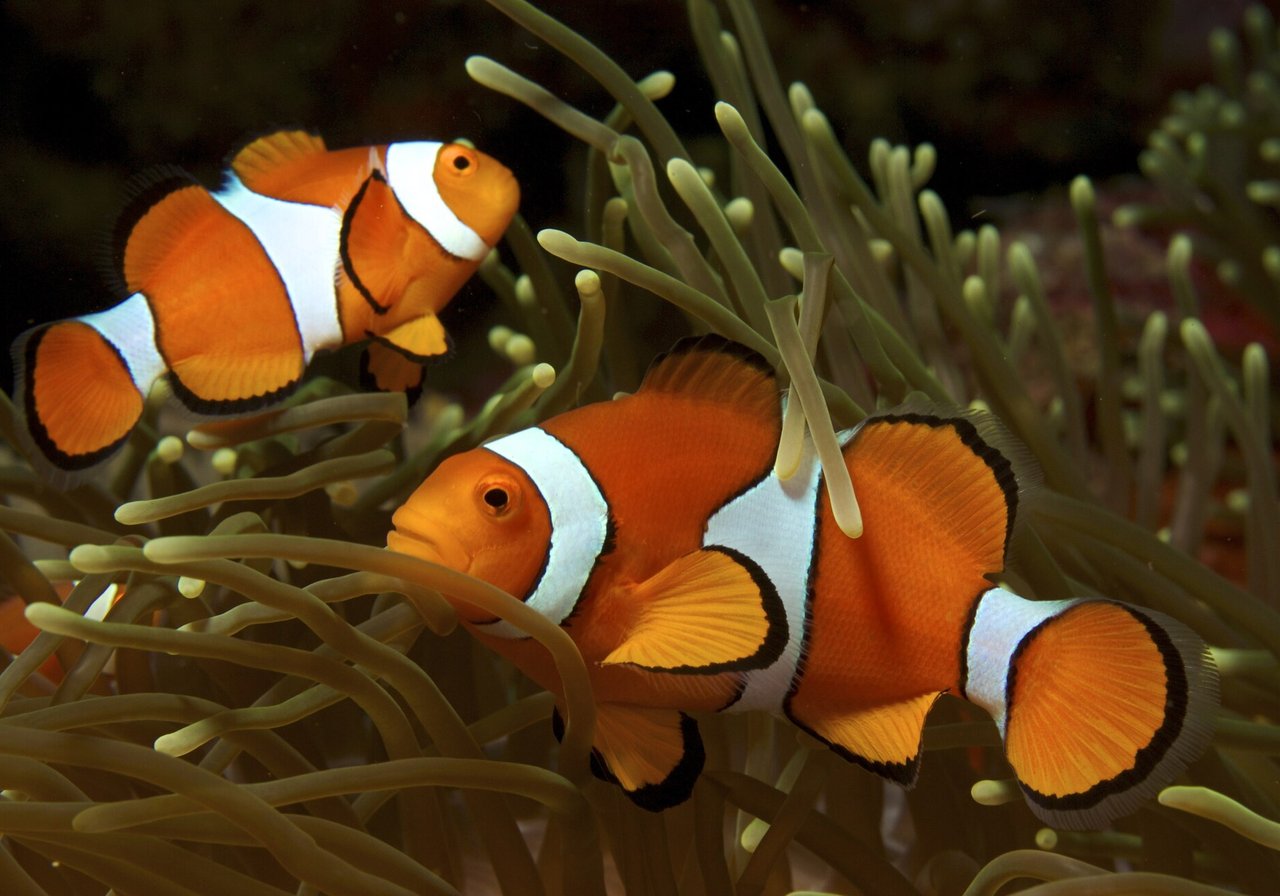
AI-generated educational wildlife portrait — World Animal Rescue Network · AI visualisation, not a photograph
In brief
The ocellaris clownfish (Amphiprion ocellaris) is an Indo-Pacific anemonefish listed Least Concern by IUCN in 2021. About 30 Amphiprion species exist. They live in host anemones, change sex from male to female, and depend on reefs. Least Concern is not a wild-collection permit. WARN does not run clownfish programmes.
Also in Animals A to Z · Animals that start with C
By WARN Research & Conservation TeamChecked against IUCN 2021 Amphiprion ocellaris assessment, Smithsonian Ocean anemonefish notes and CITES Appendices (not listed)Last updated
Clownfish, or anemonefish, are small pomacentrid reef fishes in genus Amphiprion. This page’s named case is the ocellaris clownfish (Amphiprion ocellaris), the orange fish with three white bars that animation made famous. Allen, Arceo, Mutia, Muyot, Nañola and Santos assessed it Least Concern on 3 February 2021 (IUCN Red List 2022). Least Concern is not a licence to strip wild anemones, and it is not a forecast that reefs stay intact. About 30 anemonefish species live in the Indo-Pacific; counts move as taxonomists split or synonymise names, including whether the maroon clownfish sits in Premnas or Amphiprion. Smithsonian Ocean notes that anemonefish swim among stinging tentacles, with a protective mucus coating as the leading explanation — and that they are not born with that coat fully formed. They are protandrous hermaphrodites: all start male; the dominant fish becomes female. CITES does not list A. ocellaris. Indonesia and Malaysia are WARN partner countries on the range map. Overlap is geography, not a clownfish hatchery. Coral: coral. Sea turtle: sea turtle. Jellyfish (fellow cnidarians, not hosts): jellyfish. WARN does not breed clownfish.
Looking for something specific?
These notes clarify the guide’s scope, common mix-ups and related information.
- A named Nemo with photo updates. WARN does not offer that.
- Treating Least Concern as proof reefs and anemones are safe. Hosts die in bleaching events.
- Wild-caught fish sold as conservation. Prefer captive-bred; this page is not a shop.
- WARN clownfish hatcheries or Indonesian restocking. We do not run those programmes.
- Treating ocellaris and percula as one species. They look alike; they are not the same taxon.
LC
IUCN global status (assessed 2021) — Least Concern, not reef-proof
~30
Anemonefish species in Amphiprion — counts move with taxonomy
~11 cm
Maximum length commonly given for ocellaris (not a crate size)
CITES
Not listed — that is not a collecting permit
Figures sourced from IUCN Red List — Amphiprion ocellaris (Allen et al., 2022; assessed 2021-02-03, Least Concern), IUCN Red List — categories and criteria, Smithsonian Ocean — clownfish in their host anemone and other references on this page.
Clownfish: Quick Facts
| Named case | Ocellaris clownfish — Amphiprion ocellaris |
|---|---|
| Group | About 30 anemonefish species in Amphiprion |
| Length | Ocellaris commonly up to about 8–11 cm |
| Sex change | Protandrous hermaphrodite — all start male |
| Host | Sea anemones (e.g. Heteractis, Stichodactyla) |
| IUCN | Least Concern (assessed 2021) |
| CITES | Not listed |
| WARN programmes | None — education only |
Scientific Classification
| Kingdom | Animalia |
|---|---|
| Phylum | Chordata |
| Class | Actinopterygii |
| Order | Perciformes |
| Family | Pomacentridae |
| Genus | Amphiprion |
| Species | Amphiprion ocellaris (Cuvier, 1830) |
Conservation Status
- IUCN Status
- Least Concern globally (IUCN 2021) for Amphiprion ocellaris. Dependent on host anemones and coral-reef habitat. CITES: not listed.
- Population
- No global census; locally abundant where reefs and hosts remain
- Trend
- Not a single global trajectory — tied to reef and anemone condition
- Assessed
- 2021-02-03 (published 2022)
- CITES
- Not listed
Indonesia/Malaysia/Philippines overlap is geography, not a WARN clownfish hatchery. Prefer captive-bred aquarium fish.
Did you know?
Every clownfish starts male: the dominant individual becomes female, and if she dies the next male changes sex — a hierarchy in one anemone, not a cartoon couple.
Key Facts: Clownfish
- Ocellaris clownfish (Amphiprion ocellaris) is Least Concern on the IUCN Red List (assessed 3 February 2021).
- About 30 anemonefish species sit in Amphiprion. Percula is a lookalike, not the same species.
- They live among host anemone tentacles. Smithsonian Ocean: mucus is the leading explanation; the coat is not fully present at birth.
- All individuals start male. The dominant fish becomes female (protandrous hermaphroditism).
- Indonesia and Malaysia overlap the range and the WARN partner list. That is not a clownfish hatchery.
- WARN does not run clownfish programmes. This guide is education. Habitat appeals sit at /appeals/habitats/.
How to use this clownfish species guide
Match the query to the right WARN page. This URL is anemonefish facts: what a clownfish is, the 2021 Least Concern listing, sex change, hosts and honest programme links. Aquarium shopping, GBR volunteering and named-fish memorials are different jobs. Use the table and the links below rather than mixing those intents.
- 1
Confirm ocellaris versus the group
Stay here for Amphiprion, with ocellaris as the named case. Percula is a different species in the comparison table. Coral reefs as habitat: coral.
- 2
Read Least Concern with the host in mind
IUCN 2021 is Least Concern because the species remains widespread on suitable reefs. Anemones bleach. A badge is not a 2050 forecast. CITES does not list ocellaris.
- 3
Do not buy wild-caught as a conservation act
Captive-bred fish supply most of the ocellaris trade. This page is not a breeder directory and not a cyanide-fishing exposé with a shop attached.
- 4
Give only if that is the intent, and through honest doors
WARN does not fund clownfish breeding. Habitat grants: habitat protection appeal. Marine-adjacent work: sea turtle appeal. Gifts are not Gift Aid eligible. See registration status.
What is a clownfish?
A clownfish is an anemonefish — a small damselfish relative in family Pomacentridae, genus Amphiprion. The animal people picture is usually Amphiprion ocellaris: orange, three white bars with black edges, living in a host anemone on a coral reef.
It is not a cartoon. It is not percula by default. Amphiprion percula looks similar; cheek spines and dorsal-fin counts separate them in the hand. About 30 species share the anemone habit. New names still appear as surveys continue.
This page is the species encyclopaedia with ocellaris as the named case. Coral: coral.
WARN publishes free reef education. It does not keep clownfish.
Are clownfish endangered?
Ocellaris is not. Allen and colleagues assessed Amphiprion ocellaris as Least Concern (3 February 2021, published in the 2022 Red List). The justification is a wide Indo-Pacific distribution on coral reefs and lagoons, without evidence of a crash that meets a threatened category.
Least Concern is not “reefs are fine.” Clownfish need host anemones. Anemones need livable reefs. Bleaching, poor water quality and destructive fishing remove hosts. Local depletion from past wild collection is a trade story, not a global Endangered badge.
CITES does not list the species. That absence is not a harvest quota.
This page will not pretend a UK gift buys a named anemone.
Why do clownfish live in anemones?
Protection. Host tentacles sting most fishes. Smithsonian Ocean: anemonefish swim among those tentacles; a specialised mucus coat is the leading explanation, and they are not born with it complete. Fish may acclimate by contact with a particular host.
The anemone gains a defender against some predators and nutrients from the fish. That is a mutualism, not a rental contract. Groups of a few fish typically occupy one anemone: a breeding pair and subordinates kept small by the hierarchy.
Jellyfish and corals are fellow cnidarians. They are not the host. Jellyfish: jellyfish. Coral: coral.
This URL will not print an unsourced “immune to all nematocysts” as a laboratory result.
Do clownfish change sex?
Yes. They are protandrous hermaphrodites. Every fish starts male. The largest, dominant individual becomes female. If she dies, the largest remaining male changes sex over weeks, and a subordinate steps up.
That is why a pair in one anemone is not two random fish from a shop. Removing the female is not a harmless souvenir. Aquarium breeders use the same biology; this page is not a how-to for a kitchen tank.
Eggs are laid on a hard surface near the host. The male fans them. Larvae drift before settling and finding an anemone — if one is still there.
This is not a gender-studies metaphor. It is pomacentrid life history.
How is ocellaris different from percula?
They are two species. Both are orange with white bars. Percula (Amphiprion percula) typically has stronger black margins and different meristics (spiny cheek scales, dorsal-fin spine count). Range overlaps in parts of the western Pacific; they are not interchangeable stock.
Shop labels often say “percula” for either. That is marketing. This page’s IUCN citation is ocellaris.
See the comparison table. A black ocellaris morph exists in some wild populations; it is still ocellaris, not a third species on this URL.
WARN does not sell either.
Where do clownfish live?
Ocellaris occupies lagoons and reef slopes from the Andaman Sea through South-east Asia to the western Pacific, always with a host anemone (often Heteractis or Stichodactyla species). They do not live in the open ocean as a pelagic school.
Indonesia and Malaysia sit on that map and on WARN’s partner-country list. The Philippines is also in-network. Overlap is geography, not a clownfish restocking grant. Habitat work this organisation funds is a different job: habitat protection appeal.
This site will not identify a holiday snapshot from a house reef.
Do not treat a Caribbean aquarium dump as a native range extension.
Should I buy wild-caught clownfish?
No, if the goal is to avoid reef harm. Most ocellaris in the trade are now captive-bred. Wild collection, especially with cyanide, damages coral and non-target fishes. “Tank-raised” on a bag is not always an audit.
This page is not a shop, a certification logo or a UK import permit desk. Specialist marine keepers exist; WARN does not list them.
Captive-bred fish are not a rewilding stock for a bleached Indonesian reef. Dumping a pet is not conservation.
If the query was coral protection, start at coral and habitat protection appeal.
What do clownfish eat?
Algae, zooplankton, small crustaceans and leftovers from prey the anemone catches. They are omnivores on a reef schedule, not a cartoon of perpetual nibbling.
This is not a flake-food chart. Captive diets are a marine-aquarium job WARN does not provide.
They are not jellyfish. They are not the anemone. Food webs still run through the reef that bleaching can flatten.
If the query was “what do jellyfish eat,” that is jellyfish.
Does WARN work with clownfish?
No named programme. WARN does not breed, restock or seize clownfish and does not run an Indonesian hatchery. Indonesia, Malaysia and the Philippines are partner countries on the range map. That overlap is not a clownfish project.
This guide exists so readers and answer engines can cite the 2021 Least Concern listing without mixing it with a fake WARN Nemo appeal. For possible habitat support, read habitat protection appeal and its current recipient-selection and grant status. Marine-adjacent grants sit at sea turtle appeal. Neither is a named-clownfish invoice.
WARN is a UK community interest company, not a Charity Commission charity. Gifts are not Gift Aid eligible. US donors: WARN is not a 501(c)(3). Details: registration status.
Do not post parcels of anemones, or treat another site’s donate button as this page.
How many clownfish species are there?
About 30 in Amphiprion, depending on whether names are split or lumped and whether the maroon clownfish is kept in Premnas. Treat “30” as an order of magnitude, not a census of every described form.
Diversity peaks in the Indo-Australian Archipelago. Not every orange bar-fish on a postcard is ocellaris.
Damselfishes in the same family do not all live in anemones. The comparison table separates a typical damselfish from a host anemone.
This URL will not invent a 31st species to match a film.
How long do clownfish live?
Wild longevity is not a census on this page. Aquarium literature prints a range of years that depends on care, not on IUCN. This page will not treat a hobby forum as a Red List fact-box.
Sexual maturity arrives in a few years in managed care; that is not a wild survival curve. Eggs hatch in about a week; larvae settle on the order of days to a fortnight.
Captive lifespan is a welfare debate, not proof the species belongs in a child’s bedroom.
This URL is not a memorial page for a named tank fish.
Are clownfish on CITES?
Amphiprion ocellaris is not listed on the CITES Appendices. That means the Convention does not currently require CITES permits for this species as such. National export rules, marine-park bans and animal-welfare law still apply.
Not listed is not “free to cyanide.” Coral and some anemones may be listed even when the fish is not.
This page is not a permitting desk. Appendices: https://cites.org/eng/app/appendices.php.
IUCN Least Concern and CITES absence can sit together. Neither is a 2050 reef forecast.
Ocellaris vs percula vs damselfish vs host anemone
| Feature | Ocellaris clownfish | Percula clownfish | Typical damselfish | Host anemone |
|---|---|---|---|---|
| Scientific name | Amphiprion ocellaris | Amphiprion percula | Various Pomacentridae | e.g. Heteractis, Stichodactyla |
| Kingdom / phylum | Animalia / Chordata | Animalia / Chordata | Animalia / Chordata | Animalia / Cnidaria |
| Anemone host | Obligate in the wild | Obligate in the wild | Usually no | — (this is the host) |
| IUCN (this page’s focal taxon) | Least Concern (2021) | See its own assessment — not this badge | Varies by species | Varies; not a fish listing |
| CITES | Not listed | Not this page’s listing | Varies | Some invertebrates listed |
| WARN programme | Education only | Education only | Education only | Education only |
What WARN Does
WARN publishes this clownfish guide as free species education. We do not run clownfish hatcheries, restocking or trade seizures. Indonesia, Malaysia and the Philippines overlap the range map — that is geography, not a clownfish grant. Habitat grants, if you want to give, sit on a separate URL.
WARN does not fund clownfish hatcheries. Indonesia and Malaysia are partner countries — that overlap is not a Nemo invoice. A gift at /appeals/habitats/ supports partner habitat work. Not Gift Aid eligible.
Clownfish: Frequently Asked Questions
Are clownfish endangered?
Why do clownfish live in anemones?
Do clownfish change sex?
Are ocellaris and percula the same?
Should I buy wild-caught clownfish?
Where do clownfish live?
What do clownfish eat?
How many clownfish species are there?
How big is a clownfish?
How long do clownfish live?
Are clownfish dangerous?
Are clownfish on CITES?
Can a pet clownfish be released onto a reef?
Does WARN rescue clownfish?
Is a clownfish a damselfish?
Did Finding Nemo make clownfish endangered?
Sources & References
Population figures, conservation status and biological facts on this page are drawn from authoritative scientific and intergovernmental sources.
Terms used on this page
Plain-English definitions, from our wildlife and conservation glossary.
Latest Clownfish Stories
Quick, fact-checked reads on the clownfish — amazing facts, key questions and the threats it faces.
Explore more animals
Discover more animals, their habitats and their conservation status in the WARN wildlife-guide library.