Ferret Breed · Domestic (colour type)
Dark-Eyed White
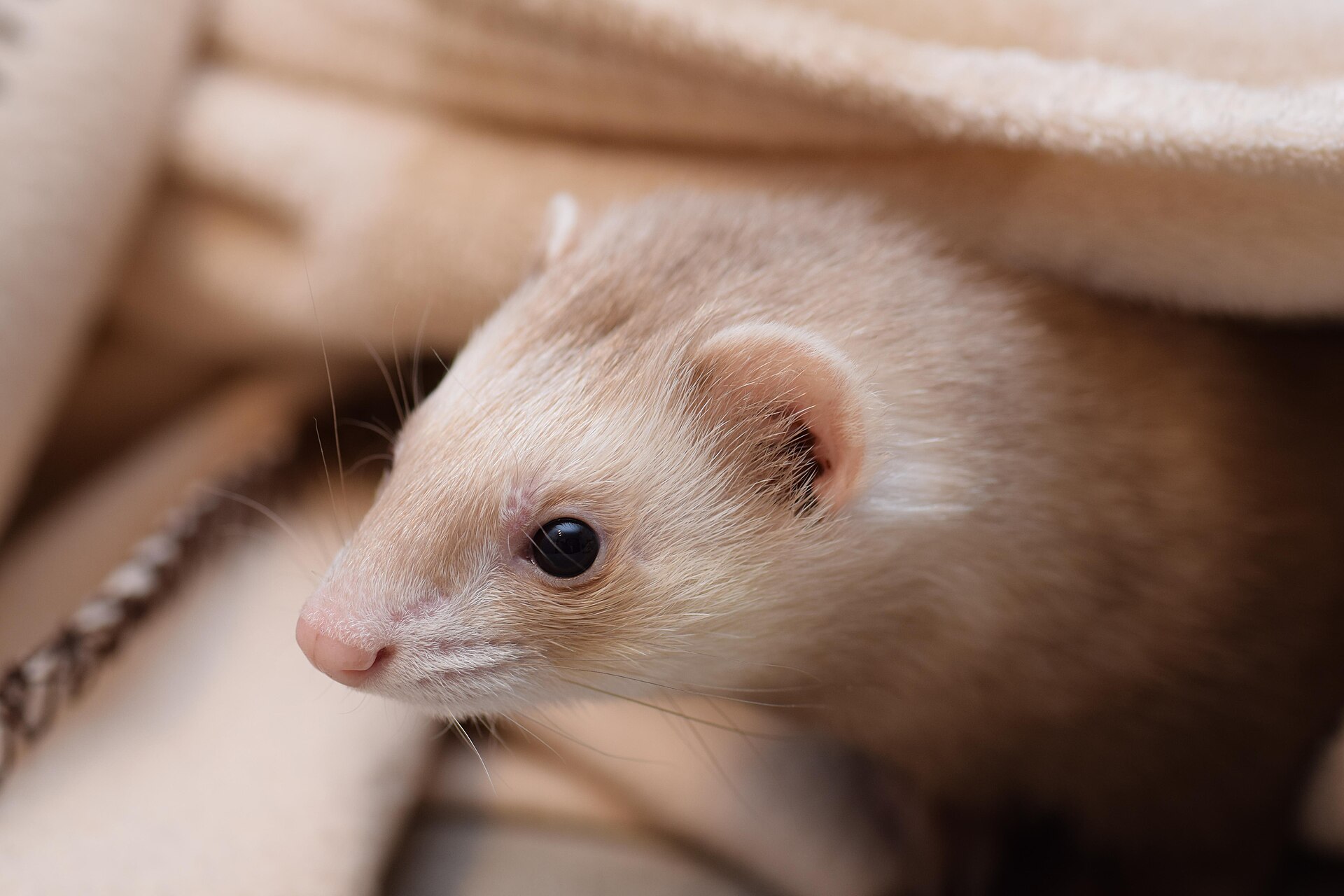
Pure white coat with dark eyes — a popular show and pet colour without pink-eye albinism.
By WARN Research & Conservation TeamLast updated
In brief
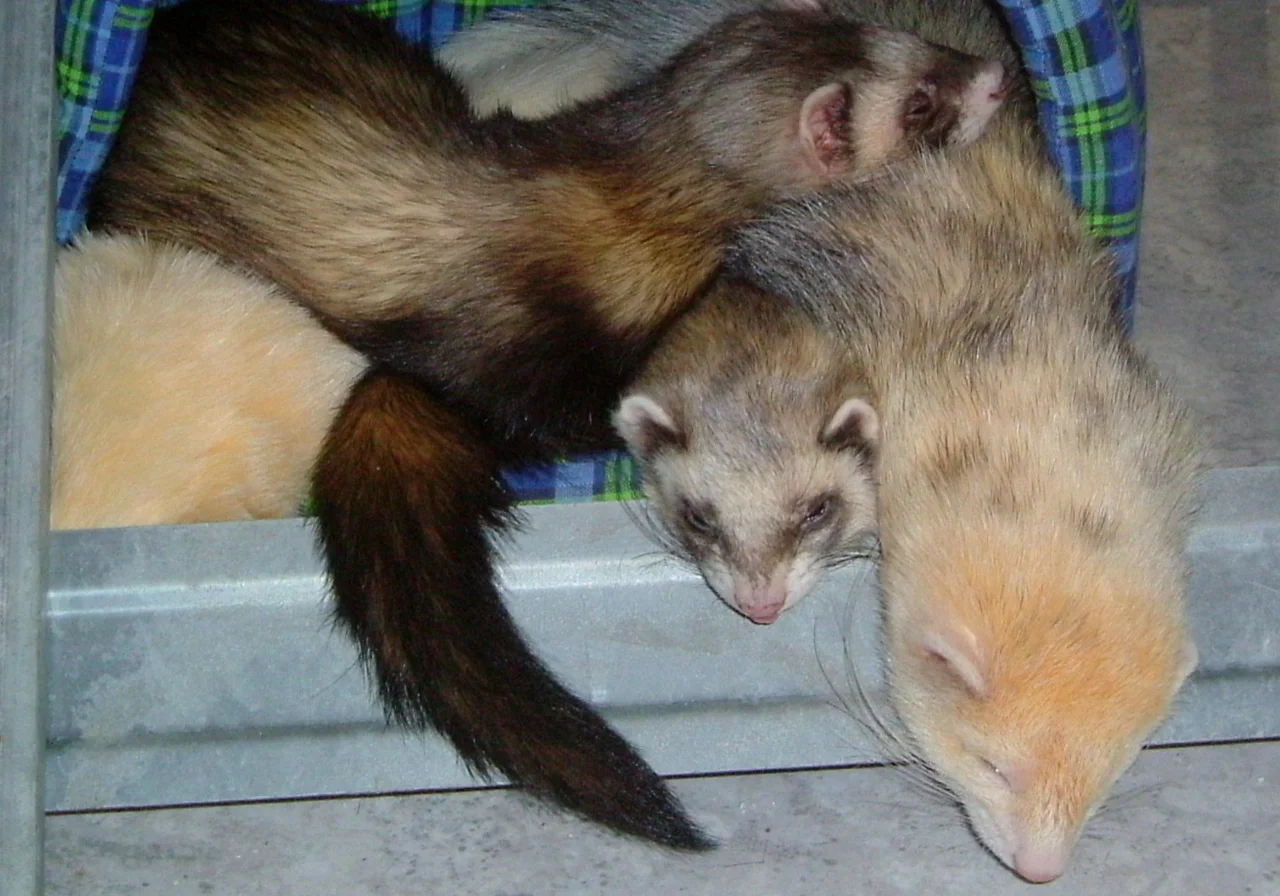
The Dark-Eyed White ferret is a domestic colour type with a pure white coat and normal dark eye pigment — distinct from pink-eyed albinos. Its defining trait is striking snow-white fur without the light sensitivity associated with albinism, making it a popular show and companion ferret.
What are the key facts about a Dark-Eyed White?
The Dark-Eyed White is a ferret breed from Domestic (colour type): small (0.7–2 kg), playful, inquisitive, social. Pure white coat with dark eyes — a popular show and pet colour without pink-eye albinism.
| Origin | Domestic (colour type) |
|---|---|
| Size | Small (0.7–2 kg) |
| Adult weight | 0.7–2 kg (1.5–4.4 lb); jills typically smaller than hobs |
| Lifespan | 5–10 years |
| Coat & colour | Short, dense white fur across the body with dark eyes and a pink or speckled nose depending on line. The coat needs little grooming beyond occasional brushing during seasonal moults. White ferrets may show slight yellowing if bedding is dusty, so keep litter and hammocks clean. |
| Temperament | Playful, inquisitive, social |
| Best suited to | Suits attentive indoor owners who can ferret-proof a room and provide daily supervised play. Dark-eyed whites thrive in pairs or small groups when neutered and introduced carefully. They need multi-level cages, dig boxes, tunnels and compatible companions rather than solitary hutch-style keeping. |
Is a Dark-Eyed White a good ferret for you?
A Dark-Eyed White is a good ferret when your home matches suits attentive indoor owners who can ferret-proof a room and provide daily supervised play. dark-eyed whites thrive in pairs or small groups when neutered and introduced carefully. they need multi-level cages, dig boxes, tunnels and compatible companions rather than solitary hutch-style keeping.. It is a playful, inquisitive, social small (0.7–2 kg) breed from Domestic (colour type).
Pure white coat with dark eyes — a popular show and pet colour without pink-eye albinism. That one-line pitch is not a care plan. Factor grooming (Short, dense white fur across the body with dark eyes and a pink or speckled nose depending on line. The coat needs little grooming beyond occasional brushing during seasonal moults. White ferrets may show slight yellowing if bedding is dusty, so keep litter and hammocks clean.), typical adult size (0.7–2 kg (1.5–4.4 lb); jills typically smaller than hobs), and the health issues listed below before you pay a deposit.
Meet adults of the breed, not only puppies or kittens, and prefer rescue or health-screened homes. A Dark-Eyed White that looks right in a photo can still be the wrong animal for a small flat, a full-time office job, or a household that wanted a low-energy companion.
What is a Dark-Eyed White?
Pure white coat with dark eyes — a popular show and pet colour without pink-eye albinism. Origin is Domestic (colour type); coat or markings are described as Short, dense white fur across the body with dark eyes and a pink or speckled nose depending on line. The coat needs little grooming beyond occasional brushing during seasonal moults. White ferrets may show slight yellowing if bedding is dusty, so keep litter and hammocks clean..
Kennel and registry labels describe a type. Individual Dark-Eyed Whites still vary, and rescue animals may be mixes.
Where does the Dark-Eyed White come from?
Dark-Eyed Whites come from Domestic (colour type). Dark-eyed white ferrets were selected from albino and silver breeding lines in North American and European ferretries during the late twentieth century.
Breeders wanted the visual impact of a white coat while retaining normal melanin in the eyes, reducing some welfare concerns linked to albinism. The colour type was formalised in modern ferret colour registries alongside sable, silver and cinnamon varieties. Today dark-eyed whites appear frequently in pet shops, show classes and working ferret lines descended from European polecat stock.
How much care does a Dark-Eyed White need?
Plan 5–10 years of food, vet care, grooming and time. A Dark-Eyed White is small (0.7–2 kg) (0.7–2 kg (1.5–4.4 lb); jills typically smaller than hobs) from Domestic (colour type), with coat care described as short, dense white fur across the body with dark eyes and a pink or speckled nose depending on line. the coat needs little grooming beyond occasional brushing during seasonal moults. white ferrets may show slight yellowing if bedding is dusty, so keep litter and hammocks clean..
Match daily exercise to the playful, inquisitive, social temperament rather than to Instagram.
Grooming follows the coat, not a generic clip: Short, dense white fur across the body with dark eyes and a pink or speckled nose depending on line. The coat needs little grooming beyond occasional brushing during seasonal moults. White ferrets may show slight yellowing if bedding is dusty, so keep litter and hammocks clean.. Keep the animal lean; extra weight is a joint and heart tax, especially in a small ferret.
Budget for unexpected vet bills. The health section below is why “cheap to buy” is not the same as cheap to keep.
What surprises people about the Dark-Eyed White?
A few details about the breed, alongside the practical care information in this guide.
- Dark-eyed whites are not albinos — they carry pigment in the eyes and often in the nose leather.
- White ferrets can still show a faint cream or yellow cast on the tail during seasonal coat change.
- The colour type appears across both American and European ferret breeding traditions.
- Show judges look for clean white coat colour without excessive spotting or yellow staining.
What health issues should you know about in a Dark-Eyed White?
Health concerns to discuss with your vet, including changes to watch for and everyday care. This is general guidance, not veterinary advice — always speak to your vet.
Adrenal disease
Benign or malignant adrenal tumours cause hair loss, itching, swollen vulva in jills and sometimes aggressive behaviour. Early neutering trends have not eliminated the condition in domestic ferrets.
Care: Schedule twice-yearly vet checks and discuss implant or surgical options if symptoms appear. Prompt treatment improves comfort and quality of life.
Insulinoma
Pancreatic tumours overproduce insulin, causing weakness, drooling, seizures or collapse, often after fasting or exercise. It is one of the most common ferret cancers.
Care: Feed frequent small high-protein meals and seek urgent vet care for collapse. Medication and surgery may be options depending on staging.
Dental disease
Tartar, gingivitis and fractured teeth develop in ferrets fed soft diets or given sugary treats. Bad breath and pawing at the mouth are warning signs.
Care: Offer appropriate chew enrichment and schedule dental checks with an exotics vet. Professional cleaning under anaesthesia may be needed.
Who should skip a Dark-Eyed White?
Skip a Dark-Eyed White if you are homes that cannot match a playful, inquisitive, social small (0.7–2 kg) ferret from Domestic (colour type). This Domestic (colour type) ferret is small (0.7–2 kg) and playful, inquisitive, social — the mismatch is usually lifestyle, not a missing accessory.
This page is allowed to say no. Skip if you are homes that cannot match a playful, inquisitive, social small (0.7–2 kg) ferret from Domestic (colour type).
A different ferret breed on this site may fit. Wanting “a Dark-Eyed White” after a film or a colour photo is not a reason to ignore the skip list.
What are the hidden catches with a Dark-Eyed White?
The hidden cost of a Dark-Eyed White is usually not the purchase price. It is years of care, the health list on this page, and the mismatch between a playful, inquisitive, social animal and a busy home.
The impulse-buy catch
A Dark-Eyed White from Domestic (colour type) is often sold on looks. Coat, colour and size are not a temperament test. Meet the adult animal, ask about health screening, and walk away from pressure sales.
The adrenal disease catch
Benign or malignant adrenal tumours cause hair loss, itching, swollen vulva in jills and sometimes aggressive behaviour. Early neutering trends have not eliminated the condition in domestic ferrets. Schedule twice-yearly vet checks and discuss implant or surgical options if symptoms appear. Prompt treatment improves comfort and quality of life.
The insulinoma catch
Pancreatic tumours overproduce insulin, causing weakness, drooling, seizures or collapse, often after fasting or exercise. It is one of the most common ferret cancers. Feed frequent small high-protein meals and seek urgent vet care for collapse. Medication and surgery may be options depending on staging.
How does a Dark-Eyed White compare with Champagne and Silver?
A Dark-Eyed White is not interchangeable with Champagne and Silver. Compare origin, size, lifespan and temperament before you choose — those four lines prevent most regret.
| Ferret fact | Dark-Eyed White | Champagne | Silver |
|---|---|---|---|
| Origin | Domestic (colour type) | Domestic (colour type) | Domestic (colour type) |
| Size | Small (0.7–2 kg) | Small (0.7–2 kg) | Small (0.7–2 kg) |
| Lifespan | 5–10 years | 5–10 years | 5–10 years |
| Temperament | Playful, inquisitive, social | Energetic, curious, affectionate | Active, mischievous, bonded |
What is the verdict on the Dark-Eyed White?
Choose a Dark-Eyed White only if the care, skip-if and health sections still look like your life after a week of thinking. Otherwise pick a different ferret or wait. Rescue is usually the better first door than a waiting-list puppy or kitten.
If the match is real, budget for 5–10 years of vet care and do not skip health screening. If it is not, walking away is the kind choice — for you and for the animal.
Ferrets need responsible homes
Ferrets are playful companions but often bought on impulse and abandoned when owners underestimate their care needs. WARN publishes these guides to promote responsible ownership and highlight the wider exotic-pet welfare issues our partners confront.