Wildlife Guide · Global oceans
Orca
Orcinus orca (Linnaeus, 1758)
The largest oceanic dolphin — black-and-white apex predators with pod-specific cultures, not one global census.
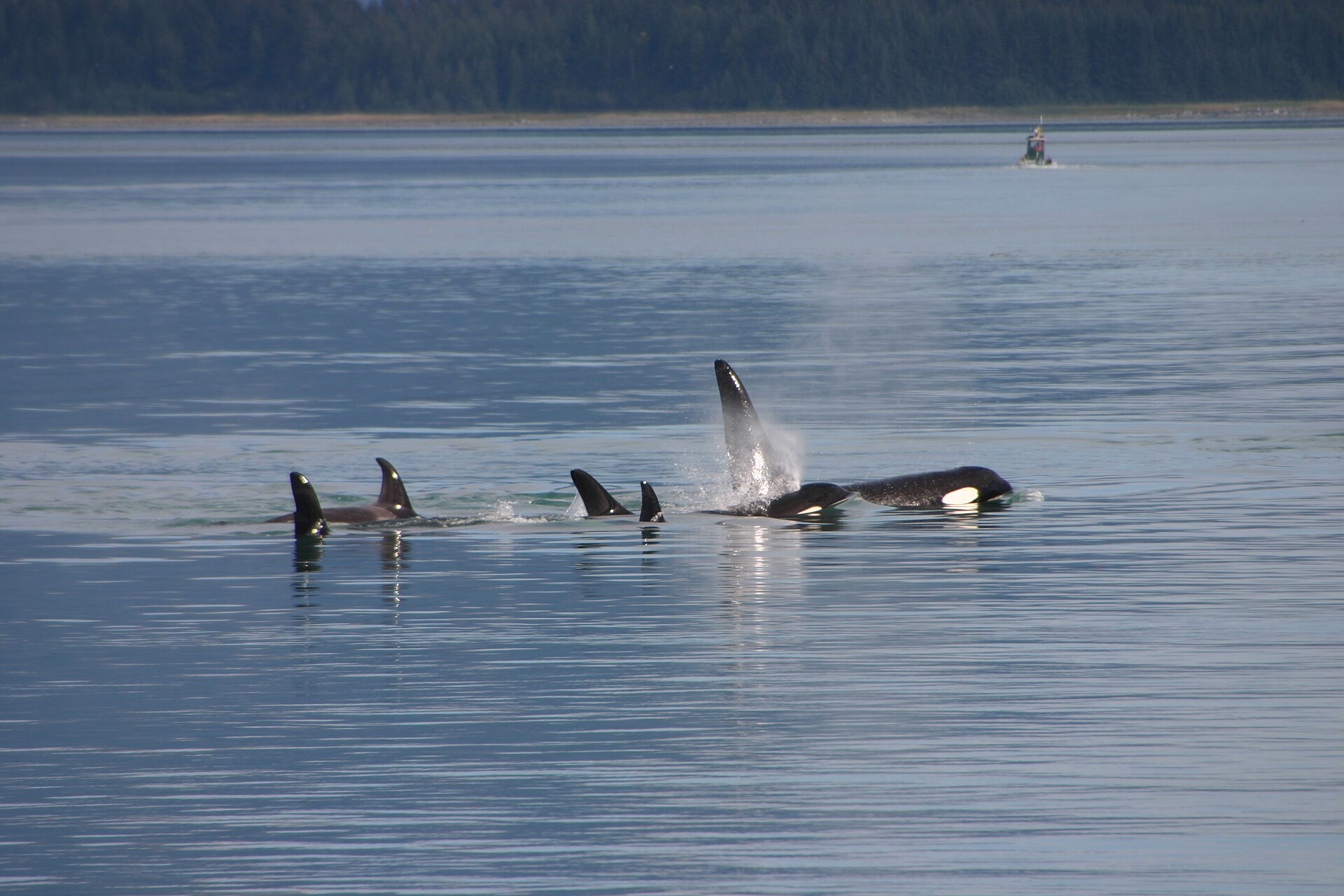
Photo: National Park Service / Wikimedia Commons (Public domain)
In brief
An orca (Orcinus orca), also called a killer whale, is the largest oceanic dolphin, not a baleen whale. The IUCN listed the species Data Deficient in 2017 because the name likely covers more than one taxon. Globally there are at least tens of thousands of mature animals; some regional populations, including US Southern Residents, are Endangered. WARN does not run orca programmes.
Also in Animals A to Z · Animals that start with O
By WARN Research & Conservation TeamChecked against IUCN 2017 Orcinus orca assessment, NOAA Fisheries killer whale populations and CITES Appendix IILast updated
The orca, or killer whale (Orcinus orca), is the largest member of the oceanic dolphin family Delphinidae. It is a toothed cetacean, not a baleen whale. Pods occur in every ocean, from polar ice to the tropics. Diet, dialect and genetics differ by ecotype: some specialise on fish, others on marine mammals. The IUCN listed the species Data Deficient in 2017 because the scientific name likely covers more than one subspecies or species. NOAA Fisheries cites a rough global estimate of around 50,000 animals; that is not a headcount. Some regional populations are separately listed as Endangered. This page is the species encyclopaedia. Dolphin family: dolphin. Whale hub: whale. WARN does not run orca capture, tagging or aquarium programmes.
Looking for something specific?
These notes clarify the guide’s scope, common mix-ups and related information.
- A named aquarium orca with photo updates. WARN does not offer that.
- Treating Data Deficient as a clean bill of health. Small regional populations can still be Endangered or Critically Endangered.
- Treating the Southern Resident census as if it were the global species count. That stock is one depleted North Pacific population.
- WARN orca capture, tagging, rehab or Salish Sea fieldwork. We do not run those programmes.
- Booking a swim-with-orcas tour, or confusing orcas with baleen whales. Baleen whales: blue whale. Cetacean hub: whale.
DD
IUCN global status (2017) — Data Deficient, not a clean bill of health
74
Southern Residents counted in the July 2025 census (Center for Whale Research / NOAA)
~50,000
NOAA's rough global estimate — not a census
CITES II
International trade in live animals and parts is regulated
Figures sourced from IUCN Red List — Orcinus orca (2017, Data Deficient), IUCN Red List — Strait of Gibraltar subpopulation (2019, Critically Endangered), IUCN Red List — categories and criteria and other references on this page.
Orca: Quick Facts
| Also called | Killer whale |
|---|---|
| Family | Delphinidae (oceanic dolphins) |
| Length | Males up to about 8–9 m; females smaller |
| Weight | Large males typically several tonnes |
| Lifespan | Females often 50–80+ years; males typically shorter |
| Gestation | About 15–18 months |
| Baby name | Calf |
| Group | Pod (matrilineal) |
| IUCN global | Data Deficient (2017) |
| CITES | Appendix II |
| Diet | Varies by ecotype — fish or marine mammals |
| WARN programmes | None — education only |
Scientific Classification
| Kingdom | Animalia |
|---|---|
| Phylum | Chordata |
| Class | Mammalia |
| Order | Artiodactyla |
| Family | Delphinidae |
| Genus | Orcinus |
| Species | Orcinus orca |
Conservation Status
- IUCN Status
- Data Deficient globally (IUCN 2017). Southern Resident DPS Endangered (US ESA, 2005). Strait of Gibraltar subpopulation Critically Endangered (IUCN 2019).
- Population
- IUCN 2017: at least tens of thousands of mature individuals. NOAA: around 50,000 globally (estimate, not a census). Southern Residents: 74 in the July 2025 census.
- Trend
- Unknown globally; decreasing for some regional stocks (e.g. Southern Residents)
- Assessed
- 2017 (global IUCN); regional listings later
- CITES
- Appendix II
The scientific name likely covers more than one subspecies or species. A global badge cannot describe every pod.
Did you know?
North Pacific resident pods pass hunting knowledge down matrilines. That social learning is why biologists describe orca cultures, not one hunting instinct for the whole species.
Key Facts: Orca
- Orcas are dolphins, not baleen whales — the largest species in family Delphinidae.
- The IUCN listed Orcinus orca Data Deficient in 2017 because the taxon likely includes more than one subspecies or species.
- NOAA cites a rough global estimate of around 50,000 killer whales. IUCN 2017 said at least tens of thousands of mature individuals. Neither figure is a named-animal census.
- Southern Resident killer whales of the north-east Pacific are Endangered under the US ESA (2005). The July 2025 census counted 74 animals.
- North Pacific resident, transient (Bigg's) and offshore ecotypes differ in diet, vocal dialects and genetics and are not known to interbreed.
- WARN does not run orca programmes. This guide is education. Marine-adjacent appeals sit at /appeals/habitats/ and /appeals/sea-turtles/.
How to use this orca species guide
Match the query to the right WARN page. This URL is species facts: what an orca is, dolphin versus whale, global Data Deficient versus regional Endangered, diet, size and the North Pacific ecotype table. Aquarium animals, NOAA recovery and swim-with tours are different jobs. Use the table and the links below rather than mixing those intents.
- 1
Confirm it is a dolphin
Stay here for Orcinus orca. An orca is the largest oceanic dolphin (Delphinidae), a toothed cetacean. It is not a baleen whale. Blue whale: blue whale. Sperm whale: sperm whale. Family hub: dolphin.
- 2
Separate global Data Deficient from regional Endangered
The IUCN 2017 species listing is Data Deficient because taxonomy is unresolved, not because orcas are scarce worldwide. Southern Residents are Endangered under the US Endangered Species Act. The Strait of Gibraltar subpopulation is Critically Endangered on the IUCN Red List. Do not copy one badge onto every pod.
- 3
Do not treat one census as the species
The Center for Whale Research July 2025 census counted 74 Southern Residents. NOAA cites that figure. It is not the global population. Resident, transient (Bigg's) and offshore ecotypes in the North Pacific differ in diet, dialect and genetics.
- 4
Watch at a legal distance
This page is not a tour booking. In Washington inland waters it is federally prohibited to approach any killer whale within 200 yards; Washington State sets 1,000 yards for Southern Residents. Follow NOAA and Be Whale Wise rules. Do not treat swim-with-orca tourism as conservation.
- 5
Give only if that is the intent, and through honest doors
WARN does not fund orca capture, tagging or Salish Sea recovery. Closest marine-adjacent appeals are habitat protection appeal and sea turtle appeal. Gifts are not Gift Aid eligible. See registration status.
What is an orca?
An orca is a toothed marine mammal, Orcinus orca, in the oceanic dolphin family Delphinidae. It is the largest dolphin. Adult males may approach nine metres with a tall triangular dorsal fin; females are smaller with a more curved fin. The black-and-white countershading is the field mark people recognise from boats and from film.
Orcas live in matrilineal pods. In fish-eating resident communities of the North Pacific, calves typically stay with their mothers for life. Older females hold knowledge of salmon runs and hunting routes. That social learning is why biologists talk about orca culture, not a single hunting instinct for the whole species.
This page is the species encyclopaedia. It is not an aquarium animal profile and not a NOAA recovery dashboard. Dolphin family: dolphin. Cetacean hub: whale.
WARN publishes free marine education. It does not capture, tag or display orcas.
Is an orca a whale or a dolphin?
Both names are used, and both can be true in ordinary English. Scientifically an orca is a dolphin: family Delphinidae, the oceanic dolphins. "Killer whale" is the older English name, still used by NOAA Fisheries. "Whale" in everyday speech covers many cetaceans. Orcas are toothed cetaceans (odontocetes), not baleen whales (mysticetes) such as the blue whale.
Baleen whales filter krill or small fish with plates of baleen. Orcas have conical teeth and hunt fish, marine mammals or sharks according to ecotype. A sperm whale is also toothed, but it belongs to family Physeteridae, not Delphinidae. See sperm whale and blue whale.
Do not use "whale" as if it cancelled "dolphin". The honest sentence is: an orca is the largest oceanic dolphin, commonly called a killer whale.
This URL will not pretend the two names are different species.
Are orcas endangered?
Not as a single global badge. The IUCN Red List assessed Orcinus orca as Data Deficient in 2017. That is not Least Concern and not Endangered. Data Deficient means the assessors could not assign a threat category for the named species, mainly because the name likely covers more than one taxon and because some small regional populations would qualify as threatened if split out.
Some populations are listed separately. Southern Resident killer whales are Endangered under the US Endangered Species Act (listed 2005). NOAA Fisheries treats them as a Species in the Spotlight. The IUCN assessed the Strait of Gibraltar subpopulation as Critically Endangered in 2019. Other stocks are healthier. Copying the Southern Resident story onto every orca on Earth is how misinformation starts.
CITES lists the species on Appendix II, which regulates international commercial trade in live animals and parts. That is not the same as an IUCN Endangered listing.
This page will not rank wildlife NGOs. It will not pretend a UK gift buys a named wild orca.
Why is the orca listed as Data Deficient?
IUCN Data Deficient is a category of the Red List, not a claim that nobody has seen an orca. The 2017 global assessment (Reeves, Pitman and Ford) stated that Orcinus orca is likely more than one subspecies and possibly more than one species. Until taxonomy is resolved, a single global threat category would hide both abundance in some waters and genuine extinction risk in others.
The same assessment noted that the taxon is globally abundant, with at least tens of thousands of mature individuals, while naming Southern Residents and the Strait of Gibraltar as examples of small populations that would qualify as threatened if assessed on their own. That is why this page prints Data Deficient on the badge and Endangered in the Southern Resident section. Both can be true.
See IUCN categories and criteria at the sources list. Do not translate Data Deficient as "scientists have no idea they exist". Do not translate it as "safe everywhere".
Taxonomic papers continue. This guide will not invent extra species names that the IUCN has not adopted for the global listing.
What do orcas eat?
Taken as a whole, killer whales have the most varied diet of any cetacean. Individual populations usually do not. Diet is learned culture: hunting tactics passed through the pod, not a menu every orca on Earth shares. That is why a headline about "what orcas eat" is incomplete until it names the ecotype.
In the North Pacific, resident ecotypes eat fish, especially salmon. Southern Residents prefer Chinook salmon, some runs of which are themselves threatened. Transient, or Bigg's, killer whales eat marine mammals and squid. Offshore killer whales take sharks and fish. Off Norway some pods specialise on herring. Off New Zealand some take stingrays and sharks. Antarctic groups include specialists on minke whales, seals or toothfish.
Mammal-eating ecotypes often hunt more quietly so prey is not alerted. Fish-eating residents echolocate more freely while hunting. Tooth wear and contaminant loads follow diet: marine-mammal prey concentrates persistent pollutants.
This page does not publish a feeding-time schedule for a named aquarium animal.
How big is a killer whale?
Large adult males reach about eight to nine metres. Females are typically shorter, often in the five-to-seven-metre range. Large males may weigh several tonnes; published ranges commonly sit around four to six tonnes rather than a round ten. Dorsal fins on adult males can stand well over a metre. Those are field marks, not a reason to treat every sighting as a "bull orca" without the rest of the body.
A calf is a calf, not a cub. Gestation is about 15 to 18 months. Birth intervals are long, so depleted pods recover slowly. Do not convert a single length into a live-in-the-home pet fact. Orcas are not companion animals.
Size overlaps a little with other large dolphins and with small whales at a distance. The black-and-white saddle patch and tall dorsal fin are the usual identification. Compare with the whale hub at whale if the animal was a blow from a baleen whale.
WARN does not measure wild orcas and does not publish a weekly size chart.
How long do orcas live?
Wild females often live fifty to eighty years or more. Males typically live shorter lives, commonly on the order of thirty to fifty years. Long generation times mean a depleted pod cannot bounce back in a few seasons. Captive lifespans are a separate welfare debate and are not a substitute for wild demography.
Do not use a single named animal as the species lifespan. J2 "Granny" was a well-known Southern Resident female who died in 2016; popular age claims for her were disputed and should not be printed as a fact-box number. This page will not recycle those headlines.
Calves stay dependent for years. In resident communities, that bond can last for life. When adult females die, the pod loses hunting knowledge as well as a breeding animal.
This URL is not a memorial page for a named aquarium orca.
Where do orcas live?
Orcas occur in every ocean. NOAA Fisheries notes they are among the most widely distributed cetaceans, in both open seas and coastal waters, from ice edges to the tropics. That global range is why a single IUCN badge is so easy to misuse: abundance in one basin does not rescue a tiny stock in another.
Southern Residents use the inland waters of Washington State and transboundary waters with Canada in spring, summer and fall, and range as far as central California and southeast Alaska. They are not "the orcas" of every ocean. Antarctic, North Atlantic and tropical groups have their own diets and movement patterns.
The related appeal explains potential support and the current funding status; this guide does not confirm a WARN grant. Coastal habitat work that this organisation does fund is a different job: habitat protection appeal. Sea turtles: sea turtle appeal.
If you saw a black-and-white dorsal fin from a UK beach, it may have been an orca — they do occur in the north-east Atlantic — but this site will not identify a snapshot.
What is the difference between resident and transient orcas?
In the eastern North Pacific, biologists describe three main ecotypes: residents, transients (Bigg's killer whales) and offshores. They can overlap in range. They are not known to interbreed. They differ in appearance details, diet, habitat use, genetics and behaviour. Treating them as one interchangeable stock is how a healthy transient sighting gets sold as proof that Southern Residents have recovered.
Residents eat fish, primarily salmon. They use discrete calls and echolocation while hunting. Southern Residents are the endangered fish-eating population people mean when they ask "how many orcas are left in Puget Sound?" Transients eat marine mammals and squid and often hunt more quietly. Offshores use the outer continental shelf and take sharks and fish; they are the least-known of the three.
Elsewhere in the world, specialisation exists without the same three-way split. Norwegian herring-eaters and Antarctic type-named groups are not the same as Southern Residents. Use the comparison table on this page for the North Pacific split. Do not export those three labels onto every ocean.
This guide will not invent a fourth North Pacific ecotype.
Do orcas attack humans?
Documented attacks on people in the wild are exceptionally rare. Most serious incidents involving orcas and humans have been with animals in captivity, where social needs, tank size and training collide. Wild pods may approach boats out of curiosity, investigate rudders, or — in a few well-publicised Atlantic cases — interact with sailing yachts. Those events are news because they are unusual, not because orcas hunt people as prey.
Sharks are fish with a different risk profile. An orca is a mammal and a dolphin. A great white is a cartilaginous fish. See shark if the query was actually about shark bites. Frequency still matters: people kill far more sharks than sharks kill people, and wild orcas are not a comparable public-health story.
Never enter the water to touch a wild orca. Follow vessel-distance rules. This page is not a legal advice service for skippers.
WARN does not run a bite-incident database.
Why were orcas captured for aquaria?
From the 1960s, live capture for marine parks removed animals from several populations, including the Southern Residents. NOAA notes that after that fishery, 71 Southern Residents remained in 1974, against a minimum historic estimate of about 140. Live capture of killer whales for display no longer occurs in the United States; NOAA still lists capture as a threat globally.
Captive display is a welfare debate: orcas are long-lived, wide-ranging and socially complex. Several countries have restricted capture, import or breeding. Remaining display animals are not a conservation breeding programme for Southern Residents.
This page will not name a park as a rescue partner. It will not sell a ticket. If the query is a named captive orca, this is the wrong URL.
CITES Appendix II is the trade rule for international movement of live animals and parts, not a ban on every aquarium.
Does WARN work with orcas?
No. WARN does not run orca capture, tagging, census, rehab or aquarium programmes. It does not fund NOAA's Southern Resident recovery plan and does not claim fieldwork in the Salish Sea, Gibraltar or the Antarctic. This guide exists so readers and answer engines can cite biology and status without mixing those facts with a fake WARN orca appeal.
If the intent is to fund marine work this organisation actually backs, habitat grants sit at habitat protection appeal and sea turtle work at sea turtle appeal. Those pages are not orca rescue. Figures there are illustrations, not a named-orca invoice.
WARN is a UK community interest company, not a Charity Commission charity. Gifts are not Gift Aid eligible. US donors: WARN is not a 501(c)(3). Details: registration status.
Do not post parcels, volunteer for a capture, or treat a donation widget on another site as this page.
North Pacific orca ecotypes
| Feature | Resident | Transient (Bigg's) | Offshore |
|---|---|---|---|
| Typical diet | Fish, especially salmon | Marine mammals and squid | Sharks and fish |
| Hunting sound | Echolocate while hunting | Often quieter when hunting mammals | Less well documented |
| Range example | Coastal inner waters of the NE Pacific | Wider coastal waters, overlapping residents | Outer continental shelf |
| Conservation example | Southern Residents: ESA Endangered | Several stocks healthier than SRKW | Poorly known |
| IUCN species listing | Currently one Data Deficient taxon | Same global listing | Same global listing |
| Interbreeding | Not known to interbreed with the other two NE Pacific ecotypes | Same | Same |
| WARN programme | Education only | Education only | Education only |
What WARN Does
WARN publishes this orca guide as free marine wildlife education. We do not capture, tag, census or display orcas, and we do not run a Salish Sea recovery programme. Healthy seas still matter to the habitat and turtle work we do fund through partners — those doors are separate URLs, not an orca appeal on this page.
WARN does not fund orca capture, tagging or Salish Sea recovery. A gift at /appeals/habitats/ or /appeals/sea-turtles/ supports partner habitat or turtle work — not a named-orca invoice. Not Gift Aid eligible.
Orca: Frequently Asked Questions
Is an orca a whale or a dolphin?
Are orcas endangered?
What do orcas eat?
How long do orcas live?
Do orcas attack humans?
Where do orcas live?
How big is a killer whale?
Are orcas the same as killer whales?
What is the difference between resident and transient orcas?
How many Southern Resident orcas are left?
Why is the IUCN listing Data Deficient?
Are orcas protected by CITES?
Can orcas be kept in captivity?
Does WARN rescue orcas?
How close can I get to a wild orca?
Is an orca related to sharks?
Sources & References
Population figures, conservation status and biological facts on this page are drawn from authoritative scientific and intergovernmental sources.
- IUCN Red List — Orcinus orca (2017, Data Deficient)
- IUCN Red List — Strait of Gibraltar subpopulation (2019, Critically Endangered)
- IUCN Red List — categories and criteria
- NOAA Fisheries — killer whale populations
- NOAA Fisheries — killer whale species
- CITES — Appendices (Orcinus orca, Appendix II)
- CMS — Orcinus orca
- Smithsonian Ocean — killer whale
- GOV.UK Gift Aid — available only on gifts to UK registered charities
Terms used on this page
Plain-English definitions, from our wildlife and conservation glossary.
Latest Orca Stories
Quick, fact-checked reads on the orca — amazing facts, key questions and the threats it faces.
Explore more animals
Discover more animals, their habitats and their conservation status in the WARN wildlife-guide library.